
Indoor vines are one of my favorite ways to bring greenery into a room without taking up much floor space. Their trailing stems can soften the edges of shelves, spill over hanging baskets, and turn an ordinary bookcase into an attractive plant display.
The best low-light indoor vines give you plenty of decorating options, even when your home doesn’t have large, sunny windows. Plants such as pothos, heartleaf philodendron, and satin pothos can adapt to lower light levels while adding natural color and texture to your living space.
Of course, low light doesn’t mean no light. These plants still need enough natural or artificial illumination to support healthy growth. Some will grow more slowly in shaded rooms, and variegated varieties may lose some of their colorful markings when light is limited.
Whether you’re decorating a small apartment, adding greenery to your bedroom, or looking for plants that trail beautifully from a shelf, you’ll find several attractive choices in this guide.
What You’ll Learn
- Which indoor vines tolerate lower light levels
- The differences between trailing and climbing houseplants
- How to choose vines for shelves, hanging baskets, and small rooms
- Which plants offer attractive foliage without needing direct sunlight
- What to expect from vines growing in shaded indoor spaces
Quick Answer: What Are the Best Low-Light Indoor Vines?
The best low-light indoor vines include Golden Pothos, Heartleaf Philodendron, Jade Pothos, Satin Pothos, and Arrowhead Vine. These plants tolerate indirect light and can grow in rooms with limited natural sunlight. For the strongest low-light performance, solid-green varieties are often more dependable than heavily variegated plants. All need some usable light, and growth will generally be slower in darker locations.
Best Low-Light Indoor Vines at a Glance
These trailing and climbing houseplants offer different foliage colors, growth habits, and decorating possibilities. The table below will help you choose a vine for your available space.
| Plant | Light Preference | Best Display |
|---|---|---|
| Golden Pothos | Low to bright indirect light | Hanging baskets and shelves |
| Jade Pothos | Low to bright indirect light | Bookcases and shaded corners |
| Heartleaf Philodendron | Low to bright indirect light | Hanging planters and wall displays |
| Satin Pothos | Moderate to bright indirect light; tolerates some lower light | Shelves and decorative pots |
| Arrowhead Vine | Moderate indirect light; green forms tolerate lower light | Plant stands and climbing supports |
| English Ivy | Moderate to bright indirect light | Cool rooms and hanging baskets |
| Grape Ivy | Low to moderate indirect light | Hanging baskets and plant stands |
Find Live Indoor Vines On Amazon
What Makes an Indoor Vine Suitable for Low Light?
Many popular indoor vines naturally grow beneath taller vegetation in tropical or subtropical environments. Some begin life on the forest floor before climbing trees and other supports toward brighter light.
This ability to grow in filtered sunlight makes certain vines well suited to indoor environments. However, the amount of light available still influences their growth rate, leaf size, color, and overall appearance.
Low Light Doesn’t Mean Darkness
A low-light location might be several feet from a bright window or near a north-facing window where direct sunlight is limited. The exact conditions depend on the size of the windows, nearby buildings, and the room’s layout.
A completely windowless room is different. Without natural sunlight, you’ll generally need artificial lighting to keep your vines growing over the long term.
If a plant produces increasingly small leaves, develops long bare spaces between leaves, or stops producing healthy new growth, insufficient light may be part of the problem.
Trailing Vines Versus Climbing Vines
Many popular indoor vines can be grown in more than one way. Pothos and heartleaf philodendron, for example, can trail from hanging baskets or climb supports.
Trailing vines are especially useful for shelves and hanging planters because their stems naturally cascade downward. Climbing vines can be trained upward on trellises, moss poles, or other supports.
Your choice depends on the look you want to create and the space available. A cascading plant can soften a tall bookcase, while a climbing vine can add greenery to a narrow wall without occupying much floor space.
7 Best Low-Light Indoor Vines for Your Home
These seven plants offer attractive foliage and flexible decorating possibilities. Some are more tolerant of low light than others, so consider both their growing requirements and where you plan to display them.
1. Golden Pothos (Epipremnum aureum)
Golden Pothos is one of the most popular trailing houseplants, and it’s easy to understand why. Its heart-shaped green leaves feature attractive yellow markings, and its flexible stems can grow along shelves, trail from hanging baskets, or climb a support.
This plant adapts to a wide range of indoor conditions and tolerates lower light better than many decorative foliage plants. However, the golden variegation may become less pronounced when light is limited.
Golden Pothos looks especially attractive on a tall shelf or bookcase where its vines can cascade naturally. You can also train the stems along a wall using plant clips or another suitable support.
Best for: Hanging baskets, bookshelves, beginner-friendly plant displays, and rooms with indirect sunlight.
2. Jade Pothos (Epipremnum aureum ‘Jade’)
Jade Pothos has the familiar heart-shaped leaves of other pothos varieties, but its foliage is solid green rather than heavily variegated.
This makes it a particularly useful choice for lower-light locations. Without extensive yellow or white variegation, the plant has more green leaf tissue available for photosynthesis.
Its rich green foliage creates a simple, natural appearance that works well with wooden shelves, neutral-colored planters, and minimalist decorating styles.
Jade Pothos can trail beautifully from a hanging planter or grow along a support. Like other pothos varieties, it will generally grow more vigorously when provided with sufficient indirect light.
Best for: Lower-light shelves, shaded living rooms, and simple green displays.
3. Heartleaf Philodendron (Philodendron hederaceum)
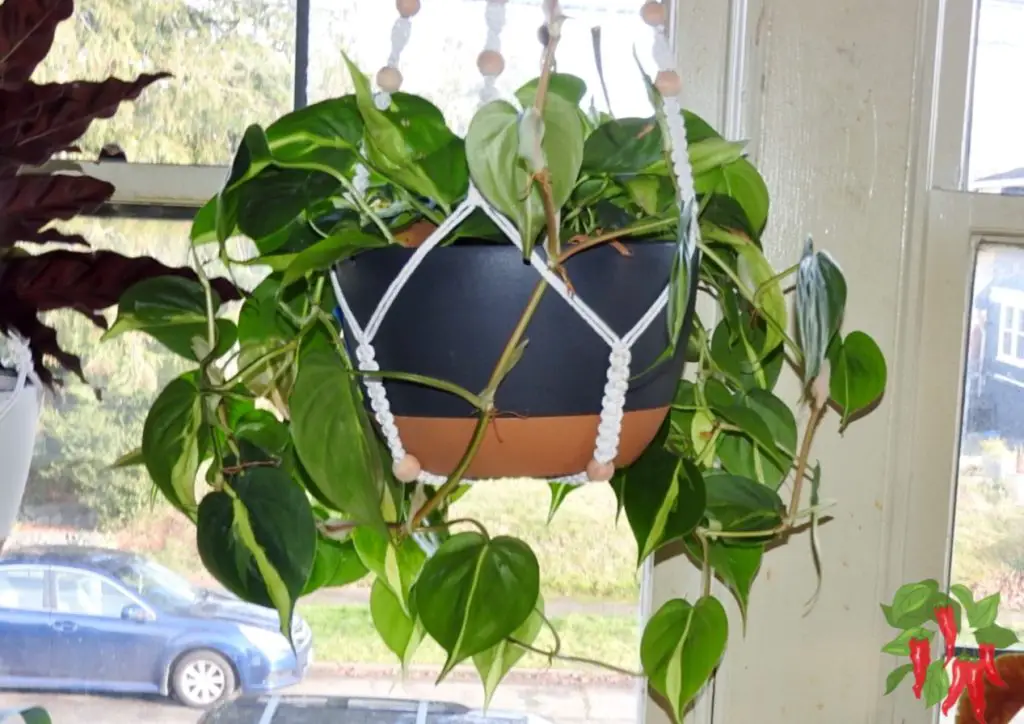
Heartleaf Philodendron is another excellent choice when you want a trailing indoor plant that can adapt to lower light levels.
Its smooth, heart-shaped leaves grow along slender stems that can become quite long over time. The foliage has a softer appearance than many pothos varieties, making it especially attractive in hanging baskets and elevated planters.
Heartleaf Philodendron grows well in moderate indirect light and can tolerate lower-light locations, although growth may slow and the spacing between leaves may increase.
You can let the stems trail naturally or guide them along a trellis or wall support. Pruning also helps manage the length and encourages new growth from nodes below the cut.
Best for: Hanging baskets, bedrooms, shelves, and vertical plant displays.
4. Satin Pothos (Scindapsus pictus)
Satin Pothos adds a different look to an indoor vine collection. Its dark green, heart-shaped leaves feature silvery markings and a soft, satin-like finish.
Despite its common name, Satin Pothos belongs to the genus Scindapsus rather than Epipremnum, the genus of Golden Pothos.
This plant prefers moderate to bright indirect light but can tolerate somewhat lower light levels. In darker locations, growth may slow and the attractive silver markings may become less prominent.
Satin Pothos is particularly appealing in decorative hanging planters or on shelves where its patterned foliage can be viewed up close.
Best for: Decorative shelves, hanging planters, and rooms with moderate indirect light.
5. Arrowhead Vine (Syngonium podophyllum)
Arrowhead Vine gets its common name from the distinctive shape of its juvenile leaves. As the plant matures, its foliage can change shape, and its stems develop a climbing or trailing habit.
Green varieties generally tolerate lower light better than forms with extensive white, pink, or other colorful markings.
Young plants often have a compact, bushy appearance, but mature stems can be trained upward on supports or allowed to trail from a planter.
Arrowhead Vine is a good choice when you want a plant that can change its appearance as it grows. It also works well in mixed plant displays with pothos and philodendrons.
Best for: Plant stands, climbing supports, shelves, and tropical-style decorating.
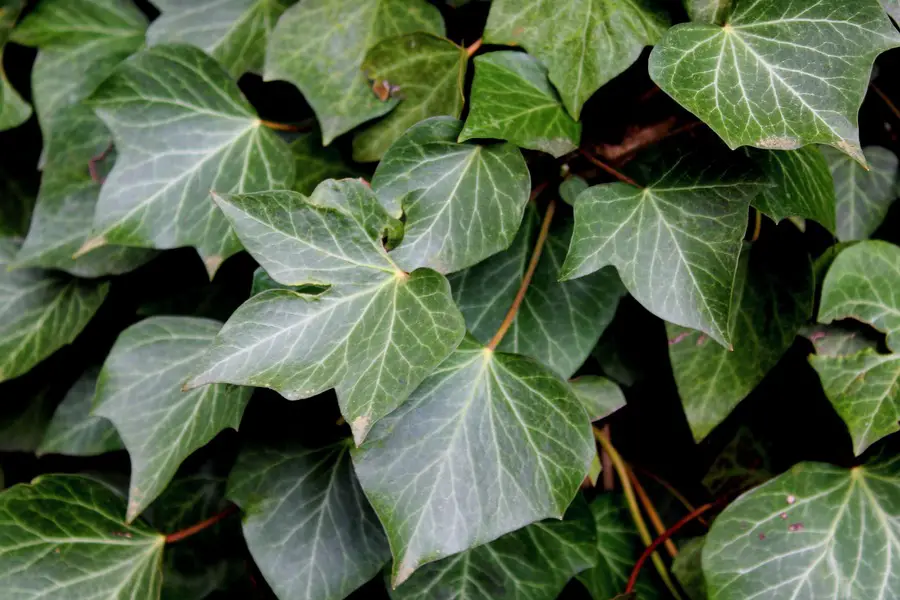
6. English Ivy (Hedera helix)
English Ivy offers a more traditional trailing appearance, with lobed leaves growing along slender stems. It looks attractive in hanging baskets, on shelves, and in decorative containers.
However, English Ivy isn’t as dependable in very low light as pothos or heartleaf philodendron. It generally performs better with moderate to bright indirect light, cooler indoor temperatures, and good air circulation.
It can also be susceptible to spider mites in warm, dry indoor conditions, so regular inspection is worthwhile.
Choose English Ivy when your room has sufficient indirect light and you want a classic trailing plant with a different leaf shape.
Best for: Cooler rooms, hanging baskets, and traditional decorating styles with adequate indirect light.
7. Grape Ivy (Cissus alata)
Grape Ivy is an attractive climbing and trailing houseplant with glossy green leaves arranged in groups of three leaflets. Its foliage creates a fuller, more textured appearance than many vines with simple heart-shaped leaves.
This plant tolerates lower indoor light levels and can be a useful alternative to pothos and philodendron when you want something different.
Grape Ivy can grow in a hanging basket or be trained along a small trellis. Its flexible stems make it suitable for decorative displays where you want greenery to spread naturally.
Provide indirect light, a well-aerated growing medium, and regular moisture checks. Although it tolerates lower light, healthy growth will be more dependable when the plant receives adequate illumination.
Best for: Hanging baskets, plant stands, shelves, and rooms with filtered natural light.
How Much Light Do Indoor Vines Really Need?
One of the biggest advantages of growing indoor vines is their ability to adapt to different lighting conditions. Pothos, heartleaf philodendron, and several other popular vines can grow in locations that receive less sunlight than many flowering houseplants require.
However, there is a difference between tolerating low light and growing vigorously in it. A vine may remain healthy in a shaded room but produce new leaves more slowly than it would in brighter indirect light.
Choosing the Best Location
North-facing windows are often useful locations for low-light indoor vines. They generally provide gentle, indirect daylight without the intense afternoon sun that can damage sensitive foliage.
You can also place vines farther back from east- or west-facing windows, provided enough natural light reaches the plant.
Keep in mind that light intensity decreases as you move away from a window. A plant sitting on a shelf across a large room may receive considerably less light than one growing just a few feet from the same window.
If your vine develops increasingly small leaves, long bare spaces between leaves, or weak growth, consider moving it closer to a light source.
Can Indoor Vines Grow Under Artificial Lights?
Yes. Artificial lighting makes it possible to grow indoor vines in darker rooms, offices, and other spaces where natural sunlight is limited.
A full-spectrum white LED grow light is a practical option because it supports plant growth while producing a natural-looking light color that works well in living spaces.
For many foliage vines, approximately 12–14 hours of suitable artificial lighting daily is a reasonable starting point. The ideal schedule depends on the light’s intensity, its distance from the foliage, and the plant’s response.
A timer makes it easy to maintain a consistent lighting schedule without having to turn the fixture on and off manually.
Do Variegated Vines Need More Light?
Many variegated vines benefit from brighter indirect light to maintain their colorful markings and support healthy growth.
Golden Pothos, for example, may produce greener leaves when grown in a shaded location. Highly variegated pothos varieties with extensive white markings generally need more light than solid-green Jade Pothos.
If your room receives limited daylight, choosing a predominantly green variety is often the simplest way to enjoy attractive foliage without struggling to maintain variegation.
Watering Low-Light Indoor Vines
Watering is one of the most important parts of caring for indoor vines. In lower-light conditions, plants often grow more slowly and may use less water than they would in brighter locations.
That means a watering routine that works well during summer near a bright window may leave the growing medium too wet when the same plant is moved into a darker room.
Check the Growing Medium Before Watering
Instead of watering on a fixed schedule, check the moisture level in the pot. Pothos, heartleaf philodendron, and many other common indoor vines can tolerate some drying between waterings.
Allow the upper portion of the growing medium to dry appropriately for the species before watering again. The goal is to keep the roots supplied with moisture and oxygen rather than leaving them constantly saturated.
Arrowhead Vine generally appreciates more consistent moisture than pothos, while English Ivy also benefits from avoiding prolonged dryness.
Bottom Watering Indoor Vines
I prefer bottom watering many of my indoor plants because it allows the growing medium to absorb moisture from below.
To bottom water, place the pot in a shallow container of water and allow moisture to move upward through the drainage holes. Once the growing medium has absorbed enough water, remove the pot and let any excess drain away.
This method can be especially convenient for trailing vines because you don’t have to move long stems out of the way to water from above.
Occasional top watering may still be useful for flushing accumulated fertilizer salts from the growing medium.
Can You Grow Indoor Vines in Self-Watering Planters?
Self-watering planters can work well for many indoor vines when the growing medium provides adequate moisture movement and root aeration.
A reservoir can simplify watering, particularly for plants displayed on shelves or in locations where reaching the pot is inconvenient.
However, remember that plants growing in lower light may use water more slowly. Monitor the moisture level and adjust reservoir management to avoid keeping the roots excessively wet.
Best Growing Medium for Low-Light Indoor Vines
A good growing medium should retain enough moisture to support healthy roots while providing air spaces that prevent prolonged saturation.
For many indoor vines, I prefer a combination of coco coir and perlite. Coco coir helps retain moisture, while perlite improves aeration and drainage.
You can adjust the proportions depending on the plant, the container, and your watering method.
Adjusting the Mix for Different Vines
- Pothos: A coco coir and perlite mixture provides moisture retention with good root aeration.
- Heartleaf Philodendron: An airy mixture works well, and orchid bark can be added when you want more structure.
- Satin Pothos: A well-aerated medium helps prevent prolonged saturation around the roots.
- Arrowhead Vine: A mixture that retains moderate moisture while draining freely is a practical choice.
- English Ivy: Use a well-drained medium that doesn’t become excessively dry for extended periods.
- Grape Ivy: A loose, moisture-retentive medium supports healthy root development without remaining waterlogged.
Coco coir and perlite contain little available nutrition on their own, so plants growing in these materials will need an appropriate fertilizer during active growth.
Temperature and Humidity for Indoor Vines
Most of the tropical vines in this guide grow well in ordinary household temperatures. A range of approximately 65–80°F (18–27°C) is suitable for many pothos, philodendron, and syngonium varieties.
English Ivy is an exception because it generally prefers cooler conditions than many tropical foliage plants.
Avoid placing your vines directly beside heating vents, cold drafts, or air-conditioning outlets that create rapid temperature changes.
Do Low-Light Indoor Vines Need High Humidity?
Many common indoor vines tolerate ordinary household humidity reasonably well. Pothos and heartleaf philodendron are especially adaptable, although moderate humidity can help support attractive foliage.
If your home becomes very dry during winter, a humidifier can help maintain more consistent conditions.
A small digital hygrometer is useful for checking actual humidity levels. Misting leaves may briefly wet their surfaces, but it doesn’t provide a dependable increase in room humidity.
How to Keep Indoor Vines Full and Attractive
Trailing vines can become beautiful decorative features as their stems lengthen. However, without occasional attention, some plants develop long stretches of stem with fewer leaves than you might prefer.
Good lighting, appropriate watering, and selective pruning can help maintain a fuller appearance.
Pruning Long or Leggy Vines
Pruning is one of the easiest ways to manage the shape of an indoor vine. When a stem becomes longer than you want, use clean pruning scissors to cut just above a node.
A node is the point on a stem where a leaf and potential new growth emerge. Many vines can produce new shoots from nodes below the cut.
Pruning also gives you an opportunity to remove damaged foliage and keep your plant looking tidy.
If a vine is becoming leggy because it isn’t receiving enough light, improve the lighting as well. Pruning alone won’t correct the underlying growing conditions.
Propagating Vines From Stem Cuttings
Pothos, heartleaf philodendron, and several other indoor vines are easy to propagate from stem cuttings.
Choose a healthy stem and cut a section containing at least one node. Remove any leaves that would sit below the waterline if you’re rooting the cutting in water.
Place the cutting in clean water or a suitable moist propagation medium and provide indirect light. Once it develops a healthy root system, you can pot it into an appropriate growing mixture.
Adding rooted cuttings back into the original planter is a useful way to create a fuller display with more stems growing from the container.
Should You Let Vines Trail or Encourage Them to Climb?
Both approaches can look attractive, and the best choice depends on your decorating goals.
Trailing vines create a soft, cascading effect that works beautifully on shelves and in hanging baskets. Climbing vines add height and can help fill narrow spaces beside furniture or along walls.
Some plants, including pothos and heartleaf philodendron, may develop larger mature leaves when given a suitable climbing support and adequate growing conditions.
Decorating Your Home With Low-Light Indoor Vines
Indoor vines are especially useful when you want to bring more greenery into your home without filling every available surface with pots.
Their trailing stems add movement and texture, while climbing varieties can turn a plain vertical space into a living decorative feature.
Hanging Baskets for Small Rooms
Hanging baskets allow you to enjoy attractive foliage while keeping tables and floors clear.
Golden Pothos, Heartleaf Philodendron, and Grape Ivy are attractive choices for hanging displays. Position the planter where the foliage receives adequate light and where you can safely reach it for watering and maintenance.
Make sure ceiling hooks and other supports are rated for the combined weight of the planter, growing medium, plant, and water.
Trailing Vines on Bookshelves
A bookshelf is one of my favorite places to display trailing plants. The vines soften the straight lines of shelves and add a natural contrast to books, framed photographs, and decorative objects.
Jade Pothos works especially well when you want solid green foliage, while Satin Pothos adds silver markings that stand out against darker furniture.
Allow enough space for the vines to grow without becoming tangled around objects you regularly move.
Low-Light Vines for Bedrooms
Trailing plants can create a relaxed, welcoming appearance in bedrooms. A Heartleaf Philodendron on a shelf or a Golden Pothos in a hanging basket adds greenery without requiring a large planter.
Choose a location that receives sufficient indirect daylight and keep the foliage away from heating vents.
If you have pets, consider plant toxicity before choosing a location. Several popular indoor vines are toxic when chewed or swallowed.
Decorating North-Facing Rooms
North-facing rooms often provide gentle daylight that suits many foliage houseplants. Pothos and Heartleaf Philodendron are particularly useful choices when the light is adequate but direct sunlight is limited.
Try placing a trailing plant near the window or on a nearby shelf where the foliage can receive indirect light throughout the day.
Avoid assuming every part of the room receives the same amount of light. A dark corner several feet from the window may need supplemental illumination.
Using Vines to Soften Furniture and Empty Corners
Long trailing stems can soften the appearance of cabinets, tall plant stands, and shelving units. You can also guide climbing vines along a decorative trellis to add greenery without taking up much horizontal space.
A simple arrangement of one or two healthy vines often creates a more attractive display than crowding several plants into an area where they compete for light.
Choose a location that supports healthy growth first, then arrange the stems to complement your furniture and decorating style.
Common Problems With Low-Light Indoor Vines
Even adaptable indoor vines can develop problems when growing conditions aren’t quite right. Fortunately, their leaves and stems often provide useful clues.
Long Stems With Small Leaves
Long spaces between leaves and increasingly small foliage can indicate insufficient light. Move the plant closer to a suitable window or provide supplemental artificial lighting.
Yellowing Leaves
Yellow leaves can result from excessive moisture, root stress, insufficient light, or normal aging. Check the growing medium and roots before changing your watering routine.
Brown Leaf Tips or Edges
Brown tips may develop because of inconsistent watering, dry air, fertilizer salt buildup, or other environmental stresses. Look at the overall growing conditions rather than assuming a single cause.
Loss of Variegation
Some variegated vines produce greener leaves when grown in lower light. Moving the plant to brighter indirect light may help new growth display stronger markings, depending on the variety.
Slow Growth
Slower growth is common in lower-light conditions. If the plant otherwise looks healthy, it may simply be responding to reduced light availability. However, extremely slow growth combined with declining foliage may indicate inadequate lighting, nutrient shortages, or root problems.
Pests on Indoor Vines
Spider mites, mealybugs, scale insects, and other common houseplant pests can occasionally affect indoor vines.
Inspect the undersides of leaves and the points where leaves join stems. If pests appear, isolate the affected plant and choose a suitable treatment. Insecticidal soap can be useful for certain soft-bodied pests when applied according to the product label.
Regular observation, clean growing conditions, and adequate light are helpful for maintaining attractive, healthy vines over time.
Are Low-Light Indoor Vines Safe for Cats and Dogs?
If you have cats or dogs, pet safety deserves special attention when choosing trailing houseplants. Several of the most popular low-light indoor vines are toxic to pets when chewed or swallowed.
Pothos, Heartleaf Philodendron, Satin Pothos, and Arrowhead Vine contain insoluble calcium oxalate crystals. These can irritate the mouth and digestive tract, causing drooling, oral discomfort, vomiting, and difficulty swallowing.
English Ivy is also toxic to cats and dogs, although its toxic compounds differ from those found in pothos and philodendrons.
Pet Safety Comparison
| Indoor Vine | Pet Safety |
|---|---|
| Golden Pothos | Toxic to cats and dogs |
| Jade Pothos | Toxic to cats and dogs |
| Heartleaf Philodendron | Toxic to cats and dogs |
| Satin Pothos | Toxic to cats and dogs |
| Arrowhead Vine | Toxic to cats and dogs |
| English Ivy | Toxic to cats and dogs |
| Grape Ivy | Generally considered non-toxic to cats and dogs |
Grape Ivy is a useful option for pet owners who want a trailing houseplant. However, even non-toxic plants can cause mild digestive upset when pets eat large amounts of foliage.
Hanging baskets and elevated shelves can help reduce access, but curious cats may still reach dangling vines. Consider your pet’s habits before choosing where to display a plant.
You can check individual plants in the ASPCA Toxic and Non-Toxic Plants Database.
If you suspect your pet has eaten a toxic plant, contact your veterinarian or an animal poison control service promptly.
Frequently Asked Questions About Low-Light Indoor Vines
What are the best low-light indoor vines?
Golden Pothos, Jade Pothos, Heartleaf Philodendron, and Grape Ivy are among the best choices for lower-light indoor spaces. They tolerate indirect light and offer attractive trailing or climbing growth. Satin Pothos and Arrowhead Vine can also work when sufficient light is available.
What is the easiest indoor vine to grow in low light?
Jade Pothos and Heartleaf Philodendron are excellent beginner-friendly choices. Both tolerate a range of indoor conditions and can be grown in hanging baskets, on shelves, or with climbing supports.
Can indoor vines survive without sunlight?
Indoor vines can grow without natural sunlight if they receive enough artificial light. However, they cannot survive indefinitely in complete darkness. A suitable LED grow light can support healthy growth in windowless rooms.
Which indoor vine grows fastest in low light?
Pothos and Heartleaf Philodendron are relatively vigorous growers under suitable indoor conditions. However, growth generally slows as light levels decrease. Providing adequate indirect light is the best way to encourage healthy, steady growth.
Can I grow low-light vines in hanging baskets?
Yes. Golden Pothos, Jade Pothos, Heartleaf Philodendron, and Grape Ivy are attractive hanging basket plants. Their stems can cascade over the edges of the planter, adding greenery without occupying much floor space.
How often should I water indoor vines in low light?
Check the growing medium before watering rather than following a fixed schedule. Plants growing in lower light may use water more slowly. Pothos and Heartleaf Philodendron can tolerate some drying between waterings, while Arrowhead Vine generally appreciates more consistent moisture.
Do low-light indoor vines need fertilizer?
Yes, indoor vines need nutrients to support healthy growth. Use an appropriate houseplant fertilizer during active growth, following the product directions. Plants growing slowly in low light generally require less fertilizer than those growing vigorously in brighter conditions.
How do I make my trailing vines look fuller?
Prune long stems to encourage branching, provide adequate light, and propagate healthy stem cuttings. Adding rooted cuttings back into the original planter can create a fuller appearance with more stems growing from the container.
Why is my pothos losing its yellow markings?
Golden Pothos may produce greener leaves when light is limited. Moving it into brighter indirect light can help encourage stronger variegation in new growth, depending on the variety and growing conditions.
Are low-light indoor vines safe for pets?
Many popular indoor vines, including pothos, philodendron, syngonium, and English Ivy, are toxic to cats and dogs. Grape Ivy is generally considered non-toxic and may be a better choice for homes with curious pets. Always verify plant identification and toxicity before purchasing.
Final Thoughts on the Best Low-Light Indoor Vines
Indoor vines are a wonderful way to add natural greenery to your home, especially when you have limited floor space or want to soften the appearance of shelves, furniture, and walls.
The best low-light indoor vines combine attractive foliage with the ability to adapt to ordinary household conditions. Golden Pothos and Heartleaf Philodendron are dependable choices for beginners, while Jade Pothos is especially useful when you want rich green foliage in a room with less natural light.
Satin Pothos offers beautiful silver markings, Arrowhead Vine provides interesting leaf shapes, and Grape Ivy brings a different texture to hanging baskets and plant stands. English Ivy can also be attractive when you have the cooler temperatures and sufficient indirect light it prefers.
One of the things I enjoy about trailing plants is how much you can do with a single container. You can let the stems cascade from a shelf, train them around a support, or use them to bring greenery into a corner that would otherwise feel empty.
For healthy growth, remember to provide enough light, adjust watering to the conditions in your room, and use a growing medium that allows the roots to breathe. A simple coco coir and perlite mixture works well for many of these plants, especially when you adjust it to your watering method.
You don’t need a large collection or a room filled with sunshine to create an attractive indoor plant display. Start with one or two vines that suit your available light, give them room to grow, and enjoy the way their foliage changes the feeling of your home.
Find Live Indoor Vines On Amazon
🌿 Explore More Indoor Plant Guides
Looking for more ways to decorate your home with beautiful houseplants? These guides can help you find plants for hanging baskets, shaded rooms, and smaller living spaces.
References
- University of Minnesota Extension.
Growing Houseplants.
Guidance on indoor plant lighting, watering, humidity, and general growing conditions. - Clemson Cooperative Extension.
Pothos.
Information on pothos varieties, indoor growing conditions, light requirements, and propagation. - North Carolina State University Extension.
Philodendron hederaceum.
Botanical identification, growing conditions, plant characteristics, and toxicity. - University of Wisconsin–Madison Extension.
Arrowhead Vine, Syngonium podophyllum.
Plant characteristics, indoor care, propagation, and growth habits.
Related Content


Visit my Amazon Influencer Page for videos and gardening products Grow Your Own Garden