
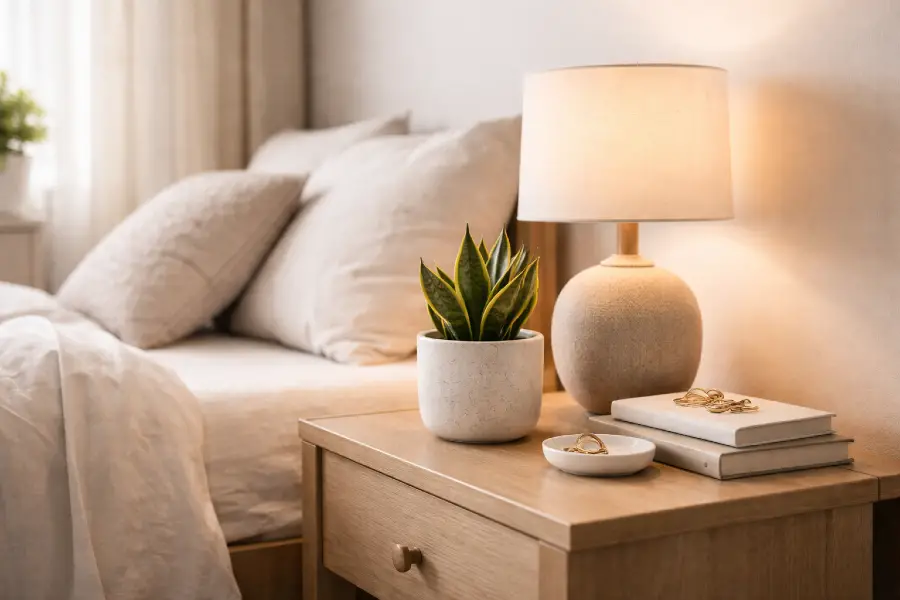
Adding a plant to a nightstand is one of the easiest ways to make a bedroom feel more calm, comfortable, and finished. The best plants for nightstands are small, easy to care for, and able to grow in the softer light that most bedrooms have.
Nightstand plants should be compact and not too tall so they do not block lamps, alarm clocks, or books. Small leafy plants, trailing plants, and low maintenance plants are usually the best choices for night tables.
In this guide, you will learn which plants work best on nightstands, how to style a nightstand with plants, and how to choose plants that grow well in bedroom conditions.
Find Easy Indoor Houseplants On Amazon
What You’ll Learn
-
- Best small plants for nightstands
- Low light plants for bedrooms
- Low maintenance nightstand plants
- Trailing plants for night tables
- How to style a nightstand with plants
- How many plants to put on a nightstand
Quick Answer
The best plants for nightstands are compact enough to leave room for everyday items and suited to the amount of light that actually reaches the bedside table. Peperomia, small snake plants, ZZ plants, pothos, and compact philodendrons are good choices for many bedrooms. Before choosing a plant, check how far your nightstand is from the window and how much usable light reaches it during the day.
Nightstand Plants at a Glance
| Plant | Why It Works | Light | Keep in Mind |
|---|---|---|---|
| Snake Plant | Upright growth and easy care | Low to bright indirect light | Choose a compact variety that won’t become too tall for the space |
| ZZ Plant | Neat growth and infrequent watering | Low to bright indirect light | Small plants fit nightstands better than mature specimens |
| Pothos | Trailing growth softens the edge of the nightstand | Moderate to bright indirect light; tolerates lower light | Trim long vines so they don’t interfere with the bed or floor |
| Peperomia | Naturally compact with decorative foliage | Medium to bright indirect light | Avoid keeping the growing mix constantly wet |
| Philodendron | Easy-growing foliage with trailing options | Moderate to bright indirect light; some tolerance for lower light | Choose a compact or trailing type rather than a large-growing variety |
| Peace Lily | Attractive foliage with occasional flowers | Moderate to bright indirect light; tolerates lower light | Choose a smaller cultivar and allow enough room for its spreading leaves |
| Calathea | Colorful patterned foliage | Medium to bright indirect light | Usually requires more attention to moisture and humidity than the easiest choices above |
Quick Tip: Don’t choose a nightstand plant based on bedroom decor alone. Check the light at the actual bedside table first. A nightstand close to a bright window can support far more plant choices than one across the room or in a dark corner.
🌿 Why Plants Look Good on Nightstands
Nightstands are small surfaces, but they are very visible in a bedroom. A small plant on a nightstand can make the entire bedroom feel more styled and complete without adding clutter.
Plants also help soften a bedroom. Bedrooms usually have hard furniture like bed frames, dressers, and lamps. Adding a small plant introduces natural texture and color that makes the space feel calmer and more relaxing.
Because nightstands are usually next to beds and lamps, smaller plants are usually better than tall plants. Compact plants keep the space looking clean and balanced.
🪴 What Makes a Good Nightstand Plant?
The best nightstand plants are usually small, neat, and easy to maintain. Bedrooms often have lower light than kitchens or living rooms, so plants that tolerate medium or low light usually work best.
Good nightstand plants usually have these qualities:
- Small or compact size
- Low to medium light tolerance
- Easy watering schedule
- Decorative leaves or soft texture
- Stable pot that will not tip easily
Does Your Nightstand Get Enough Light for a Plant?
Before choosing a plant for your nightstand, look at how much light actually reaches the bedside table. A bedroom can have a bright window while a nightstand on the opposite side of the room receives very little usable light.
The biggest factors are the distance from the window, window direction, outdoor obstructions, and whether curtains or furniture block the light. Light intensity decreases as you move farther from the window, so a plant that grows well on a windowsill may struggle on a nightstand several feet away.
Nightstand Close to a Bright Window
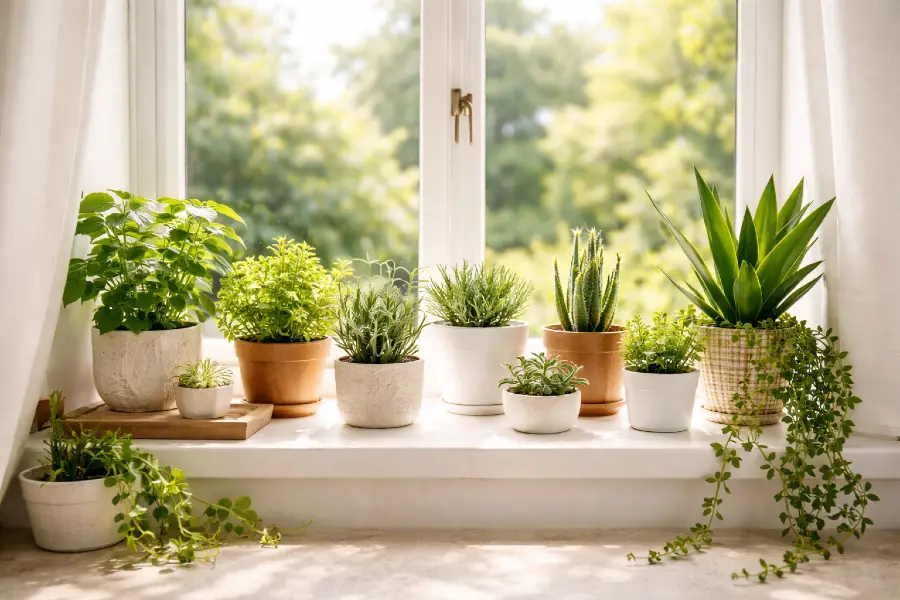
If your nightstand is close to a bright window, you have more plant choices. Peperomia, pothos, philodendron, peace lily, and many other compact houseplants can work well when their individual light needs are met.
Nightstand Several Feet From a Window
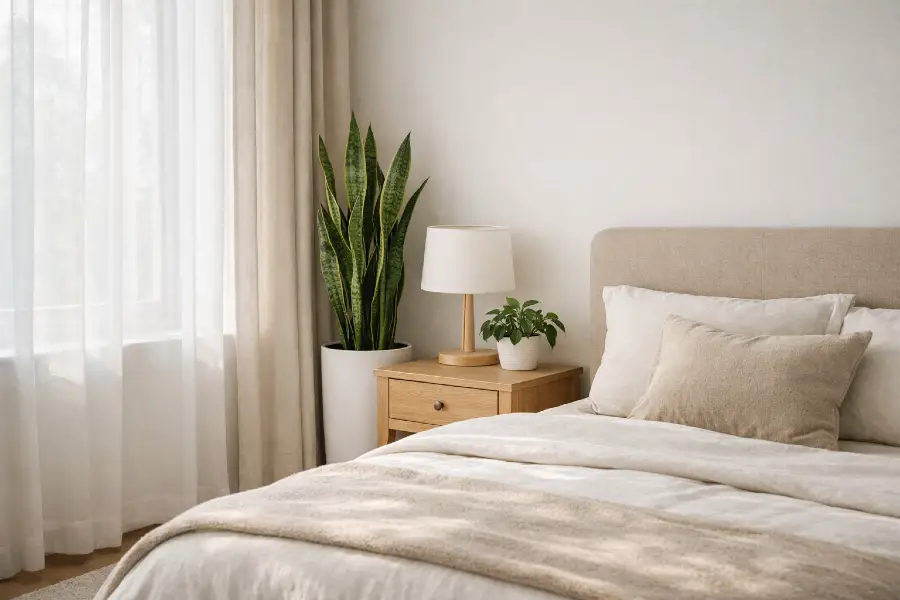
If the nightstand is farther into the room, choose plants that are more tolerant of lower light. A small ZZ plant, snake plant, pothos, or heartleaf philodendron may be a better choice than a plant that needs consistently bright light.
Lower-light tolerance doesn’t mean a plant can grow without light. Growth may be slower, and you may need to move the plant closer to the window if it begins stretching, thinning, or losing healthy growth.
Nightstand in a Dark Corner
If very little natural light reaches the nightstand during the day, even a low-light-tolerant houseplant may eventually struggle. In that situation, consider adding a small grow light, moving the plant to a brighter location during the day, or using another type of decor on the nightstand.
Simple Check: Look at your nightstand during the brightest part of the day. If the area remains noticeably dim while the space near the window is bright, choose a more light-tolerant plant or provide supplemental light. The best nightstand plant is one that fits both the available space and the light that actually reaches it.
🌱 Best Plants for Nightstands
Several indoor plants work especially well on nightstands because they stay small and grow well in bedroom conditions.
Snake Plant
Snake plants are one of the easiest indoor plants to grow and can tolerate lower light conditions, which makes them great bedroom plants.
ZZ Plant
ZZ plants are very low maintenance and tolerate low light well. Smaller ZZ plants work very well on nightstands.
Pothos
Pothos is a great trailing plant for nightstands. The vines can hang over the side of the table and soften the space.
Peace Lily
Peace lilies work well in bedrooms because they tolerate lower light and have attractive leaves and occasional flowers.
Peperomia
Peperomia stays small and compact, which makes it perfect for night tables.
Calathea
Calatheas have decorative leaves and work well in bedrooms with indirect light.
🌙 Low Light Plants for Nightstands
Many bedrooms do not receive strong direct sunlight, so choosing plants that tolerate lower light is important for nightstand plants.
Some of the best low light plants for nightstands include:
- Snake plant
- ZZ plant
- Pothos
- Peace lily
- Calathea
- Philodendron
- Chinese evergreen
These plants can grow well in bedrooms with indirect light and do not need to sit directly in a sunny window.
🌿 Low Maintenance Nightstand Plants
If you want a plant that is easy to care for, choose plants that do not need frequent watering or special care. Nightstand plants are often decorative, so low maintenance plants are usually the best choice.
Good low maintenance nightstand plants include:
- Snake plant
- ZZ plant
- Pothos
- Peperomia
- Small philodendron
📍 How to Style a Nightstand With Plants
Nightstand plants usually look best when placed next to a lamp, book stack, or small decorative object. The plant should not take up the entire nightstand, and there should still be room for everyday items.
A few simple nightstand styling ideas include:
- Plant next to a lamp
- Plant on top of a small stack of books
- Trailing plant hanging slightly over the edge
- Plant in a decorative ceramic pot
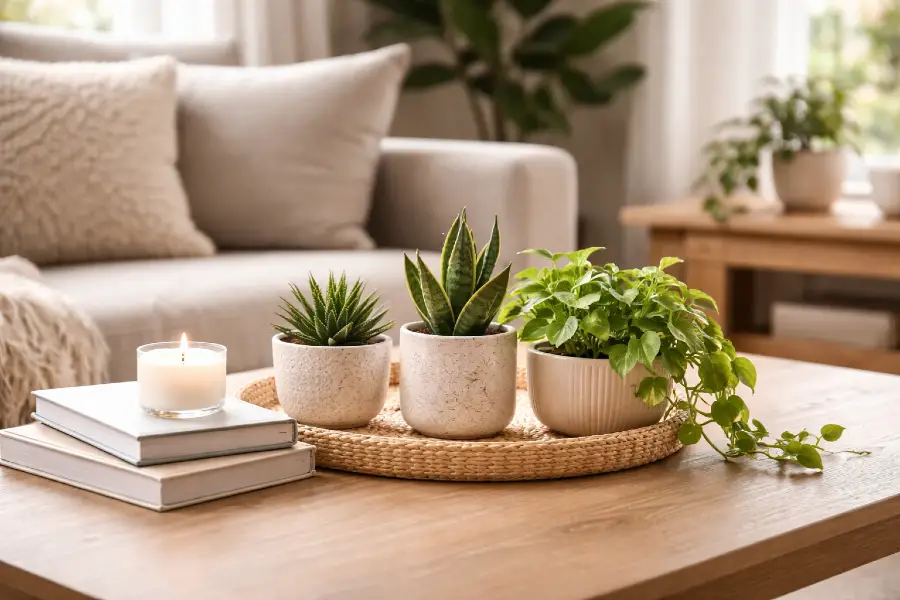
- Plant paired with a candle or small tray
Keeping the arrangement simple usually looks better than adding too many items.
✨ How Many Plants Should Be on a Nightstand?
Most nightstands look best with just one small plant. If the nightstand is larger, you may be able to fit two small plants, but usually one plant is enough to make the space feel styled without looking crowded.
Nightstands are functional spaces, so it is important to leave room for lamps, phones, books, and other items.
🏡 Choosing Pots for Nightstand Plants
For nightstands, simple pots usually look best. Neutral ceramic pots, soft colors, matte finishes, and small textured pots all work well in bedrooms.
Try to match the pot style with the bedroom furniture and decor so the plant looks like part of the room design instead of something randomly placed.
What You’ll Learn
- Best small plants for nightstands
- Low-light plants for bedrooms
- Low-maintenance nightstand plants
- Trailing plants for night tables
- How to style a nightstand with plants
- How many plants to put on a nightstand
Frequently Asked Questions About Nightstand Plants
What are the best plants for nightstands?
Some of the best plants for nightstands include compact snake plants, small ZZ plants, peperomia, pothos, and heartleaf philodendrons. These plants offer attractive foliage without requiring much space. Choose a plant that fits your nightstand and receives enough light in its actual location.
Are plants good to keep on a nightstand?
Yes. A small houseplant can add natural color, texture, and a relaxing touch to your bedroom. Plants also soften the appearance of bedside furniture and help create a more welcoming space. Choose a stable pot and leave enough room for lamps, books, and other everyday items.
What plants grow well in bedrooms with low light?
Snake plants, ZZ plants, pothos, heartleaf philodendrons, and Chinese evergreens can tolerate lower light than many other houseplants. However, low-light tolerance doesn’t mean these plants can grow in complete darkness. If your nightstand receives very little natural light, consider supplemental grow lighting.
How many plants should you put on a nightstand?
One small plant is usually enough for an average nightstand. It adds greenery without making the space look crowded. If you have a larger bedside table, two small plants can work, especially when you combine different leaf shapes or heights. Keep enough open space for everyday use.
Do nightstand plants need direct sunlight?
Most popular nightstand plants grow well in indirect natural light and don’t require strong direct sunlight. The important factor is how much usable light reaches the bedside table. A nightstand several feet from a window may receive much less light than one positioned nearby, even in the same bedroom.
What are the easiest nightstand plants to care for?
Small ZZ plants and snake plants are among the easiest choices because they tolerate occasional missed waterings and a range of indoor lighting conditions. Peperomia is another good option for a compact plant, provided it receives suitable indirect light and the growing mix isn’t kept constantly wet.
What nightstand plants are safe for cats and dogs?
Pet-friendlier choices include baby rubber plant (Peperomia obtusifolia), spider plant, prayer plant, parlor palm, and many Calathea varieties. The ASPCA lists these plants as non-toxic to cats and dogs. However, chewing any plant material can cause digestive upset, so keep greenery away from pets that regularly nibble leaves.
Can you put a trailing plant on a nightstand?
Yes. Pothos and heartleaf philodendrons can look attractive when their vines gently trail over the edge of a bedside table. Keep the vines trimmed so they don’t interfere with lamps, bedding, or other items. If you have curious pets, remember that both pothos and heartleaf philodendrons are toxic if eaten.
What size plant is best for a nightstand?
A compact plant in a small, stable pot usually works best. Choose a size that leaves room for your bedside essentials and doesn’t block a lamp or window. A plant in a 3- to 5-inch nursery pot is often a practical starting point, depending on the size of your nightstand.
🌿 Best Plants for Nightstands: Final Thoughts
🌿 Final Thoughts on the Best Plants for Nightstands
Choosing the best plants for nightstands is a simple way to bring natural beauty into your bedroom. Even one small houseplant can soften the appearance of bedside furniture, add a little color, and help create a calm, welcoming space.
Compact plants such as peperomia, small snake plants, ZZ plants, pothos, and heartleaf philodendrons are all attractive choices. The right plant depends on the size of your nightstand, your bedroom’s lighting, and how much time you want to spend on plant care.
Keep Your Nightstand Simple and Functional
When decorating a nightstand, I think simplicity usually works best. You don’t need several plants or an elaborate arrangement to make the space feel inviting. One healthy plant in an attractive pot can make a noticeable difference.
A few things are worth keeping in mind:
- Choose a compact plant: Leave enough room for your lamp, phone, books, and other bedside essentials.
- Match the plant to the available light: Check how much daylight actually reaches your nightstand rather than judging the brightness of the entire bedroom.
- Use a stable decorative pot: Choose a container that complements your bedroom furniture and protects the nightstand from water damage.
- Keep the arrangement balanced: A single plant alongside a lamp or small decorative item is often all you need.
- Consider your pets: If cats or dogs have access to your bedroom, choose a suitable non-toxic plant and keep it out of reach if they like chewing leaves.
Remember that the health of your plant comes first. A nightstand may be the perfect decorating spot, but if it doesn’t receive enough light, moving the plant closer to a window or adding supplemental lighting will help it grow better.
Whether you prefer the upright appearance of a small snake plant, the rounded leaves of a peperomia, or the gentle trailing growth of a pothos, there’s a houseplant that can complement your bedroom style.
Start with one plant you enjoy, give it the conditions it needs, and let that little touch of greenery make your bedroom feel more comfortable and complete.
Happy growing, and don’t forget to stay green! 🌿
🌿 Explore More Indoor Plant and Decorating Ideas
Looking for more ways to decorate your home with houseplants? Explore these guides for room-by-room plant ideas, small-space decorating inspiration, and ways to bring greenery into your everyday living spaces.
More Indoor Plant Guides
- Indoor Trees and Large Plants: Bring the Outdoors In!
- Indoor Plants for Offices: Boost Productivity and Air Quality
- Indoor Plants for Bathrooms: Transform Your Space into a Lush Oasis
Browse More Plant Decorating Ideas
References and Further Reading
For more information about choosing houseplants for bedrooms, providing suitable lighting, and selecting plants for pet-friendly homes, these resources offer helpful guidance:
- University of Minnesota Extension – Lighting for Indoor Plants. Explains how natural and artificial lighting affect houseplant growth, including how to choose suitable locations for indoor plants.
University of Minnesota Indoor Lighting Guide - University of Georgia Extension – Growing Indoor Plants with Success. Covers selecting indoor plants, matching plants to household conditions, watering, and general care.
University of Georgia Indoor Plant Guide - Clemson Cooperative Extension – Indoor Plants. Provides practical guidance on houseplant selection, lighting, watering, and growing conditions inside the home.
Clemson Extension Indoor Plant Guide - ASPCA – Toxic and Non-Toxic Plants. A searchable database to help identify houseplants that may be toxic or non-toxic to cats and dogs.
ASPCA Plant Toxicity Database
Related Content
Visit my Amazon Influencer Page for videos and gardening products Grow Your Own Garden