
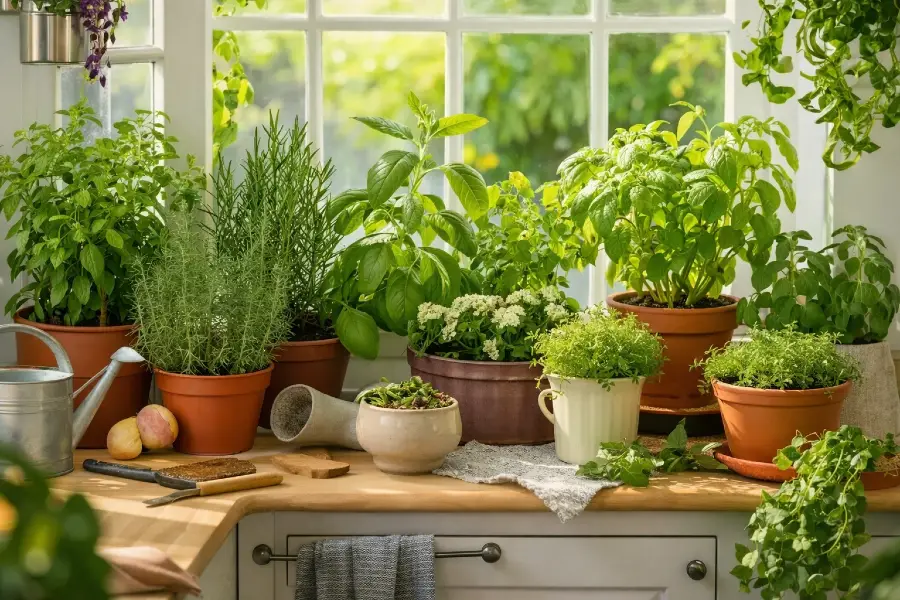
There’s something special about having fresh herbs growing in your home. Whether you’re adding basil to a homemade pizza, snipping chives for a baked potato, or picking a few mint leaves for tea, an indoor herb garden puts fresh flavors within easy reach.
But can you grow herbs indoors year-round, even when winter brings shorter days and less natural sunlight? The answer is yes, although some herbs are much easier to keep productive than others.
Growing herbs indoors also gives you an opportunity to add living greenery to your kitchen, apartment, or other small space. A collection of attractive herb plants can make a sunny windowsill or kitchen shelf feel more welcoming while providing something useful for everyday cooking.
The secret is choosing suitable herbs and providing enough light, water, and nutrients to support continued growth. With a little planning, you can enjoy fresh herbs through every season instead of relying entirely on grocery store bunches.
In this guide, we’ll look at the best herbs for year-round indoor growing, what to expect during winter, and how to create an indoor herb garden that fits your home and your routine.
What You’ll Learn
- Whether herbs can grow indoors throughout all four seasons
- Which herbs are best suited to year-round indoor growing
- Why light is especially important for winter herb production
- How different herbs grow, regrow, and respond to harvesting
- How to choose herbs for windowsills, kitchen shelves, and small spaces
Quick Answer: Can You Grow Herbs Indoors Year-Round?
Yes, you can grow herbs indoors year-round with adequate lighting, suitable temperatures, and proper watering. Mint, chives, parsley, oregano, thyme, rosemary, and basil are popular choices. However, keeping an herb alive is different from producing a steady harvest. Most culinary herbs need several hours of strong light daily, and supplemental LED grow lights are often necessary during winter. Some herbs, especially basil, benefit from regular replacement or succession planting to maintain a continuous supply.
Best Herbs to Grow Indoors Year-Round at a Glance
Some herbs grow quickly and provide frequent harvests, while others develop more slowly but can remain productive for years. This comparison will help you choose plants that suit your available space and growing conditions.
| Herb | Indoor Growing Habit | Year-Round Potential |
|---|---|---|
| Basil | Fast-growing, tender herb | Excellent with strong light and periodic replacement |
| Parsley | Leafy biennial | Good, especially during its first year |
| Chives | Clumping perennial | Good with adequate light and periodic renewal |
| Mint | Spreading perennial | Very good with regular pruning |
| Thyme | Compact, woody perennial | Good with strong light and careful watering |
| Oregano | Spreading perennial | Good with regular trimming and strong light |
| Rosemary | Woody evergreen shrub | Possible, but more demanding indoors |
Can Herbs Really Grow Indoors All Year?
Many culinary herbs can grow indoors throughout the year, but their success depends on the conditions you provide. Unlike outdoor gardens, where temperature and daylight change with the seasons, an indoor growing area gives you more control over the environment.
You can provide artificial lighting, maintain comfortable temperatures, and protect tender herbs from frost. This makes it possible to continue growing plants even when outdoor conditions are unsuitable.
However, not every herb behaves the same way. Some naturally live for several years, while others have shorter productive lives or eventually flower and decline.
Keeping Herbs Alive Versus Producing Fresh Harvests
One of the most important distinctions is the difference between keeping an herb alive and keeping it productive.
A rosemary plant might survive through winter in a bright indoor location while producing very little new growth. Basil, on the other hand, can grow rapidly under strong artificial lighting and provide repeated harvests, but individual plants may become woody or less productive as they age.
If your goal is a steady supply of fresh herbs for cooking, you’ll want to provide enough light to support new foliage rather than simply keeping the plants alive.
Why Winter Is the Biggest Challenge
Winter brings shorter days, a lower sun angle, and reduced natural light in many homes. Even a sunny windowsill may provide less usable light than it does during spring and summer.
Indoor heating can also change the growing environment by lowering humidity and creating warm, dry airflow near windows and heating vents.
Fortunately, LED grow lights make it possible to maintain a more consistent growing environment. With adequate lighting, many herbs can continue producing fresh leaves throughout the colder months.
Do Indoor Herbs Need a Winter Rest Period?
Herbs have different natural growth cycles. Tender plants such as basil can continue growing in a warm indoor environment with sufficient light. Many perennial herbs can also remain active under suitable conditions, although their growth rates vary.
Some temperate perennials, including chives, have seasonal growth habits and may benefit from a cool resting period. Other herbs, such as rosemary, can remain evergreen but may grow slowly when conditions are less favorable.
Rather than assuming every herb needs the same winter treatment, consider the natural growth habit of the particular plant you’re growing.
7 Best Herbs for Year-Round Indoor Growing
These seven herbs are popular choices for indoor gardens because they provide useful culinary harvests and can be grown in containers. Some are easy to maintain, while others need a little more attention to lighting and watering.
1. Basil (Ocimum basilicum)
Basil is one of the most rewarding herbs to grow indoors because it produces fragrant leaves that you can use in pasta, pizza, salads, and many other dishes.
It’s a fast-growing, warm-season herb that appreciates strong light and consistently warm temperatures. A bright south-facing window may support some growth, but a dedicated LED grow light is often the better choice when you want regular harvests throughout winter.
Pinching the growing tips encourages branching and helps create a fuller plant. Removing flower buds can also help maintain leaf production.
Individual basil plants don’t remain at peak productivity forever. Starting new plants from seed or cuttings periodically is a practical way to maintain a steady supply.
Best for: Sunny kitchen windows, LED-lit herb shelves, and frequent fresh harvests.
2. Parsley (Petroselinum crispum)
Parsley is a versatile culinary herb that works well in soups, salads, sauces, and many cooked dishes. Both curly-leaf and flat-leaf varieties can be grown indoors.
Parsley is naturally a biennial, meaning it typically completes its life cycle over two growing seasons. It produces leaves during its first year and eventually flowers and sets seed.
For indoor growing, treat parsley primarily as a leafy herb and harvest the outer stems while allowing the center of the plant to continue developing.
Provide bright light, moderate moisture, and enough room for its root system. Starting replacement plants before older ones decline can help maintain a continuous supply.
Best for: Kitchen windowsills, countertop herb gardens, and regular culinary use.
3. Chives (Allium schoenoprasum)
Chives are compact, clumping herbs with slender, hollow leaves and a mild onion flavor. They’re especially useful for adding fresh flavor to potatoes, eggs, soups, and salads.
Their upright growth habit makes them convenient for small pots and indoor herb displays. You can harvest leaves by cutting them above the base, allowing new growth to develop from the established clump.
Chives are perennial plants with a natural seasonal cycle. Established plants may slow down or rest during part of the year, especially when grown under cooler conditions.
If you want fresh chives continuously, maintaining more than one pot or periodically starting new plants can help provide harvests while other plants recover.
Best for: Small containers, kitchen shelves, and convenient snipping for everyday meals.
4. Mint (Mentha species)
Mint is an attractive and productive herb that grows well in containers. Its fragrant leaves are useful for tea, desserts, drinks, and a variety of recipes.
One advantage of growing mint indoors is that a container keeps its spreading roots confined. Outdoors, mint can become aggressive, but in a pot it’s much easier to manage.
Mint appreciates consistent moisture and enough light to support fresh foliage. It can tolerate somewhat less light than Mediterranean herbs such as rosemary and thyme, although strong growth still requires adequate illumination.
Regular trimming encourages branching and helps prevent long, untidy stems. Over time, you may need to divide or refresh the plant when the pot becomes crowded.
Best for: Tea lovers, compact herb gardens, and frequent leaf harvesting.
5. Thyme (Thymus vulgaris)
Thyme is a compact perennial herb with small, aromatic leaves. It’s especially useful for seasoning roasted vegetables, meats, soups, and sauces.
Unlike mint and parsley, thyme prefers a growing medium that drains freely and doesn’t remain constantly wet. Its Mediterranean origins make it well suited to bright light and relatively dry conditions.
Indoors, thyme benefits from a sunny window or a suitable LED grow light. Without enough light, its stems may become weak and stretched.
Harvest small portions of the tender growth regularly, but avoid cutting heavily into old, woody stems that may not regrow readily.
Best for: Bright kitchen windows, compact planters, and small-space culinary gardens.
6. Oregano (Origanum vulgare)
Oregano is another useful perennial herb that can remain productive indoors when it receives enough light. Its aromatic leaves are popular in Italian, Greek, and other Mediterranean-inspired dishes.
This herb develops a spreading growth habit and responds well to regular trimming. Harvesting the growing tips encourages branching and helps maintain a compact shape.
Like thyme, oregano prefers good drainage and should not be kept constantly saturated. A well-aerated growing medium and strong light are important for healthy growth.
You can grow oregano in its own container or include it in a larger herb display, provided the plants have compatible watering and lighting requirements.
Best for: Sunny windowsills, LED-lit herb gardens, and regular kitchen harvesting.
7. Rosemary (Salvia rosmarinus)
Rosemary is a fragrant evergreen herb with narrow, needle-like leaves and a woody growth habit. It’s attractive enough to serve as a small decorative shrub while providing flavorful sprigs for cooking.
However, rosemary can be more challenging indoors than basil, mint, or parsley. It needs strong light, excellent drainage, and careful moisture management.
A bright south-facing window may be suitable, but supplemental LED lighting is often helpful during winter, especially in regions with long stretches of cloudy weather.
Allow the growing medium to dry appropriately between waterings, and avoid leaving the roots constantly wet. Good air circulation is also helpful.
With suitable care, rosemary can remain a useful and attractive indoor herb for years.
Best for: Bright indoor growing areas, decorative kitchen planters, and occasional fresh sprig harvesting.
Are Indoor Culinary Herbs Safe for Cats and Dogs?
If you share your home with cats or dogs, it’s worth checking pet safety before adding herbs to your indoor garden. Many familiar culinary herbs are considered non-toxic to pets, but others can cause problems if eaten.
It’s also important to remember that a plant being safe for people to eat doesn’t automatically make it safe for pets.
Pet Safety of Popular Indoor Herbs
| Herb | Cats and Dogs | Notes |
|---|---|---|
| Basil | Non-toxic | A good choice for a pet-conscious herb garden. |
| Parsley | Toxic | The ASPCA lists parsley as toxic, with large amounts particularly concerning. |
| Chives | Toxic | A member of the Allium family; keep away from pets. |
| Mint | Toxic | The ASPCA lists garden mint as toxic to cats and dogs, particularly with large ingestions. |
| Thyme | Non-toxic | Common thyme is listed as non-toxic. |
| Oregano | Toxic | May cause digestive upset if eaten by pets. |
| Rosemary | Non-toxic | Common rosemary is listed as non-toxic. |
Basil, thyme, and rosemary are useful choices when you want to include herbs in a pet-conscious indoor garden. However, even non-toxic plants can cause stomach upset if pets consume large quantities.
Keep potentially harmful herbs in locations pets cannot access. Remember that cats may be able to reach kitchen counters and shelves that seem safely out of the way.
For individual plant information, consult the ASPCA Toxic and Non-Toxic Plants Database. Check the botanical name because plants sold under similar common names may have different safety profiles.
If you suspect your pet has eaten a harmful plant, contact your veterinarian or an animal poison control service promptly.
Frequently Asked Questions About Growing Herbs Indoors Year-Round
Can you really grow herbs indoors all year?
Yes. Many culinary herbs can grow indoors throughout the year when you provide sufficient light, appropriate temperatures, water, and nutrients. Basil, parsley, mint, thyme, oregano, rosemary, and chives are all possibilities. Some remain productive for years, while others benefit from periodic replacement.
What are the easiest herbs to grow indoors year-round?
Basil, mint, parsley, and chives are good starting choices for an indoor herb garden. They provide useful harvests and adapt well to container growing when their lighting and watering needs are met. Mint is especially vigorous, while basil grows quickly under strong light.
Can you grow herbs indoors without sunlight?
Yes, you can grow herbs without natural sunlight by using suitable LED grow lights. However, herbs cannot grow indefinitely in complete darkness. The lights must provide enough intensity and daily exposure to support healthy foliage and continued harvesting.
How many hours of light do indoor herbs need?
Many culinary herbs benefit from approximately six or more hours of strong natural sunlight daily. Under artificial lighting, a schedule of roughly 12–16 hours can be a useful starting point, depending on the fixture’s intensity. Adjust the setup based on plant growth and the light manufacturer’s recommendations.
Can herbs grow indoors during winter?
Yes. Winter herb growing is possible, especially when supplemental lighting makes up for shorter days and cloudy weather. Keep tender herbs away from cold drafts, adjust watering to actual growing conditions, and provide enough light to maintain healthy new growth.
How often should you water indoor herbs?
Watering frequency depends on the herb, container, growing medium, temperature, and light levels. Basil, mint, and parsley generally appreciate more consistent moisture, while rosemary and thyme prefer better drying between waterings. Check the growing medium rather than following a fixed calendar.
Can you grow indoor herbs in self-watering planters?
Yes. Self-watering planters can work especially well for basil, parsley, mint, and chives when the system maintains appropriate moisture and root aeration. Rosemary and thyme generally need more careful moisture management because they dislike persistently wet roots.
Do indoor herbs need fertilizer?
Yes, especially when growing in coco coir and perlite, which provide little nutrition on their own. Use a fertilizer appropriate for edible plants and follow the label directions. Fast-growing herbs under strong lighting generally need more nutrients than plants growing slowly in lower light.
Will herbs grow back after cutting?
Many herbs regrow after harvesting when enough healthy foliage and growing points remain. Basil and mint respond well to pruning above leaf nodes. Parsley produces new leaves from its crown, while chives regrow from established clumps. Woody herbs such as rosemary and thyme should be harvested more conservatively.
How do you keep basil growing all year?
Provide strong light, warm temperatures, suitable nutrients, and regular tip pruning. Remove flower buds when your goal is leaf production. Because older basil plants may become woody or less productive, start replacement plants from seeds or cuttings before the original plants decline.
Can I grow several herbs in one container?
Yes, but it’s best to combine herbs with similar moisture and lighting requirements. Basil and parsley may work together in a suitably sized container, while thyme, oregano, and rosemary prefer a more freely draining environment. Individual pots give you greater control over watering and root space.
Which herbs are best for a small apartment?
Chives, parsley, basil, and thyme are good choices for compact indoor gardens. They can grow in relatively small containers, especially when harvested regularly. A narrow shelf fitted with LED grow lights can provide space for several herbs without taking up much room.
Final Thoughts: Enjoy Fresh Herbs Indoors Every Season
Growing herbs indoors year-round is a practical way to enjoy fresh flavors while adding living greenery to your home. You don’t need a large garden, a greenhouse, or even a sunny kitchen window if you’re willing to provide suitable artificial lighting.
The key is understanding what each herb needs. Basil and mint can provide generous harvests when conditions are right, while parsley and chives offer convenient fresh leaves for everyday cooking. Thyme, oregano, and rosemary bring wonderful fragrance and flavor, although they generally appreciate stronger light and careful watering.
I think one of the best approaches is to start with herbs you actually use. There’s little reason to grow a dozen different varieties if you regularly cook with only three or four. A few healthy, productive plants are far more useful than a crowded collection that’s difficult to maintain.
You can also make an indoor herb garden part of your home’s decorating. A row of attractive containers on a bright windowsill, a compact herb shelf with white LED lighting, or a small collection on a kitchen plant stand can add color and texture to your living space.
For growing media, I like the simplicity of coco coir and perlite. It gives you a way to manage moisture and root aeration while providing nutrients through an appropriate fertilizer. Bottom watering and self-watering planters can also make routine care more convenient when matched to the plants you’re growing.
Remember that year-round growing doesn’t necessarily mean keeping the same individual plants forever. Starting new basil plants, replacing aging parsley, and occasionally dividing established mint or chives can help maintain a dependable supply of fresh leaves.
If you provide enough light and pay attention to how your herbs respond, there’s no reason your indoor growing season has to end when outdoor temperatures begin to fall.
Start small, grow what you enjoy using, and let your indoor herb garden become a useful and attractive part of your home throughout the year.
🌿 Explore More Indoor Gardening Ideas
Want to bring more greenery into your kitchen or small living space? Explore these related guides for growing and decorating with indoor plants.
References
- University of Minnesota Extension.
Growing Herbs.
Guidance on herb selection, growing requirements, harvesting, and care. - University of Maryland Extension.
Growing Herbs in Containers and Indoors.
Information on container gardening, lighting, and maintaining herbs inside the home. - University of Minnesota Extension.
Growing Houseplants.
General guidance on indoor lighting, watering, growing media, and plant nutrition. - Clemson Cooperative Extension.
Herbs.
Information on culinary herb cultivation, harvesting, and growing conditions.
Related Content


Visit my Amazon Influencer Page for videos and gardening products Grow Your Own Garden