
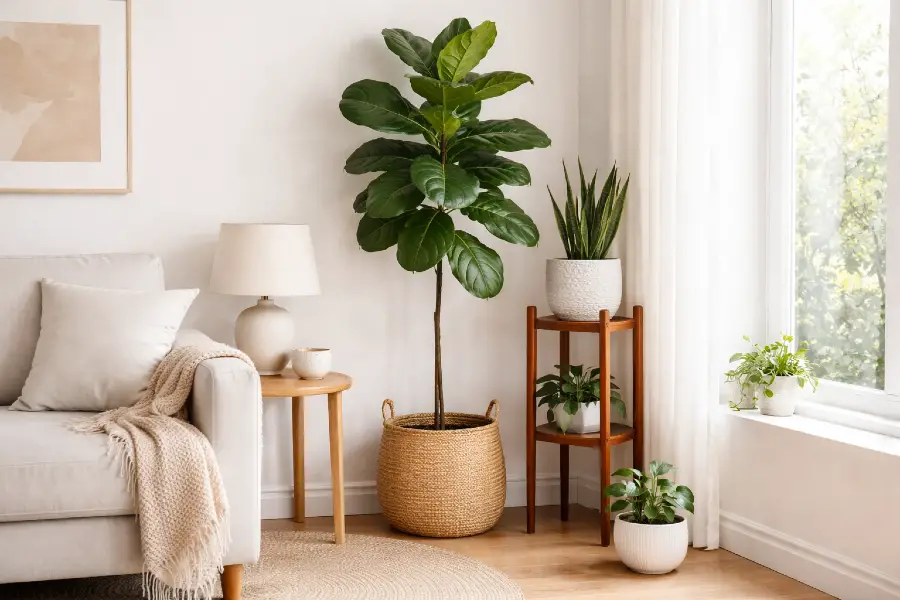
Corner plant decor ideas can turn an empty or overlooked corner into one of the most attractive spots in your home. Whether you have a spacious living room, a small apartment, or a cozy bedroom, decorating corners with plants adds greenery, height, and natural texture without requiring much additional furniture.
One of the easiest ways to make a room feel more complete is to use a houseplant where the furniture doesn’t quite fill the space. A tall floor plant can soften an empty corner, a decorative plant stand can bring greenery up to eye level, and a group of smaller plants can create a miniature indoor garden. Even a single well-placed plant can make a noticeable difference.
The trick is choosing an arrangement that fits the corner. A large Monstera or Rubber Plant can make a beautiful statement in a bright, spacious room, while a Snake Plant or Chinese Evergreen may be a better choice for a smaller corner with limited natural light. Plant size, leaf shape, lighting, and available floor space all play a part in creating an attractive display.
In this guide, you’ll discover practical corner plant decor ideas, ways to arrange plants at different heights, and simple styling techniques for living rooms, bedrooms, offices, and small spaces. You’ll also learn how to decorate darker corners while giving your houseplants the light and growing conditions they need to stay healthy.
Find Easy Indoor Houseplants On Amazon
🌿 What You’ll Learn
- How to decorate empty corners with indoor plants without making a room feel crowded.
- Which tall, medium, and compact houseplants work well in different corner spaces.
- How to use floor plants, decorative plant stands, and grouped arrangements to add height and visual interest.
- Simple corner plant decor ideas for living rooms, bedrooms, offices, and small apartments.
- How to decorate dim corners with suitable houseplants or supplemental plant lighting.
- How to combine different plant heights, leaf shapes, and containers for a balanced arrangement.
- Common corner decorating mistakes and how to avoid them.
- How to choose plant locations that provide enough light, room for growth, and safe access for watering and maintenance.
🌿 Quick Answer: How Do You Decorate a Corner With Plants?
The easiest way to decorate a corner with plants is to use one tall floor plant, a medium-sized plant on a decorative stand, or a small group of plants arranged at different heights. Tall plants such as Rubber Plants, Dracaenas, and Kentia Palms can fill empty vertical space, while compact Snake Plants, Chinese Evergreens, and Pothos work well in smaller arrangements.
For a simple corner display, start with one plant that fits the size of the space. If the corner is large enough, add a smaller plant on a stand or low table to create layers. Varying plant heights, leaf shapes, and container styles helps the arrangement look natural and balanced without becoming cluttered.
Always consider the available light before choosing your plants. Bright corners can accommodate a wider variety of houseplants, while dimmer corners are better suited to plants that tolerate lower light levels, such as Snake Plants and Chinese Evergreens. If a corner receives almost no natural light, supplemental grow lighting may be necessary to keep living plants healthy.
🪴 Corner Plant Decor Ideas at a Glance
These simple arrangements can help you choose a corner plant display that fits your room, decorating style, and available space.
| Corner Decor Idea | Best For | Plant Examples | Styling Tip |
|---|---|---|---|
| One Tall Floor Plant | Living rooms, bedrooms, empty corners | Rubber Plant, Kentia Palm, Dracaena | Choose a decorative floor pot that complements nearby furniture. |
| Plant on a Stand | Small apartments, narrow corners | Chinese Evergreen, Pothos, Peace Lily | Use a stand to raise the foliage above nearby furniture. |
| Grouped Plant Display | Larger corners, indoor garden displays | Dracaena, Philodendron, Pothos | Combine two or three plants with different heights and leaf shapes. |
| Low-Light Corner | Rooms with limited natural light | Snake Plant, Chinese Evergreen, ZZ Plant | Choose lower-light-tolerant plants and add grow lighting when needed. |
| Corner Beside Furniture | Sofas, desks, bookshelves, TV stands | Parlor Palm, Rubber Plant, Dracaena | Use foliage to soften furniture edges without blocking walkways. |
| Compact Corner Arrangement | Small bedrooms, home offices, tight spaces | Compact Snake Plant, Pothos, Peperomia | Use one compact plant or a small stand to preserve floor space. |
Corner decorating tip: Before arranging your plants, check how much natural light reaches the corner throughout the day. A location that looks bright to you may still be too dim for some houseplants, especially when it is several feet from a window. Choose plants that suit the conditions rather than selecting them by appearance alone.
🌿 Why Plants Work Well in Corners
Corners often feel empty because most furniture sits against walls, leaving corner spaces unused. Plants are perfect for corners because they add height and shape without making the room feel crowded.
A plant in a corner can also help balance the room visually. If one side of the room has shelves or furniture and the other side feels empty, a corner plant can make the room feel more even.
If you are planning plant placement for an entire room, you may also want to read Where to Put Plants in a Room.
🌳 Use Tall Plants in Corners
Tall plants are one of the best choices for corner plant decor because they fill vertical space and make the corner feel intentional instead of empty.
Tall plants work especially well in living rooms, bedrooms, and offices where corners often need height to balance furniture.
- 🌿 Tall plants fill empty vertical space
- They help balance furniture in a room
- They make corners look intentional
- They work well next to sofas and cabinets
🪴 Use Plant Stands in Corners
If you do not want a large floor plant, plant stands are a great way to decorate corners. A medium plant on a stand can add height without taking up too much floor space.
Plant stands also work well in small apartments where large plants may not fit.
🌿 Group Multiple Plants in a Corner
Another corner plant decor idea is grouping multiple plants together. This works well if you have several small or medium plants and want the corner to look fuller.
When grouping plants, try to use different heights so the plants do not all sit at the same level.
- Use one taller plant
- Add one medium plant on a stand
- Add one small plant near the floor
- Use different pot sizes
Grouping plants together can make a corner look like a small indoor garden area.
🏠 Corner Plants Next to Furniture
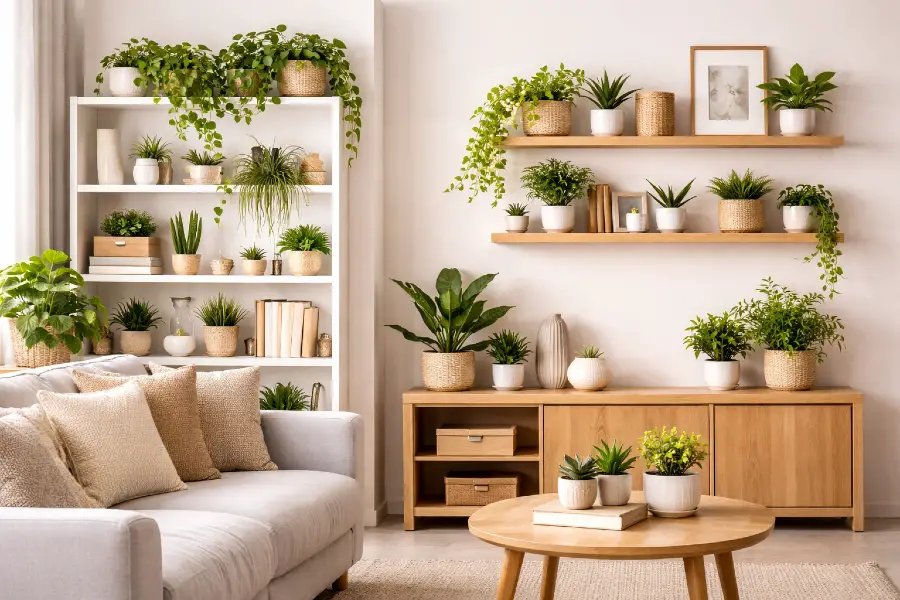
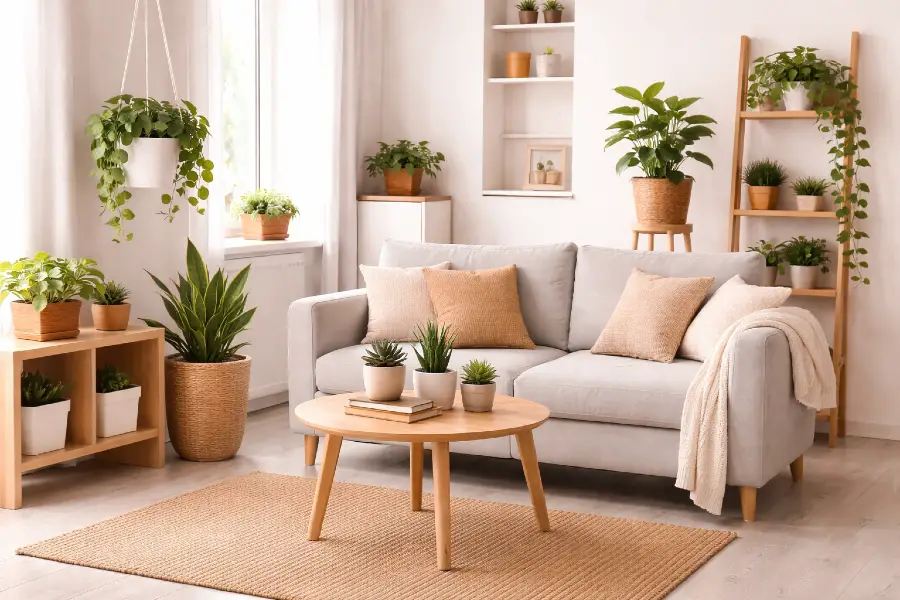
Corners next to furniture are some of the best places for indoor plants. Plants next to sofas, chairs, desks, and cabinets help soften furniture edges and make the room feel more balanced.
- Put a plant next to a sofa corner
- Put a plant beside a TV stand
- Put a plant near a desk
- Put a plant beside a bookshelf
🌙 Decorating Dark Corners With Plants
Some corners do not get much light, but you can still decorate dark corners with plants if you choose plants that tolerate low light.
You can also read Creative Ideas for Decorating Dim Corners and North Facing Spaces for more ideas.
If a corner is very dark, you may want to use a small plant light to help plants grow better.
📏 Corner Plants in Small Rooms
In small rooms, corners are often the best place for plants because they do not interfere with walking space. A corner plant can add greenery without making the room feel crowded.
Small rooms usually look best with one corner plant instead of many plants scattered around.
⚠️ Common Corner Plant Decorating Mistakes
There are a few common mistakes people make when decorating corners with plants.
- Using plants that are too small for the corner
- Putting plants where they get bumped
- Ignoring light conditions
- Using too many small plants instead of one larger plant
- Leaving corners completely empty
Corners usually look best with one larger plant or a small group of plants at different heights.
📋 Simple Corner Plant Decor Formula
If you are not sure how to decorate a corner with plants, try this simple formula:
- 🌳 One tall plant
- 🪴 One medium plant on a stand
- 🌱 One small plant near the floor
This usually makes the corner look full and balanced without looking cluttered.
🐾 Pet Safety: Decorating Corners With Plants Around Cats and Dogs
Corner plant displays can make a room feel more welcoming, but if you have cats or dogs, it’s important to consider both plant toxicity and the safety of your arrangement. Curious pets may chew leaves, dig in containers, or knock over plants while exploring their favorite corners.
Fortunately, you can create an attractive corner plant display using pet-friendly houseplants, sturdy containers, and thoughtful placement.
Choose Pet-Friendly Plants for Accessible Corners
If your pets can easily reach the corner, consider houseplants that are generally recognized as non-toxic to cats and dogs. Some attractive choices include:
- Parlor Palm: A graceful palm with soft, arching foliage that works well as a floor plant or on a stand.
- Spider Plant: A good choice for an elevated stand or shelf where its long leaves can cascade naturally.
- Boston Fern: Adds full, feathery foliage to a corner with suitable indirect light and humidity.
- Peperomia: Many commonly grown Peperomia species are non-toxic and work well in compact corner displays.
- Money Tree: A taller option for creating a focal point in a bright corner with indirect light.
Even non-toxic plants can cause stomach upset if pets eat enough foliage. It’s best to discourage chewing and keep fertilizers and other plant-care products away from animals.
Be Careful With Toxic Houseplants
Several popular plants used in corner decorating are toxic to cats and dogs if ingested. These include Pothos, Peace Lily, Philodendron, Snake Plant, ZZ Plant, Chinese Evergreen, and Dracaena.
If you have pets that chew plants, choose safer alternatives for accessible corners. Remember that cats can jump onto shelves and plant stands, so placing a toxic plant above floor level does not necessarily make it inaccessible.
Keep Plant Stands and Containers Secure
The arrangement itself is another important part of pet safety. Tall plants and elevated displays can tip over if a pet bumps into them, climbs on a stand, or pulls at hanging foliage.
- Choose stable plant stands: Use stands with wide, sturdy bases that can support the weight of the plant and container.
- Use appropriately sized pots: Avoid placing a large, top-heavy plant in a small or unstable container.
- Keep walkways clear: Position plants where pets and people can move around without brushing against them.
- Secure tall displays: Consider additional support for large plants or furniture that could tip if climbed.
- Clean up fallen leaves: Remove dropped foliage, spilled growing medium, and standing water from saucers.
Create a Corner That Works for Everyone
A beautiful corner plant arrangement should fit your room, provide suitable growing conditions, and be safe for the people and animals sharing your home. You don’t need a large collection to create an attractive display. One healthy, pet-friendly plant in a stable decorative container can be just as effective as a group of several plants.
Before choosing a new houseplant, check its botanical name and pet safety information using the ASPCA Toxic and Non-Toxic Plants Database.
Frequently Asked Questions About Corner Plant Decor
What are the best indoor plants for room corners?
Some of the best indoor plants for corners include Rubber Plants, Dracaenas, Kentia Palms, Snake Plants, Chinese Evergreens, and ZZ Plants. Tall plants work especially well in spacious corners because they fill vertical space, while compact plants are better suited to smaller rooms. Choose plants based on the available light, room size, and how much space their foliage needs as they grow.
Should you put plants in the corners of a room?
Yes, placing plants in room corners is an easy way to add greenery, soften furniture edges, and make an empty space feel more inviting. A tall floor plant can create an attractive focal point, while a smaller plant on a stand can add height without taking up much floor space. However, not every corner needs a plant. Leaving some areas open can help a small room feel spacious and balanced.
How do you decorate an empty corner with plants?
Start with one plant that fits the size of the corner. For a simple arrangement, use a tall floor plant in a decorative container. If you have more room, add a medium-sized plant on a stand and a smaller plant near the floor. Combining different heights, leaf shapes, and pot styles creates visual interest. Keep enough space around the plants for watering, cleaning, and healthy growth.
Can you put living plants in dark corners?
Yes, provided the corner receives enough usable light for plant growth. Snake Plants, ZZ Plants, and Chinese Evergreens tolerate lower light levels than many other houseplants. However, even these plants need some light to remain healthy. If a corner receives very little natural light or is far from a window, a suitable LED grow light can make the space more practical for living plants.
How many plants should you put in a corner?
One large plant or a group of two to three plants is usually enough for an attractive corner display. In a small room, a single upright plant may be the best choice. Larger corners can accommodate a taller floor plant, a medium plant on a stand, and a smaller plant near the floor. The goal is to create a balanced arrangement without overcrowding the space.
Are plant stands a good idea for small corners?
Plant stands are especially useful for decorating small corners because they raise plants above floor level and make better use of vertical space. A narrow stand with a Chinese Evergreen, Peperomia, or Pothos can create an attractive display without requiring a large floor plant. Choose a sturdy stand that fits the container securely and leaves enough room for the plant’s mature foliage.
How tall should a corner plant be?
The ideal height depends on the room and nearby furniture. A floor plant around 3 to 5 feet tall can work well beside a sofa or chair, while larger rooms may accommodate plants that reach 6 feet or more. Smaller corners may look better with a compact plant raised on a stand. Consider the plant’s mature height and width, along with ceiling clearance and nearby windows, before choosing a location.
What corner plants are safe for cats and dogs?
Parlor Palms, Spider Plants, Boston Ferns, and Money Trees are generally considered non-toxic to cats and dogs. These plants can make attractive corner displays when provided with suitable light and growing conditions. Popular alternatives such as Pothos, Snake Plants, ZZ Plants, and Peace Lilies are toxic if ingested. Check the ASPCA Toxic and Non-Toxic Plants Database before choosing plants for areas accessible to pets.
🌿 Final Thoughts: Make the Most of Your Corners With Plants
Corner plant decor is one of the simplest ways to bring more greenery into your home while making better use of available space. An empty corner can become an attractive focal point with a tall floor plant, a decorative plant stand, or a small collection of houseplants arranged at different heights.
What I like about decorating corners with plants is how much flexibility you have. A large Rubber Plant or Dracaena can add height beside a sofa, while a Chinese Evergreen or Snake Plant can bring greenery into a smaller space. You can also combine different leaf shapes, pot styles, and plant heights to create an arrangement that complements your furniture and personal decorating style.
Choose the Right Arrangement for Your Room
You don’t need a large collection of houseplants to create a beautiful corner display. Sometimes one healthy plant in an attractive container is all it takes. In larger rooms, grouping two or three plants can create a fuller arrangement that feels like a miniature indoor garden.
Think about the size of your corner, the height of nearby furniture, and how much floor space you want to preserve. Tall, upright plants work well in narrow spaces, while plants with broad or arching foliage can soften larger corners. Plant stands are another useful option when you want to add height without choosing a large floor plant.
Let Your Plants’ Growing Needs Guide Placement
One of the most important parts of decorating with living plants is making sure they receive enough light. A corner may look perfect for a particular plant, but if it is too far from a window, the plant may struggle over time.
Choose plants that match the light conditions in your room. Snake Plants, ZZ Plants, and Chinese Evergreens can tolerate lower light levels, while many larger tropical houseplants grow best with brighter indirect light. If you want greenery in a particularly dark corner, supplemental grow lighting can give you more decorating options.
Also leave enough room for plants to grow, make sure containers and stands are stable, and keep potentially toxic plants away from curious pets.
Start Simple and Build Your Own Style
If you’re unsure where to begin, start with one plant that fits the corner and looks good with the surrounding furniture. You can always add another plant, change the container, or introduce a stand later.
As your plants grow, your arrangements can change with them. A small plant that once sat on a stand may eventually become a floor plant, while a larger plant might need a new location as its foliage spreads.
The goal isn’t to fill every empty corner. It’s to create spaces that feel comfortable, welcoming, and connected to nature.
Whether you choose one tall statement plant or a small group of houseplants, the best corner plant decor combines attractive styling with the light, space, and care your plants need to thrive.
How to Decorate With Indoor Plants (Indoor Plant Styling and Decor Ideas)
If you want more indoor plant styling ideas, browse all articles here:
Plant Styling & Decor.
➡️ Next Post
Next: Decorating Small Spaces With Plants
References and Further Reading
- University of Minnesota Extension. Lighting for Indoor Plants and Starting Seeds. Guidance on choosing houseplants for different indoor light levels, including darker corners, and using supplemental grow lights.
- University of Illinois Extension. Brighten Up Dim Interiors With Low-Light Houseplants. Suggestions for choosing and growing houseplants in rooms with limited natural light.
- Penn State Extension. Low Light Houseplants. Explains how indoor plants respond to lower light conditions and discusses suitable plant choices.
- North Carolina State University Extension. Parlor Palm (Chamaedorea elegans). Botanical information, indoor growing conditions, mature size, and pet safety considerations for a popular corner houseplant.
Related Content
Visit my Amazon Influencer Page for videos and gardening products Grow Your Own Garden