
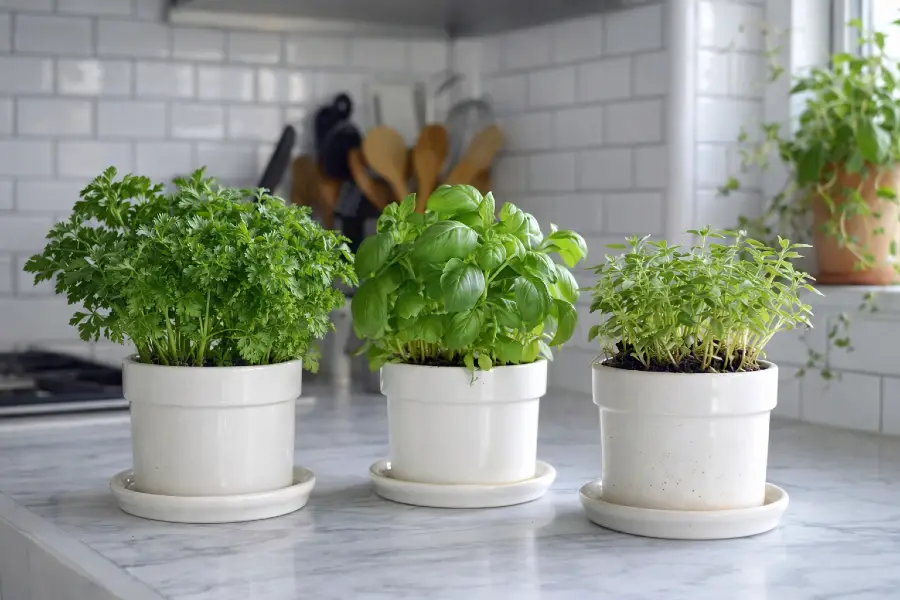
Imagine having fresh basil, parsley, chives, or thyme growing right where you prepare your meals. With a few simple countertop herb garden ideas, you can turn an ordinary kitchen counter into a convenient little growing space that adds greenery, fragrance, and fresh flavors to your home.
One of the things I like about countertop herb gardens is how easy they are to work into everyday kitchen routines. Your herbs are right where you need them for cooking, and you can keep an eye on their growth while preparing meals. Even a small kitchen can accommodate a few herb pots arranged on a tray, in a narrow planter box, or on a compact tiered stand.
You don’t need a large kitchen or a sunny windowsill to get started. With suitable LED grow lights, you can grow herbs on countertops that receive little natural light. The key is choosing an arrangement that fits your space while giving your herbs the light, water, and room they need to grow.
In this guide, you’ll discover practical countertop herb garden ideas, including attractive container arrangements, space-saving layouts, grow-light setups, and decorating tips to help you create a small kitchen herb garden that’s both useful and beautiful.
What You’ll Learn
- How to create a countertop herb garden in a small kitchen or apartment
- Creative ways to arrange herbs using planter boxes, trays, and tiered stands
- Which culinary herbs are good choices for indoor countertop growing
- How to use LED grow lights when your kitchen lacks sufficient natural light
- Where to position herb gardens for convenient harvesting and everyday care
- How to combine practical herb growing with attractive kitchen decorating ideas
Quick Answer: How Do You Set Up a Countertop Herb Garden?
The easiest way to create a countertop herb garden is to start with three or four culinary herbs in small pots arranged on a waterproof tray or in a narrow planter box. Basil, parsley, chives, and thyme are popular choices. Position your herbs near a bright window or provide suitable LED grow lights so they receive enough light for healthy growth.
For small kitchens, use the back edge of the counter, an unused corner, or a compact tiered stand to save workspace. Choose containers with drainage holes, protect your countertop from watering spills, and keep herbs within easy reach for harvesting. A simple arrangement with matching pots can be both practical and attractive.
Countertop Herb Garden Ideas at a Glance
The best countertop herb garden setup depends on your kitchen space, available light, and how many herbs you want to grow. Here’s a quick comparison of popular arrangements.
| Garden Setup | Best For | Main Advantage | Things to Consider |
|---|---|---|---|
| Planter Box | Long, narrow countertops | Keeps several herbs together in one attractive display | Group herbs with similar watering needs or use separate pots inside the box |
| Herb Pots on a Tray | Beginners and small kitchens | Easy to rearrange, water, and harvest individual herbs | Choose a waterproof tray to protect the countertop |
| Tiered Herb Stand | Small counters with limited horizontal space | Uses vertical space to display more herbs | Make sure each level receives enough light and the stand is stable |
| Grow-Light Herb Garden | Kitchens with limited natural light | Provides supplemental light for healthy indoor herb growth | Choose suitable lighting and keep electrical components away from water |
| Corner Herb Garden | Unused kitchen corners | Keeps herbs organized without occupying the main work area | Corner locations may need supplemental lighting |
My recommendation: If you’re starting your first countertop herb garden, a few individual pots on a waterproof tray offer the most flexibility. You can move plants around, adjust watering for each herb, and easily replace or expand your collection as you discover which herbs you use most often.
Why Countertops Are Great for Indoor Herb Gardens
Countertops are one of the best places for indoor herb gardens because herbs are easy to access while cooking. When herbs are visible and within reach, you are more likely to use them, water them, and take care of them regularly.
Countertop herb gardens are also easy to maintain because they are close to sinks for watering and trimming. Many people find that herbs grow better when they are part of daily kitchen routines instead of being placed in another room.
Countertop herb gardens work especially well in:
- Kitchens with bright windows
- Apartments with limited space
- Small homes
- Homes where shelves are limited
- Homes where herbs are used often for cooking
Using Planter Boxes for Countertop Herb Gardens
One of the most popular countertop herb garden ideas is using rectangular planter boxes that hold multiple herbs in one container. Planter boxes keep herbs organized and make the countertop look cleaner than having many separate pots spread across the counter.
Planter boxes are great for countertops because they fit neatly along the back of the counter or along a wall or backsplash area. This keeps the main counter space open for cooking while still allowing you to grow several herbs.
Planter boxes work well because they:
- Hold multiple herbs in one container
- Keep countertops organized
- Look neat and decorative
- Fit well along the back of counters
- Work on windowsills and counters
- Make watering easier
Wood planter boxes, ceramic planter boxes, and metal planter boxes are all popular choices for countertop herb gardens.
Using Trays for Countertop Herb Pots
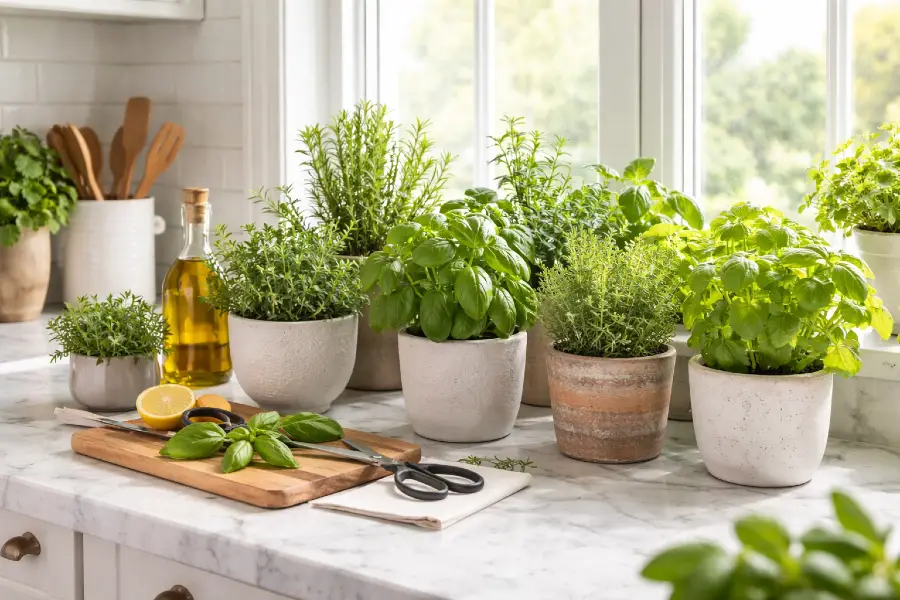
Another simple countertop herb garden idea is placing several small herb pots on a tray. A tray keeps everything organized and protects the counter from water and soil. This is one of the easiest ways to create a countertop herb garden without buying special containers.
Tray herb garden ideas include:
- Wood trays with herb pots
- Metal trays with small planters
- White trays with matching pots
- Stone trays for a natural look
- Small decorative trays for herbs
Using a tray makes a countertop herb garden look more organized and intentional instead of looking like random plant pots sitting on the counter.
Tiered Countertop Herb Garden Ideas
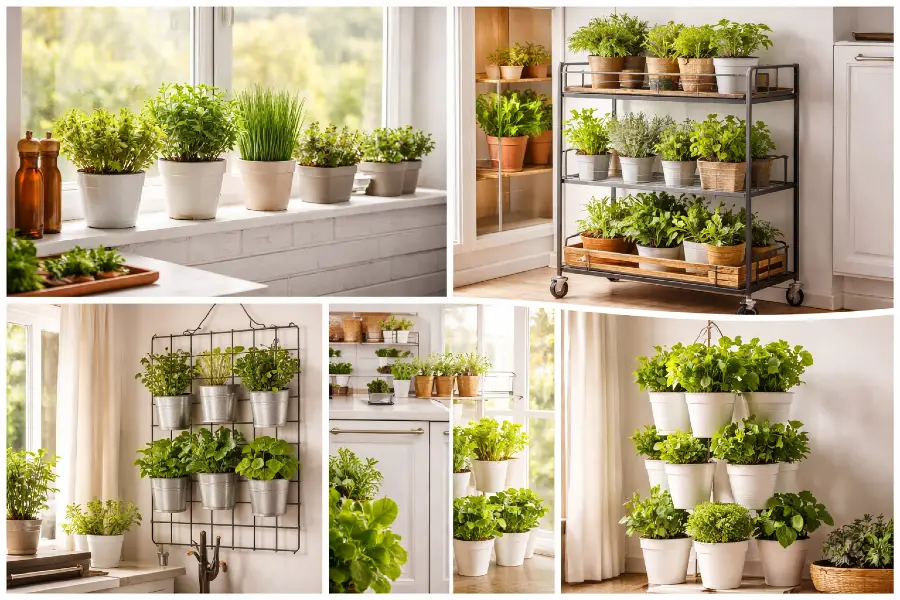
Tiered plant stands are great for countertop herb gardens because they allow you to grow more herbs without taking up much counter space. Tiered stands stack plants vertically and make the herb garden more decorative and visually interesting.
Tiered countertop herb gardens work well in small kitchens and apartments where space is limited. Instead of spreading herbs across the counter, you can grow several herbs in one small area.
Tiered herb garden stands are available in wood, metal, and plastic designs and can match many kitchen styles from modern to rustic.
Best Herbs for Countertop Herb Gardens
Most common cooking herbs grow well on countertops as long as they receive enough light. If your counter is near a window, many herbs will grow very well in this location.
Some of the best herbs for countertop herb gardens include:
- Basil
- Parsley
- Chives
- Thyme
- Oregano
- Mint
- Cilantro
- Rosemary
These herbs are commonly used in cooking and grow well in small containers, which makes them perfect for countertop herb gardens.
Countertop Herb Gardens With Grow Lights
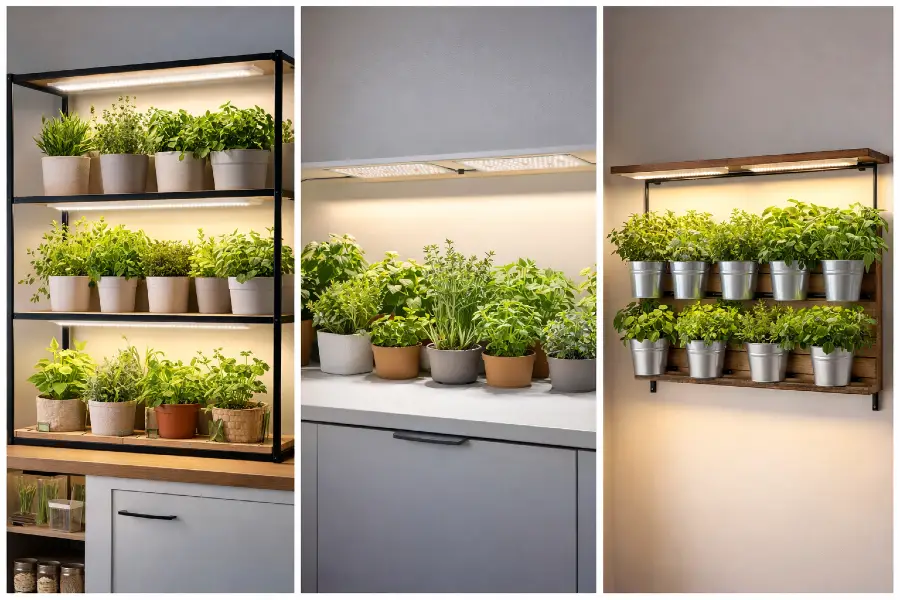
If your kitchen does not get enough natural sunlight, you can still grow herbs on the counter by using grow lights. Many indoor herb gardens are grown on countertops using small LED grow lights mounted under cabinets or placed above herb pots.
Grow lights make it possible to grow herbs on countertops even in kitchens without windows. This is very common in apartments and small homes where natural light is limited.
Countertop grow light herb garden ideas include:
- Grow light bars mounted under kitchen cabinets
- Small grow light stands above herb pots
- LED grow lights above planter boxes
- Indoor herb garden kits with built-in lights
- Small shelf units with lights on the counter
Under-cabinet grow lights are especially popular because they are hidden and do not take up extra space on the counter.
Small Kitchen Countertop Herb Garden Ideas
Even very small kitchens can usually fit a countertop herb garden. The key is to use corners, the back edge of counters, or narrow spaces near walls instead of placing herbs in the middle of work areas.
Small countertop herb garden ideas include:
- Corner countertop herb gardens
- Narrow planter boxes along the backsplash
- Small trays with herb pots
- Tiered countertop plant stands
- Herb pots placed along wall edges
- Rolling carts placed next to counters
Using the back edge of the counter is often the best place because it keeps herbs out of the way while still being easy to reach.
Organizing a Countertop Herb Garden
A countertop herb garden looks better and works better when it is organized instead of having random pots spread across the counter. Grouping herbs together makes the kitchen look cleaner and more decorative.
Ways to organize a countertop herb garden include:
- Grouping herbs in planter boxes
- Placing herb pots on trays
- Using matching pots
- Using tiered plant stands
- Keeping herbs along one section of the counter
Organizing herbs into one area makes the countertop look intentional and designed instead of cluttered.
Decorating With Countertop Herb Gardens
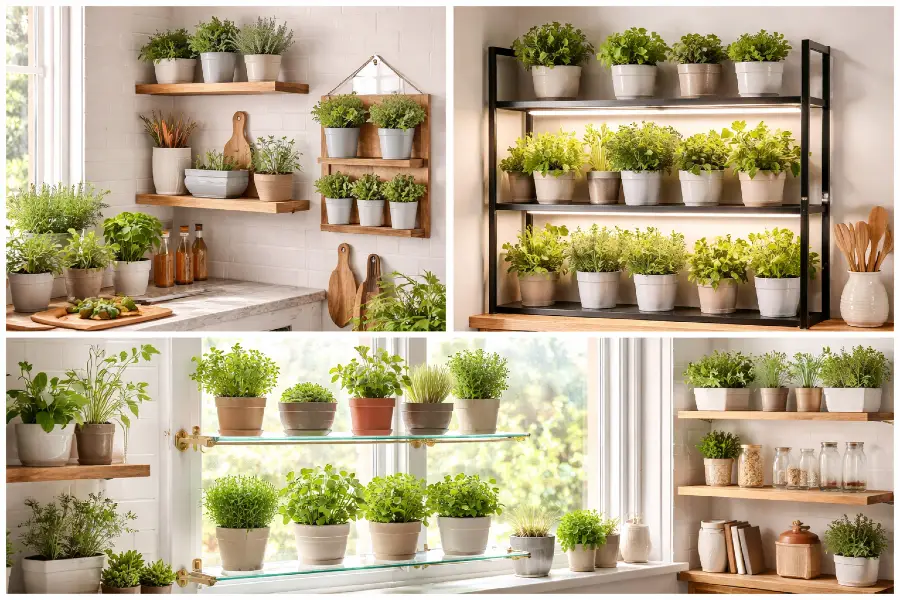
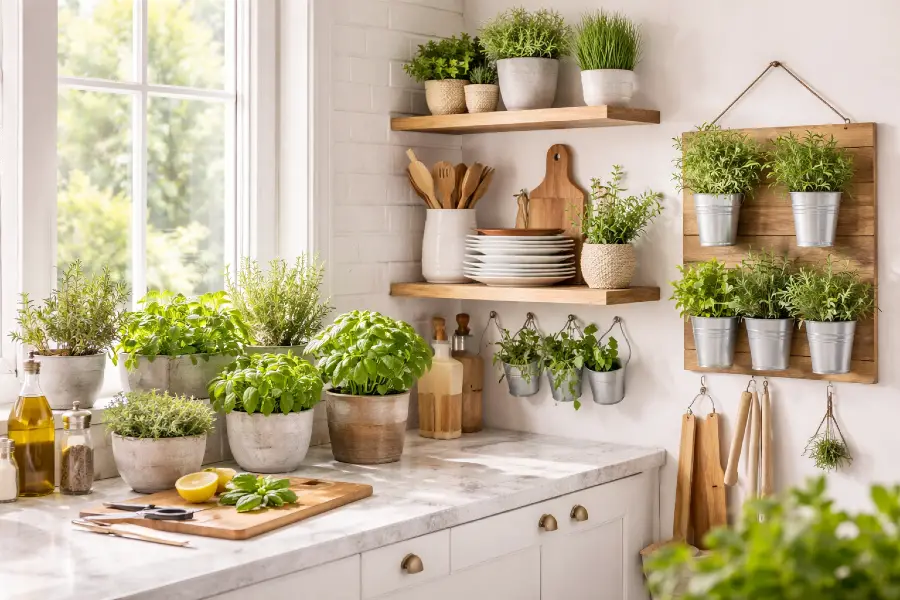
Countertop herb gardens can also be decorative. Matching pots, wooden planter boxes, and decorative trays can make herbs look like part of your kitchen design instead of just plants sitting on the counter.
Decorating ideas for countertop herb gardens include:
- Matching white herb pots
- Terracotta herb pots
- Wood planter boxes
- Mason jar herb planters
- Metal herb containers
- Mixing herbs with cutting boards and jars
- Placing herbs near cookbooks or kitchen décor
Herbs can make a kitchen feel more alive and welcoming while also being useful for cooking.
Best Counter Locations for Herb Gardens
Not every spot on a kitchen counter is a good place for herbs. The best countertop herb garden locations are areas that receive light and are easy to access for watering and harvesting.
The best countertop locations for herb gardens include:
- Near kitchen windows
- Along the backsplash area
- In corner counter spaces
- Under cabinets with grow lights
- Near the sink for easy watering
Avoid placing herbs directly next to stoves or heat vents because heat can dry out the plants quickly.
Kitchen Safety Tips for Countertop Herb Gardens
A countertop herb garden should be easy to maintain while keeping your kitchen clean and safe for everyday cooking. With a little planning, you can enjoy fresh herbs close to your food preparation area without creating problems with water, growing media, or electrical equipment.
Keep Herbs Away From Food Preparation Areas
Place your herb garden along the back of the counter, near a window, or in an unused corner rather than directly in your main food preparation area. This helps keep loose growing media, fallen leaves, and watering spills away from cutting boards and prepared food.
Wash freshly harvested herbs before using them in meals, and clean the countertop after repotting, pruning, or handling growing media.
Protect Countertops From Water Damage
Herb containers should have suitable drainage so excess water doesn’t remain around the roots. Place pots on waterproof trays or saucers to catch drainage and protect your countertop.
Empty standing water from trays when necessary, and wipe up spills promptly. This is particularly important around wooden countertops, seams, and areas where water could collect beneath decorative containers.
Use Grow Lights Safely
LED grow lights are useful for countertop herb gardens, especially in kitchens with limited natural light. Choose lights intended for indoor use and follow the manufacturer’s installation and operating instructions.
Keep electrical connections, plugs, and power strips away from sinks, watering areas, and places where spills could occur. Secure under-cabinet lights and their cords so they don’t interfere with cooking or everyday kitchen activities.
Choose Stable Containers and Safe Locations
Use stable pots, planter boxes, and tiered stands that won’t tip easily when you’re harvesting or watering. Keep taller containers away from counter edges, and make sure tiered stands can safely support the weight of watered pots.
Avoid placing herbs beside hot burners, ovens, or heating vents. Excessive heat can damage plants, dry out their growing medium, and make routine care more difficult.
My advice: Keep your countertop herb garden simple, organized, and easy to clean. A few healthy herbs in stable containers, with good lighting and proper drainage, can provide fresh ingredients while still leaving plenty of room for everyday kitchen activities.
🐾 Are Countertop Herb Gardens Safe for Cats and Dogs?
A countertop herb garden can be a wonderful addition to your kitchen, but it’s important to consider your pets when choosing which herbs to grow. Some familiar culinary herbs are generally considered non-toxic to cats and dogs, while others can cause health problems if eaten.
Pet-Friendly Herbs for Kitchen Counters
Several popular culinary herbs are generally considered non-toxic to cats and dogs, including:
- Basil: A popular kitchen herb that is listed as non-toxic to cats and dogs by the ASPCA.
- Thyme: Common culinary thyme is generally considered non-toxic to cats and dogs.
- Rosemary: This aromatic cooking herb is listed as non-toxic to cats and dogs.
- Cilantro: Also known as coriander, this herb is generally considered non-toxic to cats and dogs.
Even non-toxic herbs can cause digestive upset if pets eat large amounts. It’s best to discourage cats and dogs from chewing on your countertop plants.
Herbs That Need Extra Caution Around Pets
Not every herb that’s safe for people to eat is safe for pets. Two common examples deserve particular attention:
- Chives: Chives belong to the Allium family and are toxic to cats and dogs. Eating them can damage red blood cells and cause serious illness.
- Parsley: The ASPCA lists parsley as toxic to cats and dogs, although its listing notes that large amounts are generally required to cause the photosensitivity associated with parsley poisoning.
Mint and oregano also deserve caution. The ASPCA lists garden mint and oregano as toxic to cats and dogs, with possible digestive symptoms after ingestion. Check the exact species rather than assuming that all plants sold as mint have the same safety classification.
Keep Countertop Herbs Out of Reach
Kitchen counters may seem like safe locations for herbs, but cats can often jump onto them. Curious pets may also pull on leaves or knock over small pots.
- Choose stable containers that are difficult to tip over.
- Keep toxic herbs in locations pets cannot access.
- Avoid leaving fallen leaves or harvested herb clippings where pets can eat them.
- Store fertilizers and other plant-care products safely away from animals.
- Consider growing pet-friendly herbs if your cats or dogs regularly investigate houseplants.
Pet safety tip: A plant being edible for people doesn’t necessarily mean it’s safe for cats or dogs. If your pet eats a potentially toxic herb, contact your veterinarian or an animal poison control service for guidance.
For additional information, consult the ASPCA Toxic and Non-Toxic Plants Database before choosing herbs for a pet-friendly kitchen.
Countertop Herb Garden Ideas FAQs
Can you grow herbs successfully on a kitchen countertop?
Yes, you can grow fresh culinary herbs on a kitchen countertop as long as they receive enough light and proper care. A bright window or suitable LED grow light can provide the lighting herbs need. Countertop gardens also make watering, trimming, and harvesting convenient because your plants are close to where you prepare meals.
What are the best herbs for a countertop herb garden?
Basil, parsley, chives, thyme, oregano, mint, cilantro, and rosemary are popular choices for indoor kitchen gardens. Basil and parsley are especially useful if you cook frequently, while thyme and rosemary are attractive herbs with fragrant foliage. Choose herbs you regularly use in cooking, and remember that their lighting and watering requirements may differ.
Do countertop herb gardens need direct sunlight?
Most culinary herbs grow best with plenty of bright light. A sunny kitchen window can work well, particularly when it provides several hours of direct sunlight. If your countertop receives limited natural light, a suitable LED grow light can provide the additional light needed for healthy growth. Ordinary kitchen lighting is generally not strong enough to support productive herb growth on its own.
How many herb plants can fit on a small kitchen counter?
Even a small countertop can accommodate two or three herb pots arranged on a waterproof tray or in a narrow planter box. Larger counters may hold several more plants, depending on their mature size and available growing space. Tiered stands can also help you grow additional herbs without using much horizontal counter space. Leave enough room for harvesting and everyday kitchen activities.
What containers work best for countertop herb gardens?
Individual pots with drainage holes are among the easiest choices because you can water and care for each herb separately. Rectangular planter boxes are attractive for grouping herbs with similar growing requirements, while waterproof trays help protect countertops from spills. Decorative containers without drainage holes are best used as outer planters that hold smaller pots with proper drainage.
How often should you water herbs growing on a countertop?
Watering frequency depends on the herb, container size, growing medium, temperature, and lighting. Basil and parsley generally appreciate more consistent moisture than rosemary and thyme, which prefer a growing medium that dries somewhat between waterings. Check the medium regularly rather than watering every plant on a fixed schedule. Avoid leaving pots standing in excess drainage water.
Where is the best place to put a countertop herb garden?
A bright location near a kitchen window is often ideal. You can also use the back edge of a countertop, an unused corner, or an area beneath cabinets equipped with suitable grow lights. Keep herb gardens away from hot burners, heating vents, and busy food preparation areas. Choose a location where the plants are easy to reach for watering and harvesting.
Are countertop herb gardens safe for cats and dogs?
Some culinary herbs, including basil, rosemary, thyme, and cilantro, are generally considered non-toxic to cats and dogs. Others require caution. Chives are toxic to pets, and the ASPCA also lists parsley, oregano, and garden mint as toxic. Since cats can jump onto kitchen counters, keep potentially harmful herbs out of reach. You can check individual plants using the ASPCA Toxic and Non-Toxic Plants Database.
Final Thoughts: Creating Your Countertop Herb Garden
A countertop herb garden is one of the most enjoyable ways to combine indoor gardening with everyday kitchen activities. Having fresh basil, parsley, thyme, or other favorite herbs within reach makes cooking more convenient while adding natural greenery to your home.
You don’t need a large kitchen or an elaborate growing system to get started. A few herb pots arranged on a waterproof tray can make an attractive display. Narrow planter boxes, tiered stands, and compact grow-light gardens offer even more possibilities when countertop space is limited.
I especially like how easily countertop herb gardens can become part of your kitchen decor. Terracotta pots can create a warm, traditional appearance, while matching white containers work well in modern kitchens. Wooden planter boxes and decorative trays can also help your herbs look like an intentional part of the room rather than a collection of separate pots.
Of course, healthy herbs are what make these displays worthwhile. Give your plants enough light, choose containers with good drainage, and adjust watering to each herb’s needs. Keep your garden away from excessive heat and leave enough room to harvest leaves without disturbing the other plants.
Key Takeaways for Growing Herbs on Kitchen Counters
- Start with herbs you use: Choose two or three favorite culinary herbs before expanding your collection.
- Provide plenty of light: Use a bright kitchen window or suitable LED grow lights to support healthy growth.
- Save counter space: Arrange herbs on trays, in narrow planter boxes, or on compact tiered stands.
- Choose practical containers: Use pots with drainage holes and waterproof trays to protect your countertops.
- Water according to each plant: Check the growing medium and remember that different herbs have different moisture requirements.
- Keep herbs convenient: Place your garden where you can easily water, trim, and harvest your plants.
- Make it part of your decor: Matching pots, terracotta containers, and wooden planters can create a welcoming kitchen display.
My advice is to start small and see which herbs grow best in your kitchen. You can always add more varieties, experiment with different containers, or install grow lights as your indoor herb garden develops. The goal is to create a growing space that looks good, fits your routine, and provides fresh herbs whenever you need them.
Decorating a Kitchen With Countertop Herb Gardens
A countertop herb garden can also be used as part of your kitchen decorating style. Herbs add greenery, color, and life to kitchens and can make a kitchen feel warmer and more welcoming.
Some decorating ideas include placing herbs near cutting boards, next to cookbooks, near windows, or along the backsplash. Matching pots or containers can make the herb garden look more organized and decorative.
Many people use terracotta pots for a classic kitchen look, while others prefer white ceramic pots for a modern kitchen style. Wood planter boxes are also very popular for countertop herb gardens.
For more growing advice and inspiration, explore our Indoor Herb Gardens: Complete Guide to Growing Fresh Herbs.
Indoor Herb Gardens Category
For more indoor herb garden ideas, layouts, and setup guides, visit the Indoor Herb Gardens category here:
Indoor Herb Gardens.
➡️ Next Post
Next: Indoor Herb Garden Wall Ideas
📚 References and Further Reading
For more information about growing culinary herbs indoors, choosing suitable containers, providing adequate lighting, and keeping pets safe, explore these university Extension and nonprofit resources:
- Iowa State University Extension – Growing Herbs Indoors. Covers the best culinary herbs for indoor growing, lighting requirements, containers, watering, fertilizing, and supplemental grow lights. Read the guide.
- University of Maryland Extension – Growing Herbs in Containers and Indoors. Provides practical advice about growing herbs in small spaces, choosing containers with drainage, selecting growing media, and caring for indoor herbs. Read the guide.
- Penn State Extension – Growing Herbs Indoors. Explains herb selection, sunlight requirements, indoor temperatures, watering, containers, and maintaining productive culinary herbs throughout the year. Read the guide.
- University of Minnesota Extension – Lighting for Indoor Plants and Starting Seeds. Explains natural and supplemental lighting, LED grow lights, and providing suitable light for plants grown indoors. Read the guide.
- ASPCA – Toxic and Non-Toxic Plants Database. Helps identify plants that may be toxic or non-toxic to cats, dogs, and horses, including common culinary herbs. Check plant toxicity.
Related Content
Visit my Amazon Influencer Page for videos and gardening products Grow Your Own Garden