
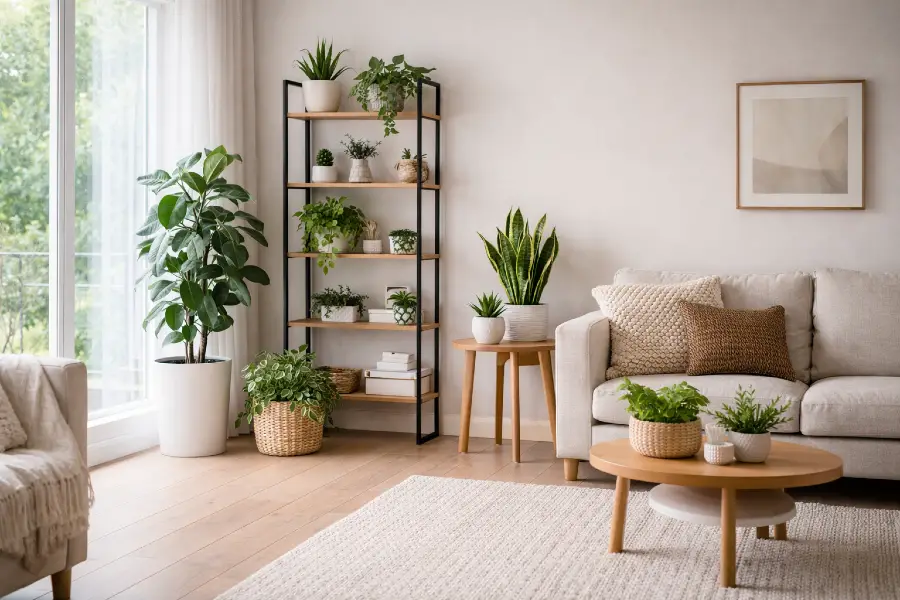
How many plants should be in a room? It’s a question worth asking when you’re decorating with houseplants. A few well-placed plants can bring life to an empty corner, soften the look of furniture, and make your home feel more welcoming.
The right number depends on your room size, available light, furniture arrangement, and personal decorating style. A small bedroom might look wonderful with just two or three plants, while a spacious living room could easily accommodate ten or more.
I’ve found that the number of plants matters less than how you arrange them. Mixing plant sizes, using different heights, and leaving enough open space can make even a modest collection look like a thoughtful part of your home decor.
In this guide, we’ll look at practical plant numbers for different room sizes, where to place your plants, and how to create a balanced arrangement without making your space feel crowded.
If you’re just getting started, you may also enjoy my guide to How to Decorate With Indoor Plants, which covers more ways to bring greenery into your home.
What You’ll Learn
- How many indoor plants work well in small, medium, and large rooms.
- Why room size, lighting, and furniture layout matter more than a fixed plant count.
- How to arrange plants around a room for a natural, balanced appearance.
- How to combine floor plants, tabletop plants, and hanging plants at different heights.
- How to enjoy a larger plant collection without making your room feel cluttered.
- Simple decorating ideas for apartments, bedrooms, offices, and living rooms.
Quick Answer: How Many Plants Should Be in a Room?
Most rooms look balanced with about three to seven indoor plants, but the ideal number depends on the room’s size, available light, furniture, and decorating style.
For small rooms, start with two to four plants. Medium-sized bedrooms and offices often look good with three to five, while larger living rooms may comfortably accommodate five to ten plants or more.
These numbers are starting points, not decorating rules. One large statement plant can have more visual impact than several small plants. Likewise, a collection of smaller plants can work beautifully when arranged on shelves, stands, and tables.
My recommendation: Start with a few plants in different locations and at different heights. Add more as you find spaces with suitable light, keeping walkways clear and allowing each plant enough room to grow.
How Many Plants Should Be in a Room: At a Glance
| Room Size | Suggested Plants | Arrangement Ideas |
|---|---|---|
| Small bedroom or apartment room | 2–4 plants | One floor plant, one shelf plant, and one small tabletop plant. |
| Medium bedroom or home office | 3–5 plants | Combine a floor plant with desk, shelf, and window-area plants. |
| Large living room | 5–10 plants | Use statement plants near furniture and smaller plants on shelves or stands. |
| Open-plan living space | 5–10+ plants | Arrange plants in groups to define seating areas and soften large open spaces. |
Grower’s Tip: Don’t force a plant into a dark corner just because the room looks better with greenery there. Choose locations where your plants can thrive, or use an appropriate grow light when natural light is limited. A healthy plant will always make a better decorating feature than one struggling to survive.
How Many Plants Should Be in a Room
A good general rule is that most rooms look best with between three and seven plants depending on the size of the room. Small rooms may only need two or three plants, while larger living rooms may look great with five to ten plants.
Instead of placing all plants in one area, it usually looks better to spread plants around the room at different heights and locations.
Small Rooms and Apartments
Small rooms usually look best with two to four plants. Too many plants in a small space can make the room feel crowded.
In small rooms, try using one floor plant, one shelf plant, and one small table plant. This spreads greenery around the room without taking up too much space.
If you are decorating a small space, you may also like Decorating Small Spaces With Plants (Small Space Plant Decor Ideas).
Medium Size Rooms
Medium size rooms like bedrooms and offices usually look best with three to five plants. This allows you to place plants in different parts of the room without overcrowding the space.
For example, you might have one floor plant, one plant on a shelf, one plant on a desk or table, and one plant near a window.
Large Rooms and Living Rooms
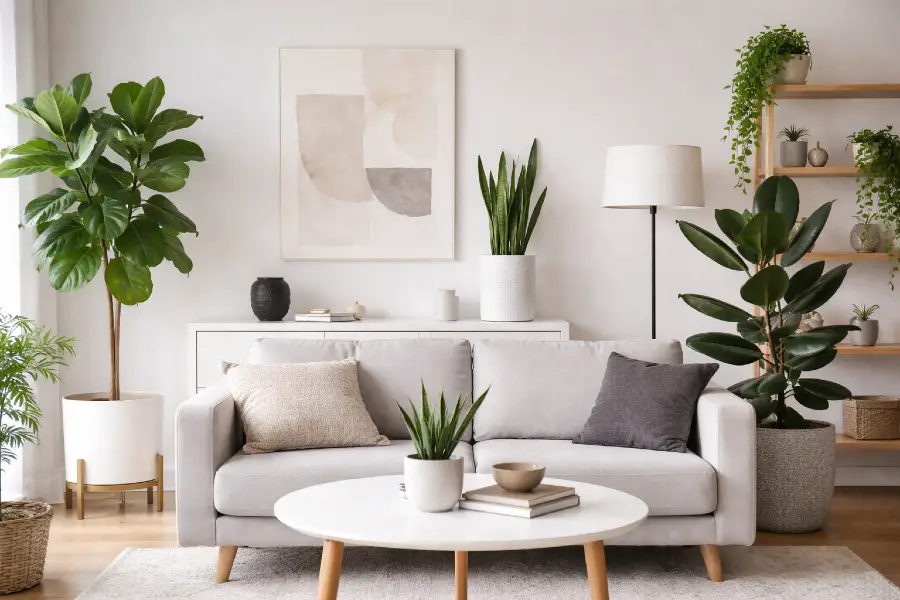
Large rooms like living rooms usually look best with five to ten plants depending on the size of the room and the amount of natural light available.
Large rooms often have empty corners, wall space, and areas beside furniture that are perfect for indoor plants.
Large plants work especially well in living rooms because they help fill empty spaces and make rooms feel more comfortable and natural.
You can see large plant ideas here: Statement Plants for Living Rooms (Best Large Indoor Plants for Living Room Decor).
Spread Plants Around the Room
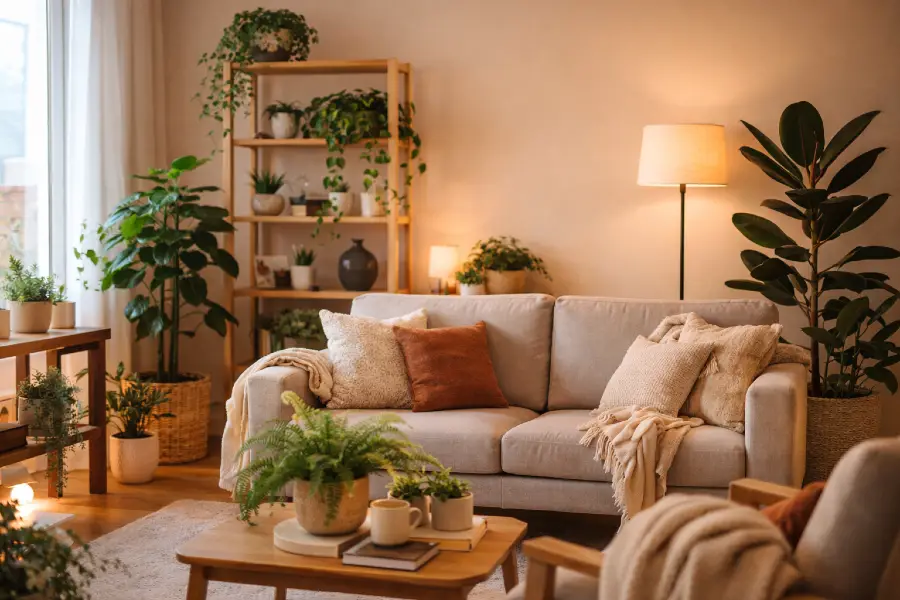
Instead of putting all plants in one corner, try spreading plants around the room. Place plants near windows, beside furniture, on shelves, and on tables.
This makes plants look like part of the room design instead of a single plant area.
If you’re not sure where plants should go, read Where to Put Plants in a Room (Indoor Plant Placement Ideas).
Use Different Plant Sizes
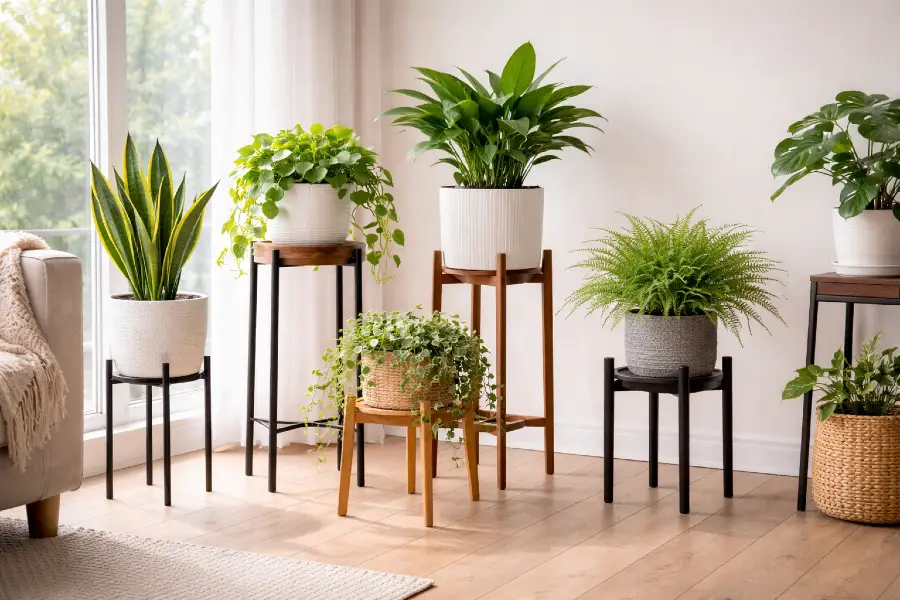
Rooms look best when plants are different sizes. Try combining large floor plants, medium plants on stands, and small plants on shelves or tables.
Using different plant sizes helps create layers and makes the room look more natural and balanced.
You can learn more about this here: Mixing Plant Sizes in Home Decor (Indoor Plant Styling With Different Plant Sizes).
Avoid Too Many Plants in One Area
Putting too many plants in one area can make a room look cluttered. It usually looks better to spread plants around the room and leave some open space.
Indoor plants should make a room feel comfortable and natural, not crowded.
Balance Plants With Furniture
Plants often look best when placed near furniture like sofas, chairs, desks, shelves, and cabinets. This helps plants look like part of the room layout.
Try placing a plant beside a sofa, a plant on a shelf, a plant near a window, and a plant in a corner.
Frequently Asked Questions About How Many Plants Should Be in a Room
How many plants should I have in my living room?
Most living rooms look balanced with about five to ten indoor plants, depending on the room’s size, furniture, and available light. A smaller living room may only need three or four plants, especially if you choose larger varieties. Start with one statement plant and add smaller plants where they fit naturally into your decorating style.
Can you have too many plants in a room?
Yes, especially when plants crowd furniture, block walkways, or make everyday activities difficult. However, a room with many plants can still look beautiful when they are arranged thoughtfully. Use shelves, plant stands, and different heights to create an organized display while leaving enough open space.
How many plants should be in a small room?
Two to four plants are a good starting point for a small room. Try one floor plant, one tabletop plant, and a smaller plant on a shelf. If floor space is limited, hanging plants and wall-mounted shelves can add greenery without making the room feel crowded.
Where should plants be placed in a room?
Place plants where they receive suitable light and complement your furniture arrangement. Windows, shelves, tables, and open corners are common choices. Larger plants can soften the appearance of furniture, while smaller plants work well on desks and shelves. Always consider the plant’s growing requirements before choosing a location.
Is it better to group indoor plants together or spread them around?
Both approaches can work. Grouping plants creates an attractive focal point, especially when you combine different heights and leaf shapes. Spreading plants around a room helps distribute greenery and connect different decorating areas. You can also combine the two methods by creating a small plant grouping near a window and placing individual plants elsewhere.
Do large plants count differently when decorating a room?
Yes. One large Monstera, Rubber Plant, or Bird of Paradise can have as much visual impact as several smaller houseplants. Large plants are especially useful for filling empty corners or balancing furniture. When deciding how many plants to use, consider their mature size and visual impact rather than simply counting pots.
Should every room in my home have indoor plants?
Not necessarily. Some rooms have excellent growing conditions, while others receive very little natural light. Focus on rooms where plants can grow well and where you will enjoy seeing them. For darker spaces, you can consider suitable supplemental lighting rather than placing a living plant where it cannot thrive.
Final Thoughts: Finding the Right Number of Plants for Your Room
So, how many plants should be in a room? For most homes, three to seven indoor plants provide a good starting point, but there’s no single number that works for every space.
A small bedroom might look wonderful with just two or three plants, while a spacious living room could accommodate ten or more. What matters most is how your plants fit with the furniture, available light, and overall appearance of the room.
I’ve always felt that plants look their best when they become a natural part of the room rather than something added just to fill an empty space. One healthy statement plant can transform a corner, while several smaller plants can bring life to shelves, tables, and windowsills.
A Few Simple Decorating Tips
- Start with a few plants: Add more as you discover locations that work well.
- Mix plant sizes: Combine large floor plants with medium and smaller varieties to create visual interest.
- Use different heights: Plant stands, shelves, and hanging planters help create layers.
- Leave some open space: Give your furniture, walkways, and plants enough room.
- Consider lighting first: Choose plants that can thrive in the locations where you want to display them.
- Let your collection grow naturally: Adjust your arrangements as your plants become larger.
Remember, you don’t need dozens of houseplants to create a beautiful indoor space. A few healthy plants, arranged with a little thought, can make your home feel more comfortable, welcoming, and connected to nature.
Whether you’re decorating a small apartment, a bedroom, or a large living room, choose the number of plants that works for your space and your lifestyle.
Happy growing, and don’t forget to stay green!
Explore More: Indoor Plant Styling & Placement
Ready to create a beautiful indoor plant arrangement? These guides will help you choose the right locations, combine different plant sizes, and make the most of your available space.
- How to Decorate With Indoor Plants — Start with practical ideas for bringing greenery into your home.
- Layering Plants in a Room — Learn how to arrange plants at different heights for a balanced appearance.
- Mixing Plant Sizes in Home Decor — Combine large, medium, and small plants to create visual interest.
- Where to Put Plants in a Room — Find practical locations that work with your furniture and lighting.
- How to Arrange Plants in a Living Room — Explore room layouts and placement ideas for larger spaces.
- Decorating Small Spaces With Plants — Make apartments and compact rooms feel greener without overcrowding them.
Looking for more inspiration? Browse all our Plant Styling & Decor articles for additional ideas.
➡️ Next Post
Next: Layering Plants in a Room
References and Further Reading
For more information about choosing suitable locations for houseplants and keeping them healthy indoors, these university Extension resources offer helpful guidance.
- University of Minnesota Extension: Growing Indoor Plants — Guidance on lighting, watering, temperature, and other factors that influence where houseplants grow best.
- Iowa State University Extension and Outreach: How to Care for Houseplants — Practical information about choosing appropriate indoor growing conditions and maintaining healthy plants.
- Clemson Cooperative Extension: Indoor Plants: Cleaning, Fertilizing, Containers & Light Requirements — Helpful advice on light requirements, containers, and general indoor plant maintenance.
Related Content
Visit my Amazon Influencer Page for videos and gardening products Grow Your Own Garden