
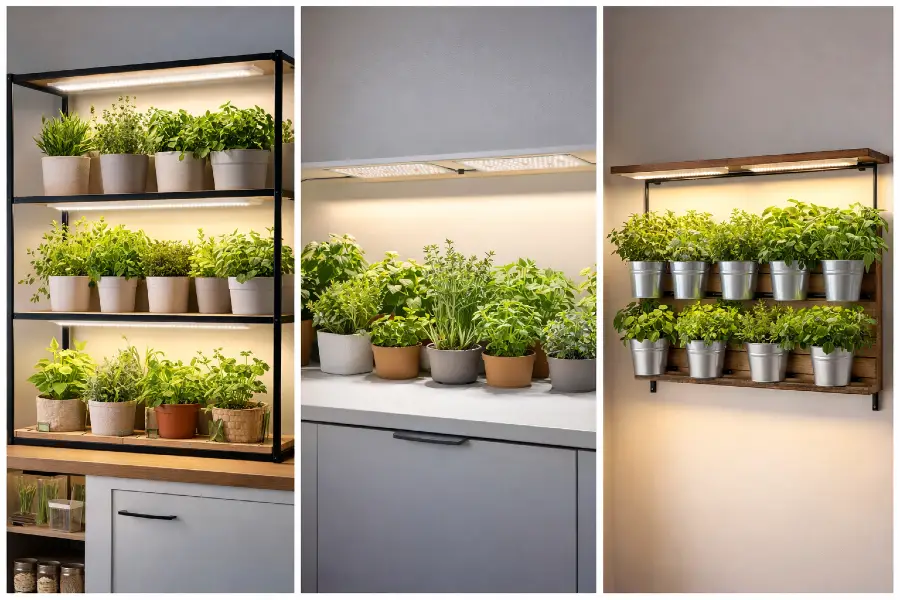
An indoor herb garden with grow lights makes it easy to enjoy fresh herbs throughout the year, even when your home doesn’t have a sunny windowsill. With the right LED lighting, you can grow basil, parsley, chives, mint, and other culinary herbs on a kitchen counter, bookshelf, or small plant stand.
One of the best things about using grow lights is the freedom to create an herb garden that fits your home. You can install lights beneath shelves, arrange a few herb pots under a countertop fixture, or build a vertical display that adds greenery without taking up valuable floor space. These setups can be both productive and attractive.
In this guide, you’ll discover practical indoor herb garden ideas using grow lights, from simple countertop arrangements to multi-level shelves and wall-mounted planters. We’ll explore ways to make the most of limited space while giving your herbs the light they need for healthy growth and regular harvesting.
What You’ll Learn
- How to create an indoor herb garden using LED grow lights
- Ways to grow fresh herbs on shelves, countertops, and walls
- Space-saving ideas for apartments, kitchens, and rooms without windows
- How to combine grow lights with attractive planters and home décor
- Which lighting arrangements work best for different growing spaces
- Simple tips for keeping your indoor herb garden productive throughout the year
You can find live herb plants, seeds, and growing kits on Amazon
Quick Answer: How Do You Grow an Indoor Herb Garden With Grow Lights?
An indoor herb garden with grow lights allows you to grow fresh culinary herbs on shelves, countertops, walls, and other small spaces without relying on natural sunlight. Start with a few containers of basil, parsley, chives, mint, or oregano, and position a suitable LED grow light above the plants.
Most indoor herbs do well with approximately 12–16 hours of artificial light daily, depending on the intensity of the fixture. Use a timer to maintain a consistent lighting schedule, and position the lights according to the manufacturer’s recommendations so the plants receive enough light without excessive heat or stress.
For small spaces, consider LED light bars beneath shelves, countertop grow light stands, or vertical wall-mounted displays. Choose containers with drainage holes, provide an appropriate growing medium, and harvest regularly. With adequate lighting and proper care, you can enjoy fresh herbs indoors throughout the year.
Indoor Herb Gardens With Grow Lights: At a Glance
| Growing Factor | Recommendation |
|---|---|
| Best Herbs | Basil, parsley, chives, mint, oregano, and thyme |
| Best Grow Lights | Full-spectrum LED grow lights, including light bars, panels, and adjustable countertop fixtures |
| Daily Lighting | Approximately 12–16 hours per day, adjusted for the light intensity and herbs being grown |
| Light Distance | Follow the fixture manufacturer’s recommended hanging height and adjust based on plant response |
| Best Locations | Kitchen counters, shelves, wall planters, rolling carts, home offices, and other suitable indoor spaces |
| Space-Saving Setups | Tiered shelving, under-cabinet LED bars, compact countertop gardens, and vertical herb displays |
| Containers | Small pots with drainage holes and saucers, sized to accommodate each herb’s roots |
| Watering | Check the growing medium regularly and water according to each herb’s moisture needs |
| Helpful Accessories | Automatic light timers, adjustable fixtures, plant trays, and shelves with good airflow |
| Year-Round Growing | Possible with adequate lighting, suitable temperatures, nutrients, and regular harvesting |
Shelf Indoor Herb Gardens With Grow Lights
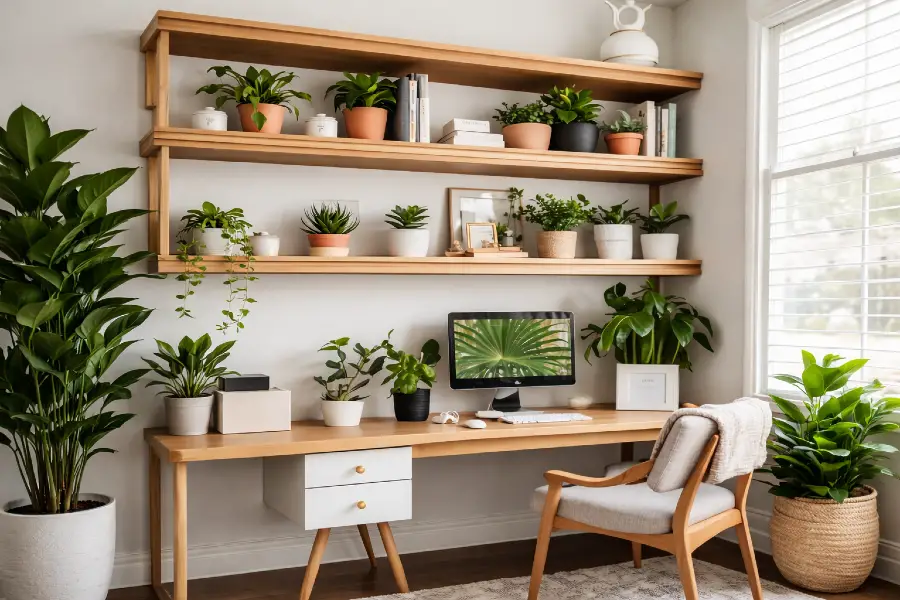
One of the most popular indoor herb garden setups with grow lights is using shelves with LED lights mounted under each shelf. This allows you to grow multiple herbs on a shelving unit without needing a window.
Shelf grow light herb gardens work well in:
- Kitchens
- Basements
- Home offices
- Apartments
- Pantries
Many indoor gardeners build small herb growing shelves using inexpensive LED grow light strips attached under each shelf.
Countertop Herb Gardens With Grow Lights
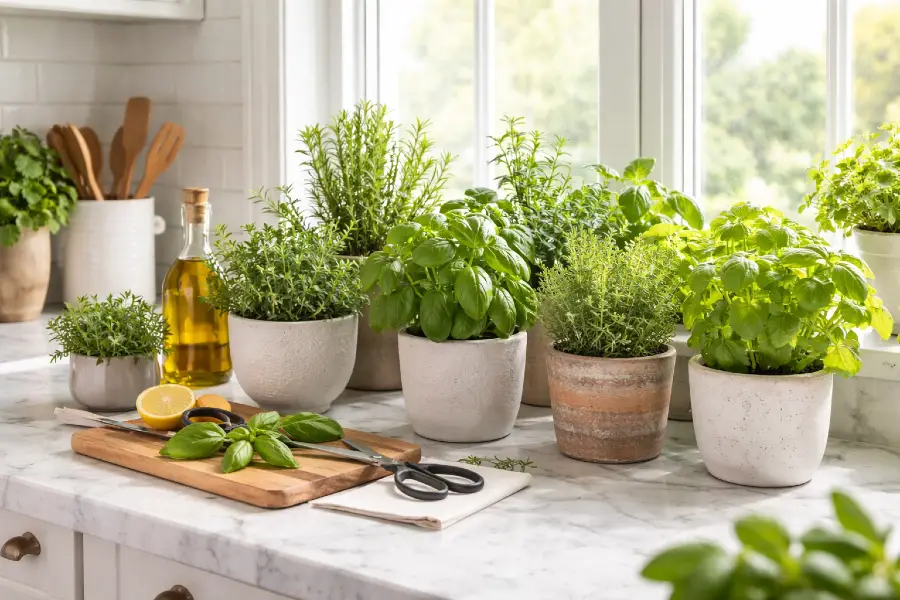
Countertop herb gardens with grow lights are another easy way to grow herbs indoors. A small grow light placed above a group of herb pots can provide enough light for several herbs to grow well.
Countertop grow light herb garden ideas include:
- Small grow light above herb pots
- Grow light bars mounted under cabinets
- Tabletop grow light stands
- Small indoor herb garden kits with lights
Countertop herb gardens are very popular in kitchens where natural light is limited.
Wall Indoor Herb Gardens With Grow Lights
Wall herb gardens can also be combined with grow lights to create vertical indoor herb gardens. A small grow light mounted above a wall planter can provide enough light for herbs to grow vertically on a wall.
Wall grow light herb garden ideas include:
- Wall planters with grow lights above
- Vertical herb garden panels with lights
- Wall shelves with grow lights
- Hanging herb planters with lights
Wall herb gardens with grow lights are perfect for small spaces and apartments.
Small Space Indoor Herb Gardens With Grow Lights
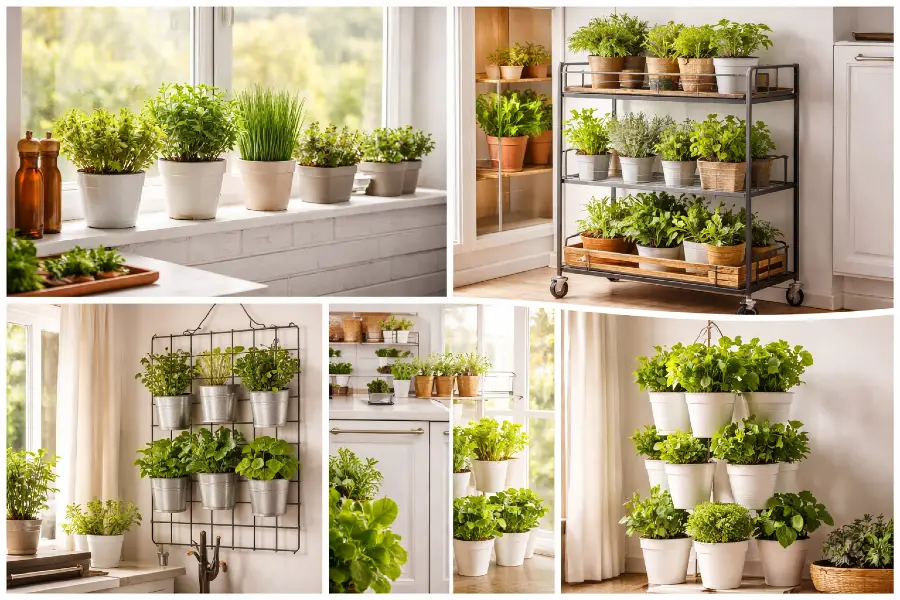
Grow lights make indoor herb gardening much easier in small spaces because you are not limited by window placement. Herbs can be grown on shelves, small tables, rolling carts, and wall planters with grow lights.
Small space grow light herb garden ideas include:
- Tiered shelves with grow lights
- Rolling carts with herb pots and lights
- Wall planters with lights
- Small tabletop herb gardens with lights
- Corner plant stands with grow lights
Best Locations for Grow Light Herb Gardens
One of the biggest advantages of grow lights is that you can place your indoor herb garden almost anywhere. You are no longer limited to windows.
Good locations for indoor herb gardens with grow lights include:
- Kitchens without windows
- Basements
- Home offices
- Pantries
- Dining rooms
- Apartments with limited sunlight
Decorating With Grow Light Herb Gardens
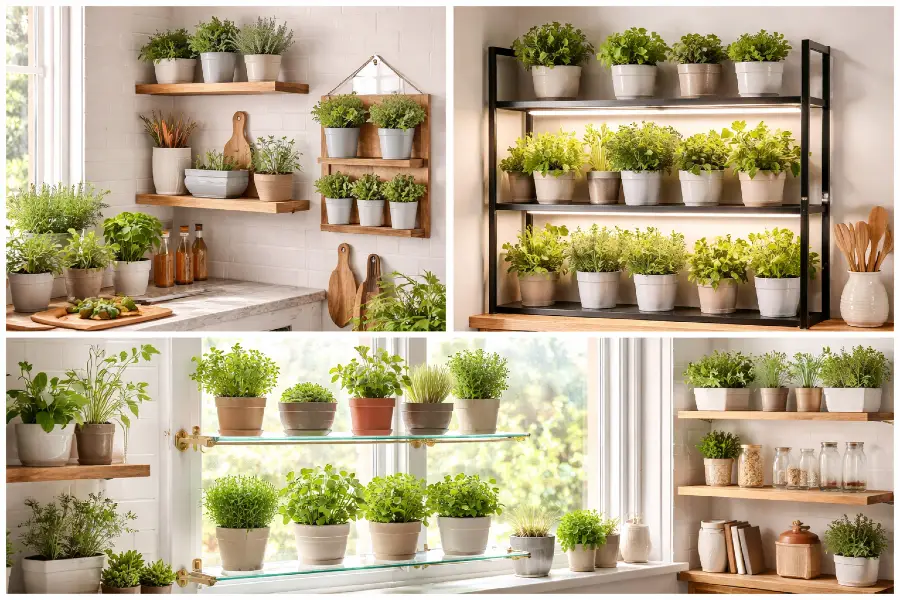
Grow light herb gardens don’t have to look industrial or unattractive. Many modern grow lights are small and stylish and can blend into home décor easily.
Decorating ideas include:
- Wood shelves with grow lights
- White shelves with herb pots
- Metal shelves with lights
- Wall herb gardens with hidden lights
- Under-cabinet grow lights in kitchens
Indoor herb gardens with grow lights can become part of your home décor while still being functional.
Are Indoor Herb Gardens Safe for Cats and Dogs?
An indoor herb garden with grow lights can bring fresh flavors and greenery into your home, but it’s important to consider your pets when choosing which herbs to grow. Some culinary herbs are safe for cats and dogs, while others can cause health problems if eaten.
According to the ASPCA, basil, thyme, rosemary, and common garden sage are considered non-toxic to cats and dogs. These can be good choices for pet-conscious households, although eating large amounts of any plant material may still cause digestive upset.
Other herbs require more caution. Chives and other members of the onion family are toxic to cats and dogs. Parsley is also listed as toxic by the ASPCA, particularly when consumed in large quantities. Mint species vary, so it’s important to check the specific plant rather than assuming all mint varieties are safe.
One advantage of growing herbs under LED lights is that you can create a dedicated growing area. Shelves, wall-mounted planters, and enclosed growing stations can help keep your herbs away from curious pets. Remember that cats can often reach elevated shelves, so choose a location your pets genuinely cannot access.
Before adding new herbs to your indoor garden, check their botanical names in the ASPCA Toxic and Non-Toxic Plants Database. If you suspect your pet has eaten a toxic plant, contact your veterinarian or an animal poison control service promptly.
Frequently Asked Questions About Indoor Herb Gardens With Grow Lights
Can herbs grow indoors using only grow lights?
Yes. Many culinary herbs grow very well indoors using LED grow lights without any natural sunlight. The key is providing enough light intensity and daily exposure for healthy growth. Basil, parsley, chives, mint, and oregano are all good choices for indoor herb gardens grown under artificial lighting.
How many hours a day should grow lights be on for herbs?
Most indoor herbs do well with approximately 12–16 hours of artificial light each day, depending on the brightness of the grow light and the herbs you’re growing. A timer makes it easy to maintain a consistent schedule. Give your plants a regular period of darkness rather than leaving the lights on 24 hours a day.
How far should grow lights be from indoor herbs?
The ideal distance depends on the type, wattage, and intensity of your grow light. Small LED light bars may need to be positioned relatively close to the foliage, while more powerful fixtures often require greater distances. Follow the manufacturer’s recommendations and watch your plants for signs of insufficient or excessive light.
What are the easiest herbs to grow under LED lights?
Basil, chives, parsley, mint, oregano, and thyme are popular choices. Basil grows quickly with adequate warmth and bright lighting, while chives and parsley are useful for beginners. Mint grows vigorously and is best kept in its own container. Choose herbs you regularly use in the kitchen so you can enjoy frequent harvests.
Can you grow an indoor herb garden in a room without windows?
Yes. A windowless kitchen, basement, pantry, or home office can support an indoor herb garden when you provide suitable grow lighting. Choose a location with comfortable temperatures, good airflow, and convenient access for watering and harvesting. LED grow lights allow you to create a productive growing area without depending on window placement.
Are shelf grow lights better than countertop grow lights?
Both can work well. Shelf grow lights are useful when you want to grow several herbs on multiple levels without using much floor space. Countertop grow lights are convenient for keeping a few frequently used herbs close to your cooking area. The best choice depends on your available space, the number of plants, and the lighting coverage you need.
Do herbs grown under grow lights need special soil?
No. Herbs grown under LED lights can use the same suitable growing media as other container-grown herbs. A well-draining potting mix works well, while coco coir and perlite with appropriate nutrients is another option. Use containers with drainage holes and adjust watering to the needs of each herb. Hydroponic systems use nutrient solutions instead of traditional potting soil.
Can you harvest herbs year-round under grow lights?
Yes. With adequate lighting, nutrients, suitable temperatures, and regular care, many culinary herbs can produce fresh growth throughout the year. Harvest established plants regularly without removing too much foliage at once. Some herbs may eventually need replacing, but indoor grow lights make it possible to maintain a productive herb garden through every season.
Final Thoughts: Fresh Herbs Indoors With Grow Lights
An indoor herb garden with grow lights gives you the freedom to grow fresh culinary herbs without depending on a sunny windowsill. Whether you live in a small apartment, have a kitchen with limited natural light, or simply want to make better use of your available space, LED grow lights open up plenty of possibilities.
You can keep things simple with a few herb pots beneath a countertop light or create a larger display using shelves, wall planters, or a rolling cart. These arrangements can provide fresh herbs for cooking while adding attractive greenery to your home.
The most important part of any setup is providing enough light for healthy growth. Choose a suitable LED fixture, use a timer for consistent lighting, and give your herbs the water, nutrients, and growing space they need. Once your plants become established, regular harvesting can encourage fresh growth and keep your garden productive.
One of the nicest things about growing herbs indoors is having fresh ingredients close at hand. A few basil leaves for pasta, chives for a baked potato, or mint for a refreshing drink can make a small indoor garden surprisingly rewarding.
Start with a few favorite herbs and a lighting arrangement that fits your home. As you become comfortable with your setup, you can add more plants or experiment with different growing methods. With the right care, your indoor herb garden can provide fresh flavors and a welcoming touch of greenery throughout the year.
Indoor Herb Gardens: Complete Guide to Growing Fresh Herbs
Grow Light Herb Garden Tips
- Place grow lights close to herbs
- Use shelves to grow multiple herbs
- Grow lights allow herbs to grow anywhere indoors
- Use timers for grow lights
- Combine grow lights with shelves or wall planters
- Use LED grow lights for efficiency
Indoor Herb Gardens Category
For more indoor herb garden ideas and setup guides, visit the Indoor Herb Gardens category here:
Indoor Herb Gardens.
➡️ Next Post
Next: Countertop Herb Garden Ideas
References
- University of Minnesota Extension. Lighting for Indoor Plants and Starting Seeds. Guidance on LED grow lights, light intensity, fixture placement, and daily lighting duration.
- University of Maryland Extension. Growing Herbs in Containers and Indoors. Recommendations for indoor herb gardens, container drainage, growing media, supplemental lighting, and watering.
- Penn State Extension. Growing Herbs Indoors. Practical information on selecting culinary herbs, indoor growing conditions, and artificial lighting.
- ASPCA Animal Poison Control. Toxic and Non-Toxic Plants Database. Reference for checking which herbs and other plants may be harmful to cats and dogs.
Related Content
Visit my Amazon Influencer Page for videos and gardening products Grow Your Own Garden