
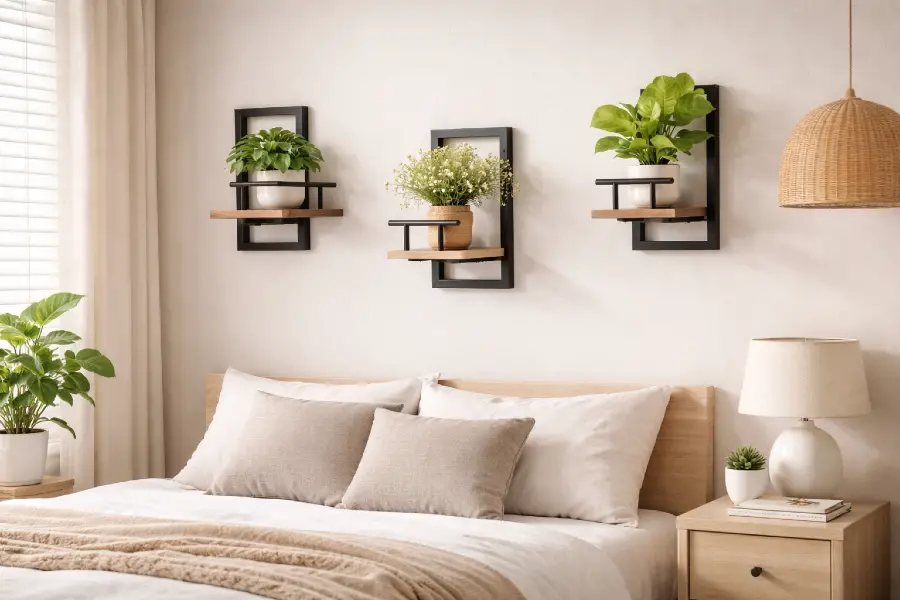
Your bedroom should feel like a comfortable place to relax, and adding a few indoor plants can make the space feel warmer, softer, and more inviting. Plant shelves are one of my favorite ways to bring greenery into a room while making good use of available wall space.
Whether you have a small apartment bedroom or a larger room with plenty of natural light, the right shelf arrangement can turn an empty wall, unused corner, or space above a dresser into an attractive plant display. You can combine compact houseplants, trailing vines, and a few decorative accents to create a look that fits your bedroom.
The best plant shelf ideas for bedrooms balance decorating with the growing needs of your plants. Shelf placement, natural light, pot size, and available space all matter. A beautiful arrangement works even better when your plants have room to grow and are easy to care for.
In this guide, you’ll discover where to place bedroom plant shelves, which houseplants work best, how to arrange shelves at different heights, and simple ways to create a calm, uncluttered display that complements your bedroom decor.
🪴 Find a Wide Variety of Plant Shelves on Amazon
🌿 What You’ll Learn
- Where to place plant shelves in a bedroom for attractive displays and suitable lighting
- Which indoor plants work best on bedroom shelves, including compact and trailing varieties
- How high and deep bedroom plant shelves should be
- Simple bedroom plant shelf layouts for small and large spaces
- How to combine plants, pots, and decorative accents without overcrowding shelves
- How to mount shelves securely and protect furniture from watering spills
- How to choose plant shelf arrangements that are practical, attractive, and easy to maintain
Quick Answer
The best plant shelf ideas for bedrooms use wall space without making the room feel crowded. Good locations include above a dresser, beside a nightstand, near a window, or in an empty corner. Choose the shelf location based on both the room layout and the light your plants need. Keep displays simple with a few compact or trailing plants, leave room for growth, and make sure shelves are securely mounted.
Bedroom Plant Shelves at a Glance
| Shelf Location | Best Use | Plant Ideas | What to Consider |
|---|---|---|---|
| Above a Dresser | Creating a bedroom focal point | Compact upright and trailing plants | Leave enough open space so the display doesn’t overpower the dresser |
| Beside a Nightstand | Small bedrooms and simple displays | One compact or trailing plant | Keep leaves and trailing stems out of the way when getting in and out of bed |
| Above a Nightstand | Using vertical wall space | One or two lightweight plants | Use secure mounting and avoid heavy pots in areas close to the bed |
| Near a Window | Plants that need brighter natural light | Pothos, spider plants, peperomia, or other plants suited to the exposure | Check the actual light throughout the day and protect sensitive plants from harsh direct sun |
| Corner Shelves | Using otherwise empty space | Compact upright or trailing plants | Bedroom corners can be much darker than areas closer to a window |
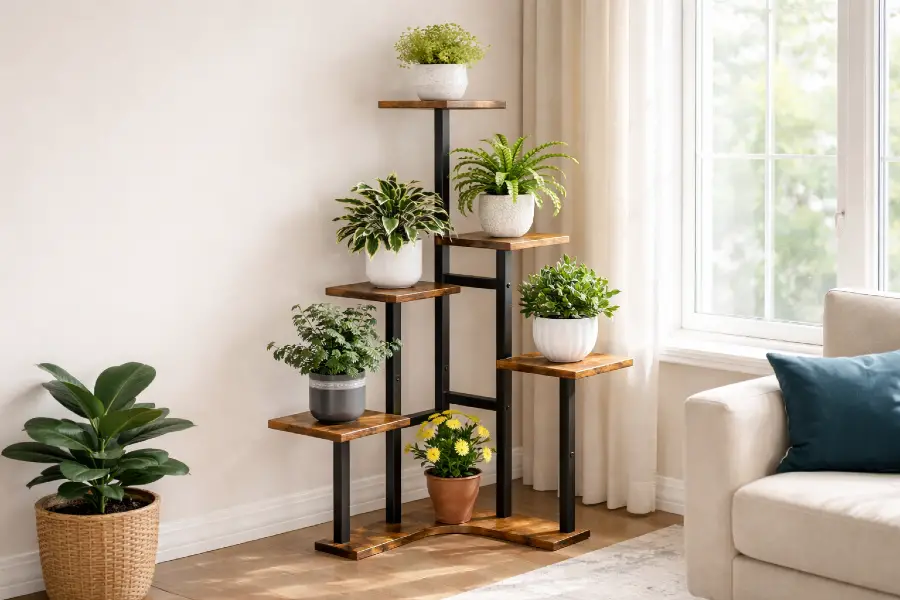
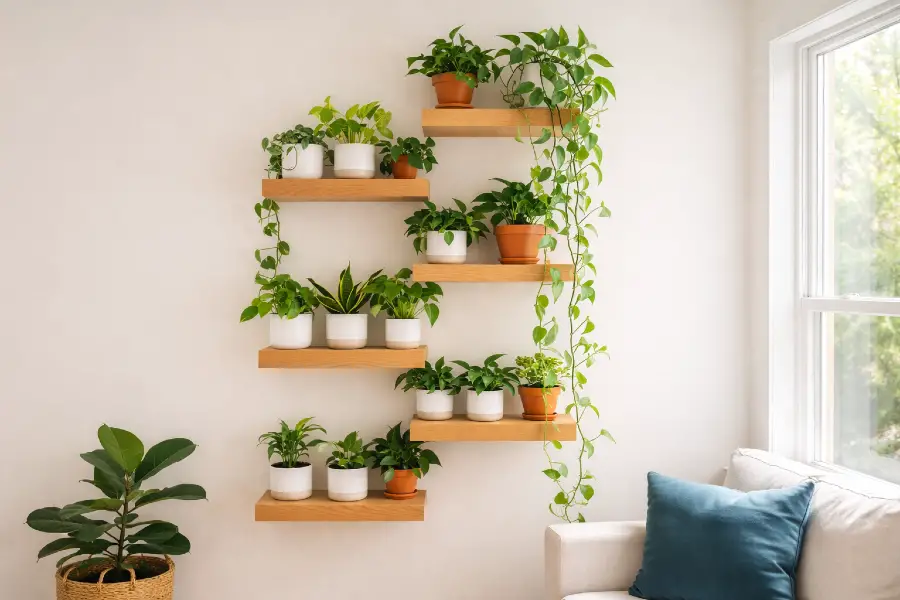
| Staggered Shelves | Creating a larger feature wall | A mix of upright, compact, and trailing plants | Allow enough vertical and horizontal space for plants to grow |
| Above a Bench or Chair | Decorating unused wall space | Small plants mixed with a few decor pieces | Keep pots and trailing growth clear of the seating area |
Quick Tip: Pick the shelf location before buying plants for it. Once you know how much light reaches that spot, you can choose plants that are much more likely to grow well there.
🛏️ Why Plant Shelves Work Well in Bedrooms
Bedrooms usually don’t have as much floor space as living rooms, so plant shelves are a great way to add plants without making the room feel crowded. Wall shelves let you decorate with plants while keeping nightstands, dressers, and floors clear.
- 🌿 Saves floor space
- 🛏️ Makes bedrooms feel more relaxing
- 🏠 Adds decoration without clutter
- 🌱 Good for small plants
- 💡 Works in small bedrooms and apartments
Plant shelves also help spread plants around the room instead of keeping them all in one area, which makes the room feel more balanced.
📍 Where to Put Plant Shelves in a Bedroom
Above a Nightstand
One of the most popular places for plant shelves is above a nightstand. A small shelf with one or two plants can make a nightstand area look more finished and decorated.
Above a Dresser
Shelves above a dresser work well for multiple small plants and trailing plants.
Near a Window
Shelves near windows are best for plants that need more light.
Corner Shelves
Corner shelves are perfect for bedrooms because they use space that is often empty.
- 🛏️ Above nightstands
- 🪞 Above dressers
- 🪟 Near windows
- 📐 Bedroom corners
- 🛋️ Above benches or chairs
How High and Deep Should Bedroom Plant Shelves Be?
Bedroom plant shelves need enough depth to hold pots securely and enough vertical space for plants to grow. Decorative shelves that work well for picture frames can sometimes be too narrow for plant pots, so measure your containers before choosing or installing the shelf.
Choose a Shelf Deep Enough for the Pots
For most small bedroom plants, a shelf about 8 to 10 inches deep gives you useful space for common small pots. If you plan to use larger containers, a 10- to 12-inch-deep shelf gives you more room and makes it easier to keep the entire pot securely on the shelf.
Don’t choose shelf depth based only on the plant’s current nursery pot. Decorative cachepots, saucers, and self-watering containers can be wider than the original pot.
Leave Room Above the Plants
If you are stacking two or more shelves, leave enough vertical space for the mature size and growth habit of the plants you want to use. For small plants, 12 to 18 inches between shelves may be enough. Taller upright plants may need 18 to 24 inches or more.
Trailing plants need less headroom above the pot because much of their growth hangs downward. That makes pothos, heartleaf philodendron, and similar trailing plants especially useful on higher shelves.
Keep Frequently Watered Plants Within Reach
A very high plant shelf may look attractive, but it can become inconvenient if you need a step stool every time you check the soil or water a plant. Keep plants that need frequent attention at a comfortable height and reserve harder-to-reach shelves for plants that require less frequent care.
Quick Tip: Before mounting a shelf, place your largest pot, saucer, or cachepot on a table and measure its width. Choose a shelf deep enough that the container sits completely and securely on the surface rather than hanging over the edge.
🌿 Best Plants for Bedroom Shelves
Most bedrooms have medium or low light, so plants that do well in indirect light usually work best for bedroom shelves.
- 🌿 Pothos
- 🌿 Philodendron
- 🌱 Snake plant
- 🌿 ZZ plant
- 🌱 Spider plant
- 🌿 Peace lily
- 🌱 Small ferns
- 🌿 Peperomia
Trailing plants are especially popular for bedroom shelves because they soften the room and make shelves look more natural and relaxed.
If you are building multiple shelves, you may also want to read our guide on How to Style a Plant Shelf for shelf spacing and layout ideas.
🪴 Bedroom Plant Shelf Layout Ideas
There are many ways to arrange plant shelves in a bedroom depending on the size of the room and where the shelves are placed. The goal is usually to make the room feel calm and balanced rather than crowded.
Single Shelf Above a Nightstand
A single floating shelf above a nightstand is simple and works well in small bedrooms. One trailing plant and one small plant is usually enough for this type of shelf.
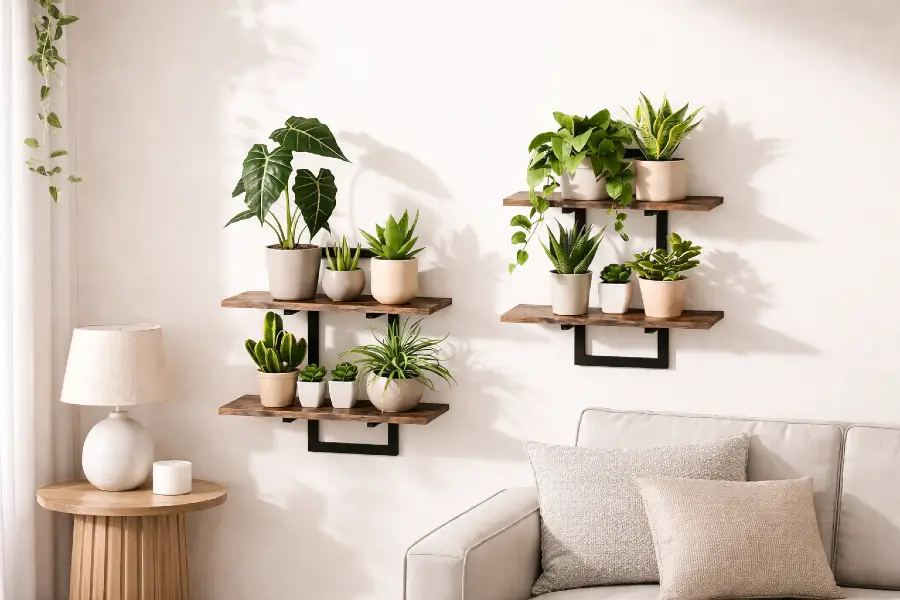
Two Shelves Above a Dresser
Two shelves stacked above a dresser give more space for plants and decor items while still looking clean and organized.
Corner Shelf Plant Display
Corner shelves are perfect for bedrooms because they use empty space without making the room feel crowded.
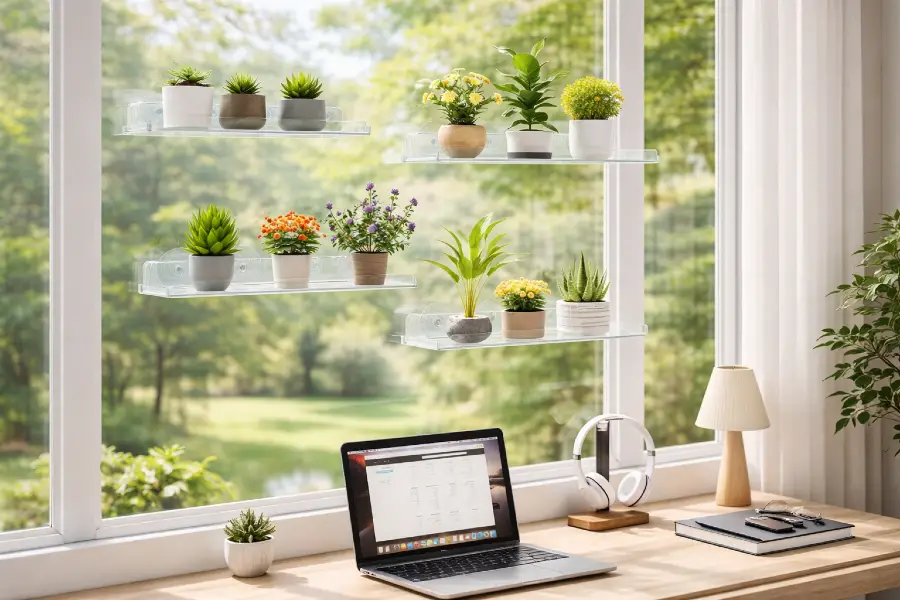
Window Plant Shelves
Shelves near a window work best for plants that need more light, and they also create a nice plant display with natural light.
- 🛏️ Single shelf above nightstand
- 🪞 Two shelves above dresser
- 📐 Corner plant shelves
- 🪟 Window shelves
- 🌿 Staggered shelf layout
Which Bedroom Plant Shelf Layout Is Right for You?
The best bedroom plant shelf layout depends on how much wall space you have, where the natural light comes from, and how many plants you want to display. You don’t need a large shelf arrangement to make an impact. In a small bedroom, one well-placed shelf may work better than covering an entire wall.
| If You Want… | Try This Layout | Why It Works |
|---|---|---|
| A simple display in a small bedroom | Single floating shelf | One shelf adds greenery without taking over a small wall or using valuable floor space. |
| A focal point above a dresser | Two stacked shelves | The dresser anchors the display and gives you room for a mix of compact, upright, and trailing plants. |
| More plant space without using the floor | Staggered wall shelves | Staggering the shelves uses vertical wall space while giving plants of different heights room to grow. |
| Better natural light for your plants | Shelves near a window | Keeping shelves closer to usable natural light can give you more plant choices and reduce the need for supplemental lighting. |
| To use an empty bedroom corner | Corner shelves | They turn otherwise unused space into a plant display without interfering with the main furniture arrangement. |
| A small accent near the bed | Shelf beside a nightstand | A compact shelf can add one or two plants while keeping the nightstand itself available for everyday items. |
| A fuller plant display | Two or three staggered shelves | This gives you room to combine different plant shapes without packing every plant onto one long shelf. |
My Pick for Most Bedrooms: Start with one or two shelves near a dresser or another open wall that receives usable natural light. This gives you enough room to create an attractive display without committing an entire wall to plants. You can always add another shelf later if the space still feels balanced.
Bedroom Plant Shelf Safety
Bedroom plant shelves should look good, but they also need to be secure and easy to live with. Because shelves may be placed near beds, dressers, chairs, or walkways, it is worth thinking about weight, mounting, watering, and how easily a pot could be bumped or knocked over.
Mount Shelves Securely
Follow the shelf manufacturer’s mounting instructions and use hardware that is appropriate for your wall type. If a shelf will hold several plants or heavier ceramic pots, make sure the mounting method is rated for the total weight of the shelf, containers, growing mix, plants, and water.
Remember that a freshly watered pot can weigh noticeably more than a dry one, so don’t calculate shelf weight using empty containers alone.
Be Extra Careful Above Beds and Seating Areas
A plant shelf directly above a bed deserves extra caution. Use lightweight containers, avoid oversized or top-heavy plants, and make sure the shelf is securely anchored. If you have any doubt about the mounting or the weight of the display, placing the shelf beside the bed instead of directly above it is the simpler choice.
Keep Pots Fully on the Shelf
Choose a shelf deep enough for the entire base of the pot or saucer. Avoid positioning containers so they hang over the front edge, especially in areas where they could be brushed by a hand, shoulder, curtain, or trailing vine.
Protect the Shelf and Furniture From Water
Use saucers, cachepots, or another waterproof barrier under containers with drainage holes. When possible, take plants down for thorough watering and allow excess water to drain before returning them to the shelf. This helps prevent water from running onto the wall, dresser, nightstand, bedding, or flooring below.
Watch Trailing Growth
Trailing plants can look great on higher shelves, but keep long stems away from lamps, ceiling fans, doors, curtains, and places where someone might catch or pull them accidentally. Trim or redirect vines as the plants grow.
Don’t Overload a Shelf
Leave some open space instead of filling every inch with pots. A less crowded shelf is easier to water, easier to inspect, and less likely to have containers pushed too close to the edge.
Safety Check: Before adding plants, confirm that the shelf is securely mounted, the pots sit completely on the shelf, the total loaded weight is within the shelf’s rating, and nothing can easily fall onto the bed or a frequently used seating area.
🎨 How to Style Bedroom Plant Shelves
Bedroom shelves should usually look calm and simple instead of busy. Bedrooms are meant to feel relaxing, so shelf styling should be simple and balanced.
Use Neutral Pots
White, beige, gray, and ceramic pots usually look best in bedrooms because they match most bedroom decor styles.
Mix Plants With Decor
You can mix plants with small decor items so shelves look more like part of the room instead of just plant storage.
- 📚 Small books
- 🕯️ Candles
- 🖼️ Small frames
- 🪨 Decorative stones
- 🪵 Small baskets
Use Trailing Plants
Trailing plants make bedroom shelves look softer and more relaxed.
- 🌿 Pothos
- 🌿 Philodendron
- 🌿 String of hearts
- 🌿 Spider plant
Leave Empty Space
Leaving some empty space on shelves helps them look clean and uncluttered.
💡 Bedroom Shelf Styling Tips
- 🪴 Use small and medium plants
- 📏 Don’t overcrowd shelves
- 🌿 Use trailing plants on higher shelves
- 🎨 Use neutral pots
- 🕯️ Add small decor items
- 🏠 Keep shelves simple and calm
Bedroom plant shelves should look relaxing and simple rather than full and busy. A few well-placed plants usually look better than too many small plants packed together.
🐾 Are Bedroom Plant Shelves Safe for Cats and Dogs?
Plant shelves are a wonderful way to decorate your bedroom, but choosing the right houseplants is especially important if you share your home with cats or dogs. Some popular indoor plants are considered non-toxic, while others can cause irritation or illness if your pet chews on the leaves.
Placing plants on shelves can help keep them away from curious pets, but it doesn’t guarantee they will be out of reach. Cats are particularly good climbers, and trailing vines can attract attention even when the pots are positioned high above the floor.
Pet Safety of Popular Bedroom Shelf Plants
Here is how the plants mentioned in this guide compare when it comes to cats and dogs.
| Plant | Pet Safety |
|---|---|
| Pothos | Toxic to cats and dogs. Chewing the leaves can cause mouth irritation, drooling, vomiting, and difficulty swallowing. |
| Heartleaf Philodendron | Toxic to cats and dogs. Contains insoluble calcium oxalate crystals that can irritate the mouth and digestive tract. |
| Snake Plant | Toxic to cats and dogs. Eating the leaves may cause nausea, vomiting, or diarrhea. |
| ZZ Plant | Toxic to cats and dogs. Contains irritating calcium oxalate crystals and should be kept away from pets that chew plants. |
| Spider Plant | Considered non-toxic to cats and dogs. Its arching leaves and dangling plantlets may still attract curious cats. |
| Peace Lily | Toxic to cats and dogs. Contains insoluble calcium oxalate crystals that can cause painful mouth irritation. It is not a true lily, but it should still be kept away from pets. |
| Ferns | Many true ferns, including Boston Ferns, are considered non-toxic. However, some plants sold as ferns, such as Asparagus Fern, are not true ferns and can be toxic. |
| Peperomia | Many commonly grown Peperomia species are considered non-toxic to cats and dogs. Check the exact species when purchasing a new plant. |
| String of Hearts | Generally considered non-toxic to cats and dogs. Its long trailing stems should still be kept away from pets that like to pull or chew foliage. |
Best Bedroom Shelf Plants for Pet-Friendly Homes
If you have cats or dogs, Spider Plants, Boston Ferns, and many Peperomia varieties are attractive choices for bedroom shelves. They provide different leaf shapes and growing habits, making it easy to create an interesting display without relying on plants known to be toxic.
Spider Plants work particularly well on higher shelves because their leaves arch naturally over the edges. Compact Peperomia varieties are useful for smaller shelves, while Boston Ferns can create a fuller display when they receive suitable light and moisture.
String of Hearts is another option for a brighter shelf, although its long trailing stems may need occasional trimming to keep them away from curious pets.
Even non-toxic plants can cause digestive upset if a pet eats enough foliage, so it is still a good idea to discourage chewing.
Keep Bedroom Plant Shelves Secure Around Pets
Choosing pet-friendly plants is only one part of creating a safe bedroom display. Shelves and containers should also be positioned so pets cannot easily knock them over or pull them down.
- Mount shelves securely: Use suitable mounting hardware and follow the manufacturer’s weight limits, including the weight of watered plants and containers.
- Watch climbing cats: A shelf near a dresser, headboard, or nightstand may be easier for a cat to reach than you expect.
- Keep trailing vines under control: Trim or redirect stems that hang within reach of pets.
- Choose stable containers: Avoid top-heavy pots or containers positioned near the edge of a shelf.
- Protect the area below: Keep heavy pots away from locations where they could fall onto a bed, pet bed, or frequently used seating area.
- Store plant-care products safely: Keep fertilizers, pest treatments, and other gardening supplies away from pets.
- Prevent watering spills: Use suitable saucers or cachepots and allow excess water to drain before returning plants to their shelves.
Check Plant Toxicity Before Adding New Plants
Plant names can sometimes be confusing, especially when several species are sold under the same common name. Before adding a new plant to your bedroom shelf, check its botanical name and confirm whether it is suitable for a household with cats or dogs.
The ASPCA Toxic and Non-Toxic Plants Database is a useful resource for checking individual houseplants.
If you suspect your pet has eaten a toxic plant, contact your veterinarian or an animal poison control service promptly.
Remember: The best bedroom plant shelf arrangement combines healthy plants, secure shelving, and thoughtful placement. Choosing non-toxic varieties where pets can reach the display helps make your bedroom more comfortable for everyone.
❓ Frequently Asked Questions About Bedroom Plant Shelves
What are the best plants for bedroom shelves?
The best plants for bedroom shelves depend on the amount of natural light available. Pothos, Heartleaf Philodendron, Spider Plants, Peperomia, Snake Plants, and ZZ Plants are all good choices when their lighting needs are met. Trailing plants work especially well on higher shelves, while compact upright plants are useful for smaller spaces. Choose plants that fit your shelf dimensions and have enough room to grow.
Where is the best place to put a plant shelf in a bedroom?
Good locations include above a dresser, beside a nightstand, near a window, or in an unused bedroom corner. The best placement combines attractive wall space with suitable lighting for your plants. Shelves near windows usually provide more growing options, while darker corners may need supplemental LED grow lighting. Avoid placing heavy plant displays directly above the bed whenever possible.
How deep should a bedroom plant shelf be?
For many small houseplants, a shelf about 8 to 10 inches deep provides enough space for common pots and saucers. Larger containers may require a shelf approximately 10 to 12 inches deep. Measure your actual containers before purchasing shelves, including decorative cachepots and watering trays. The entire base of each pot should fit securely on the shelf without hanging over the edge.
How much space should I leave between bedroom plant shelves?
For smaller plants, approximately 12 to 18 inches between shelves may provide enough growing space. Taller upright plants can need 18 to 24 inches or more. Trailing plants such as Pothos and Heartleaf Philodendron often work well on upper shelves because their stems grow downward. Consider the mature size of each plant when planning your shelf arrangement.
How many plants should I put on a bedroom shelf?
One or two plants may be enough for a short floating shelf, while longer shelves can accommodate several smaller plants. The goal is to create a balanced display rather than filling every available inch. Leave some open space between containers so plants have room to grow and remain easy to water, inspect, and maintain. Mixing upright and trailing plants can make a simple arrangement more interesting.
Can I grow plants on shelves in a low-light bedroom?
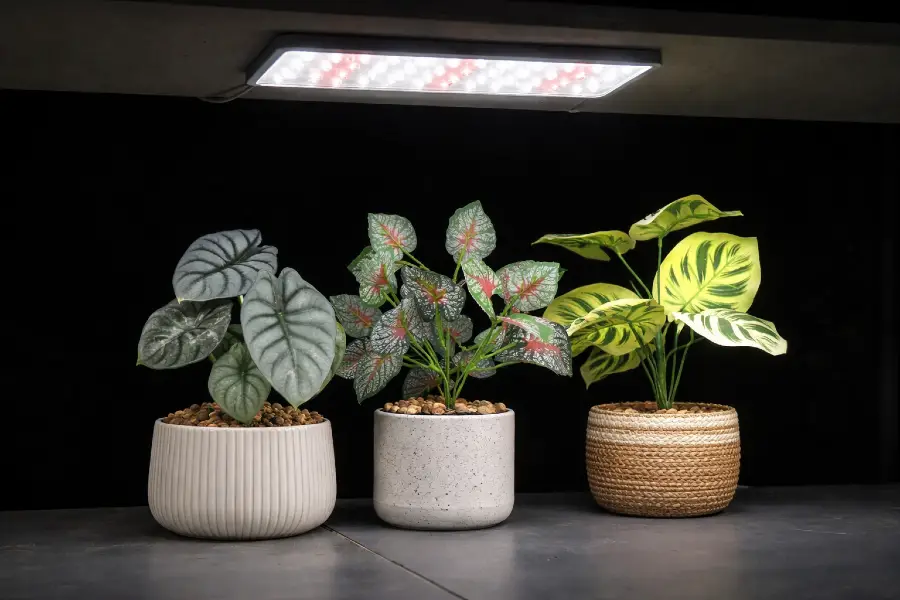
Yes, provided the plants receive enough usable light. Pothos, ZZ Plants, Snake Plants, and Heartleaf Philodendron are more tolerant of lower light levels than many other houseplants. However, low light does not mean no light. If your bedroom shelves are far from a window or in a particularly dark corner, a small LED grow light can help maintain healthier growth. Choose plants based on the actual light reaching the shelf rather than the overall brightness of the room.
Is it safe to put a plant shelf above a bed?
A plant shelf directly above a bed requires extra caution because a falling container could cause injury. Follow the shelf manufacturer’s mounting instructions, use hardware appropriate for the wall, and stay within the shelf’s rated weight capacity. Remember to include the weight of the pots, growing medium, plants, and water. Lightweight containers are preferable, but placing shelves beside the bed or above a dresser is generally a safer arrangement.
Which bedroom shelf plants are safe for cats and dogs?
Spider Plants, Boston Ferns, and many Peperomia varieties are considered non-toxic to cats and dogs. String of Hearts is another generally non-toxic option for brighter shelves. Pothos, Heartleaf Philodendron, Snake Plants, ZZ Plants, and Peace Lilies are toxic if ingested. Cats can often climb onto shelves or reach trailing vines, so plant placement alone may not prevent access. Check individual species using the ASPCA Toxic and Non-Toxic Plants Database.
🌿 Final Thoughts on Plant Shelf Ideas for Bedrooms
Adding plant shelves to your bedroom is one of the easiest ways to bring more greenery into your home without taking up valuable floor space. Whether you have a small apartment bedroom or a larger room with plenty of natural light, a few well-placed shelves can make the space feel warmer, more comfortable, and more inviting.
The best plant shelf ideas for bedrooms don’t require elaborate arrangements or large collections of houseplants. Sometimes one floating shelf with a trailing Pothos and a compact Peperomia is enough to turn an empty wall into an attractive focal point.
Keep Your Bedroom Plant Shelves Simple
Bedrooms usually benefit from a calm, uncluttered appearance. Instead of filling every shelf with plants, try combining a few different leaf shapes and growing habits. Place trailing plants on higher shelves, use compact upright plants where space is limited, and leave some open areas between containers.
Neutral pots in white, beige, gray, or natural ceramic finishes can help create a coordinated look. You can also mix in a small picture frame, decorative basket, or a few books to make your shelves feel like a natural part of the bedroom rather than a separate plant display.
Choose Locations Where Your Plants Can Thrive
Before installing shelves, consider how much natural light reaches each location. A shelf near a window may support a wider variety of plants, while a darker corner may be better suited to plants that tolerate lower light or a display with supplemental LED grow lighting.
Remember to leave enough room for your plants to grow, keep containers within easy reach for watering, and use secure mounting hardware that can support the full weight of your display.
Start With One Shelf and Build From There
If you’re decorating your bedroom with plants for the first time, start with one shelf above a dresser or along an open wall that receives suitable light. Add one or two plants, see how they grow, and decide whether another shelf would improve the arrangement.
You can always expand your display later with staggered shelves, additional trailing plants, or a small corner arrangement. Starting with a simple layout makes it easier to find the right balance between decorating and everyday plant care.
A beautiful bedroom plant shelf doesn’t need to be complicated. Choose healthy plants, give them the light and space they need, and arrange them in a way that makes your bedroom feel comfortable and welcoming. A few thoughtfully placed plants can make a surprisingly big difference.
Explore More Plant Shelf Ideas
Looking for more ways to display plants without taking up valuable floor space? Explore these plant shelf ideas:
References and Further Reading
- University of Georgia Cooperative Extension. Growing Indoor Plants with Success. Guidance on choosing indoor plants, light requirements, container selection, watering, and general houseplant care.
- University of Illinois Extension. Lighting for Houseplants. Explains indoor light levels, window exposures, and how to match plants with the available light in different parts of your home.
- University of Illinois Extension. Getting Started with Houseplants. Covers choosing suitable containers, drainage, pot size, and selecting healthy houseplants for indoor displays.
- University of Illinois Extension. Watering Houseplants. Practical information on checking growing-medium moisture, watering methods, and preventing problems caused by too much or too little water.
Related Content
Visit my Amazon Influencer Page for videos and gardening products Grow Your Own Garden