
Caring for Ponytail Palm is simpler than you might think, but it’s important to understand its unique needs to keep it thriving.

This guide is full of easy tips to help your Ponytail Palm stay healthy, grow taller, and become a standout feature in your home or garden.
Ponytail Palm Care Key Takeaways
- Caring for Ponytail Palm involves providing bright, indirect sunlight.
- Watering deeply but infrequently.
- Use a well-draining soil like a coco coir and perlite mix.
- Use a balanced diluted fertilizer during spring and summer.
- Keep it in a warm, dry environment and avoid overwatering to prevent root rot.
- With occasional pruning and repotting, this low-maintenance plant can thrive indoors or outdoors for decades.
Caring for Ponytail Palm (Beaucarnea recurvata)
The Ponytail Palm is a striking plant known for its unique appearance and resilience. Whether you’re growing it indoors or outdoors, this guide provides everything you need to ensure your plant thrives, from basic care tips to advanced techniques.
What Is a Ponytail Palm?
The Ponytail Palm, scientifically known as Beaucarnea recurvata, is a unique and eye-catching plant that stands out for its striking appearance and low-maintenance nature.
Native to the semi-desert regions of Mexico, this plant has adapted to thrive in arid environments, making it exceptionally hardy and easy to care for.
Distinctive Features of the Ponytail Palm
The Ponytail Palm’s most distinctive feature is its thick trunk that stores water, topped with long, thin leaves that flow like a ponytail. This built-in reservoir helps it survive long periods without water.
- Trunk: Often referred to as an “elephant foot” due to its swollen, textured base.
- Leaves: Narrow, ribbon-like, and capable of growing several feet long, creating a cascading effect.
- Size: Indoors, it typically grows to 3-4 feet tall, though with time, it can grow taller. Outdoors, it can reach impressive heights, becoming a striking focal point in any landscape.
Why It’s Technically a Succulent, Not a True Palm
The Ponytail Palm isn’t a palm—it’s a succulent from the Asparagaceae family. Its thick trunk stores water, allowing it to thrive in dry conditions.
Unlike true palms, which need consistent moisture, the Ponytail Palm’s drought tolerance and slow growth make it easier to care for indoors or in arid climates.
Indoor Benefits of Ponytail Palm
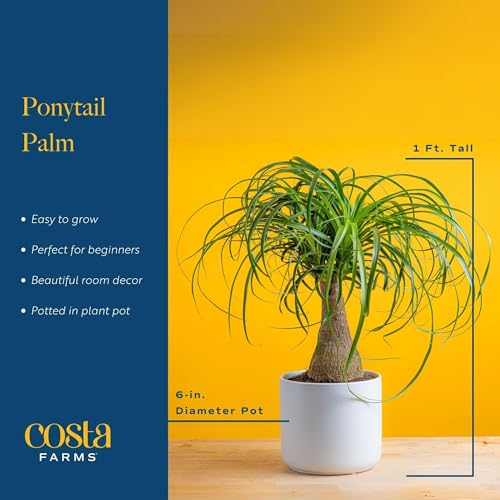
Ponytail Palms improve air quality, require minimal care, and add visual interest to any room.
Their drought tolerance makes them perfect for busy people, while their sculptural form works with any décor style.
Enhances Indoor Air Quality by Releasing Oxygen
Like all plants, Ponytail Palms help purify indoor air by releasing oxygen through photosynthesis. While not the strongest air purifier, it still contributes to a fresher home environment.
Why Ponytail Palms Are Perfect for Busy Plant Lovers
The Ponytail Palm is perfect for busy people – it stores water in its trunk and can survive long periods without care. Even if you forget to water it occasionally, this hardy plant will thrive.
Stunning Statement Plant for Any Room Design
The Ponytail Palm’s unique shape – with its bulbous trunk and flowing leaves – makes it a natural sculpture. It fits any style, from minimalist to boho, and quickly becomes a room’s focal point whether in sleek modern or classic terracotta pots.
How Big Do Ponytail Palms Get? Indoor vs Outdoor Growth
Ponytail Palms grow slowly, making them perfect for any space. Indoor plants typically reach 3-4 feet, ideal for tabletops and corners.
Outdoors in warm climates, they can grow up to 30 feet tall. Their slow growth rate means they won’t outgrow their space quickly and rarely need repotting – perfect for apartments, offices, or small homes.
Slow Growth Rate Makes It Manageable for Small Spaces
Their slow growth rate means they won’t outgrow their space quickly and rarely need repotting – perfect for apartments, offices, or small homes.
They’ll stay compact for years – perfect for apartments and offices. You won’t need to repot often, making them even easier to maintain.
Whether you’re looking for a low-maintenance indoor plant or a dramatic centerpiece, the Ponytail Palm’s adaptable size and growth habits make it a great choice.
Ponytail Palm Lifespan
The Ponytail Palm is not just a short-term addition to your home—it’s a plant that can grow alongside you for years or even generations.
Its long lifespan and resilience make it a standout choice for those looking for a low-maintenance yet enduring plant.
Typical Lifespan
Indoors, the Ponytail Palm can live for decades, provided it receives proper care. In outdoor environments with ideal conditions, such as warm climates and plenty of sunlight, it can live over 100 years, becoming a living legacy in gardens and landscapes.
Signs of Aging
As Ponytail Palms age, their growth may slow, and they might naturally shed older leaves. This is a normal part of their lifecycle and helps them focus energy on new growth.
Over time, older plants develop a thicker trunk and may grow taller, becoming even more striking.
Maintaining Longevity
To help your Ponytail Palm live its longest and healthiest life:
- Provide Proper Care: Ensure adequate light, well-draining soil, and a proper watering schedule.
- Occasional Repotting: Refresh the soil and provide more space for root growth every few years.
- Regular Maintenance: Remove dead leaves and inspect for pests or signs of overwatering.
With just a little attention, your Ponytail Palm can thrive for decades, bringing beauty and a sense of permanence to your home or garden.
How To Grow Ponytail Palm (Beaucarnea Recurvata)

Thanks to its low-maintenance nature and adaptability, growing a Ponytail Palm is easier than you might think.
This striking plant thrives with minimal care, making it a perfect choice for beginners and experienced gardeners alike.
Key Requirements for Light, Water, and Soil
- Light: The Ponytail Palm thrives in bright, indirect light. It can tolerate direct sunlight when grown outdoors, but indoors, a spot near a south- or west-facing window is ideal.
- Water: Allow the soil to dry out completely between waterings. The bulbous trunk stores water, so infrequent deep watering is best. Overwatering can lead to root rot.
- Soil: Use a well-draining cactus or succulent mix. Adding materials like perlite to coco coir can improve drainage and mimic its natural habitat.
Drought Tolerance and Hardiness Make It Beginner-Friendly
The Ponytail Palm is highly drought-tolerant, thanks to its water-storing trunk. This means you don’t need to worry about frequent watering, making it forgiving for those new to plant care.
Its hardy nature also allows it to adapt to various indoor environments, from dry apartments to slightly humid homes.
Tips for Encouraging Steady Growth Over Time
- Fertilize Lightly: Use a diluted liquid fertilizer during the growing season (spring and summer) to support healthy growth. Avoid over-fertilizing, which can damage the roots.
- Rotate for Even Growth: Turn the plant every few weeks to ensure all sides receive adequate light.
- Prune Pups: Remove offsets (pups) at the base of the trunk to direct the plant’s energy toward its main stem.
By meeting these simple requirements and giving it occasional attention, your Ponytail Palm will thrive for years, adding natural beauty to your indoor or outdoor space.
How to Grow Ponytail Palm Indoors
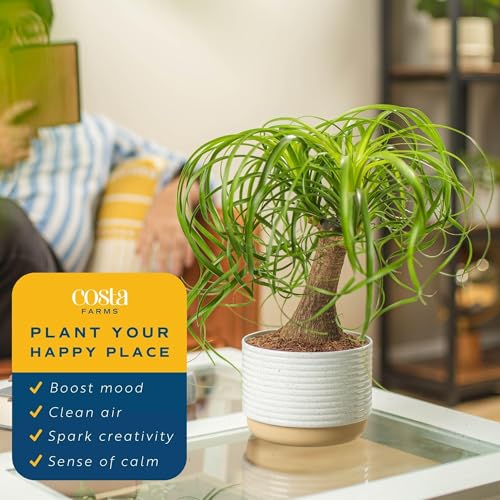
The Ponytail Palm is a breeze to care for indoors, thanks to its low-maintenance nature and ability to adapt.
- Light: Loves bright, indirect sunlight but can handle low light for short periods. A sunny window is ideal.
- Temperature and Humidity: Prefers warm, dry conditions (60-80°F). Keep it away from cold drafts and overly humid areas.
- Watering: Deeply water when the soil is completely dry. Its water-storing trunk makes infrequent watering best.
With these simple care tips, your Ponytail Palm will thrive and bring charm to any indoor space.
Growing Ponytail Palms in Containers
Growing Ponytail Palms in pots is straightforward:
- Use a cactus mix or a coco coir and perlite potting mix for good drainage
- Pick pots with drainage holes
- Place near a sunny window
That’s all you need to get started – it’s really that simple!
Ponytail Palm Watering
How to Water Your Ponytail Palm
Thanks to its water-storing trunk, watering is simple: wait until the soil is completely dry, then water deeply.
Water less in winter, and watch for yellow leaves or a soft trunk – signs of overwatering.
Ponytail Palm Fertilizing
Fertilizing your Ponytail Palm is key to supporting its steady growth and keeping its lush leaves vibrant.
While this plant doesn’t require heavy feeding, giving it the right nutrients during the growing season can make a big difference.
In this section, you’ll learn how and when to fertilize to help your Ponytail Palm thrive.
Simple Fertilizing Guide
Feed your Ponytail Palm lightly with a diluted balanced fertilizer during spring and summer
Once or twice a year is plenty. Don’t overdo it. Too much fertilizer can harm the plant.
Ponytail Palm Repotting
Repotting your Ponytail Palm helps your Ponytail Palm thrive. While not needed often, fresh soil and a new pot every few years prevent root binding and promote growth.
When to Repot Ponytail Palms
Repot your Ponytail Palm every 2-3 years when it becomes root-bound. Simply move it to a slightly larger pot with fresh well-draining soil to keep it healthy.
Steps for Repotting:
Repotting your Ponytail Palm doesn’t have to be complicated. Follow these simple steps to ensure a smooth transition for your plant:
- Choose the Right Pot: Select a pot that is slightly larger than the current one and has drainage holes to prevent root rot.
- Prepare Fresh Soil: Use a well-draining soil mix, like a cactus or succulent blend, to provide the perfect environment for healthy roots.
- Remove the Plant Carefully: Gently loosen the soil around the roots and lift the plant out of its pot. Be cautious not to damage the trunk or root system.
- Trim and Inspect the Roots: Check for any signs of rot or damage and trim unhealthy roots with sterilized scissors.
- Replant in the New Pot: Place the plant in the new pot and fill in around the roots with fresh soil, ensuring the trunk is secure and upright.
- Water Sparingly: After repotting, give the soil a light watering, allowing it to settle. Avoid overwatering while the plant adjusts.
Repotting every 2-3 years keeps your Ponytail Palm healthy, giving it the space and nutrients it needs to thrive.
Post-Repotting Care:
After repotting your Ponytail Palm, it’s important to give it time to adjust to its new environment. Here’s how to care for your plant during this transition:
- Water Lightly: Avoid heavy watering immediately after repotting. Give the soil a light watering to help it settle, then allow it to dry out completely before the next watering.
- Provide Stable Conditions: Place the plant in a spot with bright, indirect sunlight and consistent temperatures (60-80°F). Avoid drafts or sudden changes in the environment.
- Monitor for Stress: It’s normal for the plant to show slight signs of stress, like drooping leaves, for a few days. With proper care, it should recover quickly.
- Skip Fertilizing: Hold off on fertilizing for at least a month to avoid overwhelming the plant while it adjusts.
By keeping conditions stable and monitoring its needs, your Ponytail Palm will settle into its new pot and continue to thrive.
Maintenance and Pruning – Basic Maintenance Tips
How to Make Ponytail Palm Grow Taller
If you want to see your Ponytail Palm grow taller, it’s all about creating the right conditions.
How to Encourage Taller Growth
Want a taller Ponytail Palm? Provide bright light, feed with balanced fertilizer during the growing season, and remove any pups to focus energy on the main trunk’s growth.
- Nutrient Management: Feed with a balanced liquid fertilizer during the growing season to support height.
- Pruning Offsets: Remove pups to direct energy toward upward growth.
- Light Exposure: Provide consistent bright light to encourage steady vertical development.
How to Propagate Ponytail Palm
Propagating a Ponytail Palm is a rewarding way to grow new plants and expand your collection. Here are the main methods:
- Offsets (Pups): Gently detach pups (small plants growing at the base) using a clean knife. Allow them to callus for a few days before planting in well-draining soil.
- Seed Propagation: Though uncommon, you can grow from seeds if available. Keep seeds in a warm, consistent environment with plenty of light and patience.
Ponytail Palm Problems
Even though Ponytail Palms are hardy and low-maintenance, they can occasionally face issues like yellowing leaves, root rot, or pests.
Identifying and addressing these problems early will keep your plant healthy and thriving.
In this section, we’ll explore common Ponytail Palm problems and simple solutions to fix them.
- Leaf Discoloration: Yellow or brown tips caused by overwatering or underwatering.
- Drooping Leaves: Often due to insufficient light or waterlogged roots.
- Slow Growth: Address by ensuring proper light, fertilizing during the growing season, and checking for pests.
Pests and Diseases
While Ponytail Palms are resilient, they can occasionally encounter pests or diseases. Here’s how to identify and address them:
- Common Pests: Mealybugs and spider mites are the usual culprits. Treat infestations by wiping the leaves with neem oil or applying insecticidal soap.
- Diseases: Root rot, often caused by overwatering, is the most common issue. Prevent this by using well-draining soil and watering sparingly.
- Prevention: Regularly inspect your plant for signs of pests or stress. Keep care routines consistent, including proper watering and good airflow around the plant.
With a little attention, you can keep your Ponytail Palm healthy and pest-free!
Advanced Care Tips
Take your Ponytail Palm care to the next level with these advanced strategies:
- Fertilization Strategies: Apply a slow-release or organic fertilizer during the growing season (spring and summer) to boost robust growth. Avoid over-fertilizing, as this can damage the roots.
- Seasonal Adjustments: Reduce watering during fall and winter when the plant’s growth slows, and ensure it still receives adequate light.
- Styling Ideas: Showcase your Ponytail Palm by using decorative pots that complement your space. Place it as a focal point in modern, minimalist, or rustic interiors for maximum impact.
These advanced tips help your Ponytail Palm thrive while enhancing your space with style and sophistication.
Conclusion
Caring for a Ponytail Palm is not just about keeping it alive—it’s about helping it thrive and become a statement piece in your space.
With its low-maintenance nature and striking appearance, this plant offers both beauty and practicality. Let’s recap the key points and explore a few related topics for even better care.
Where to Display Your Ponytail Palm
This plant’s unique shape makes it a natural focal point. Place it on a side table, near a sunny window, or in office corners.
Its sculptural form works in any space, and its low-maintenance nature makes it perfect for busy environments.
Ponytail Palm for Beginners
If you’re new to indoor gardening, the Ponytail Palm is a perfect starter plant. It’s forgiving, thrives on neglect, and requires minimal maintenance.
Its water-storing trunk makes it drought-tolerant, so you won’t have to worry about frequent watering.
Its striking look makes it rewarding for beginners who want an easy-care plant that delivers on style.
Whether for a first apartment or a busy lifestyle, this plant’s simplicity makes it a winner for novice gardeners.
Key Takeaways
- Ponytail Palm thrives in bright, indirect sunlight and warm temperatures.
- Water sparingly, ensuring the soil dries out completely between waterings.
- Use well-draining soil and a pot with drainage holes to prevent root rot.
- Fertilize during the growing season and prune dead leaves or offsets as needed.
- Repot every 2-3 years to accommodate root growth and refresh the soil.
By following these tips, your Ponytail Palm will remain healthy, beautiful, and easy to manage for years to come.
Whether you’re a seasoned indoor gardener or just starting out, this plant will quickly become a favorite in your collection.
🌵 Indoor Succulent Guides
Discover how to grow, care for, and enjoy stunning indoor succulents! These guides cover everything from light needs to individual plant care.
- 🌱 Indoor Succulent Plant Care (Pillar Guide)
- 💡 Light Requirements for Indoor Succulents
- 🌙 Best Indoor Succulents for Low Light
- 🌵 Succulents and Cacti for Indoors
- 🌿 How to Grow Jade Plants
- 🪴 How to Grow Gasteria
- 🔥 Crassula Capitella ‘Campfire’ Plant
- 🌸 Sedum Burrito Care
- ✨ 17 Benefits of Growing Succulents Indoors
- 🍃 Crassula Capitella Varieties
- 🌼 Kalanchoe Care Indoors
- 🌴 Caring for Ponytail Palm
- 💎 String of Pearls Care
- See all articles in our Indoor Succulents category
Related Content

Visit my Amazon Influencer Page for videos and gardening products Grow Your Own Garden