
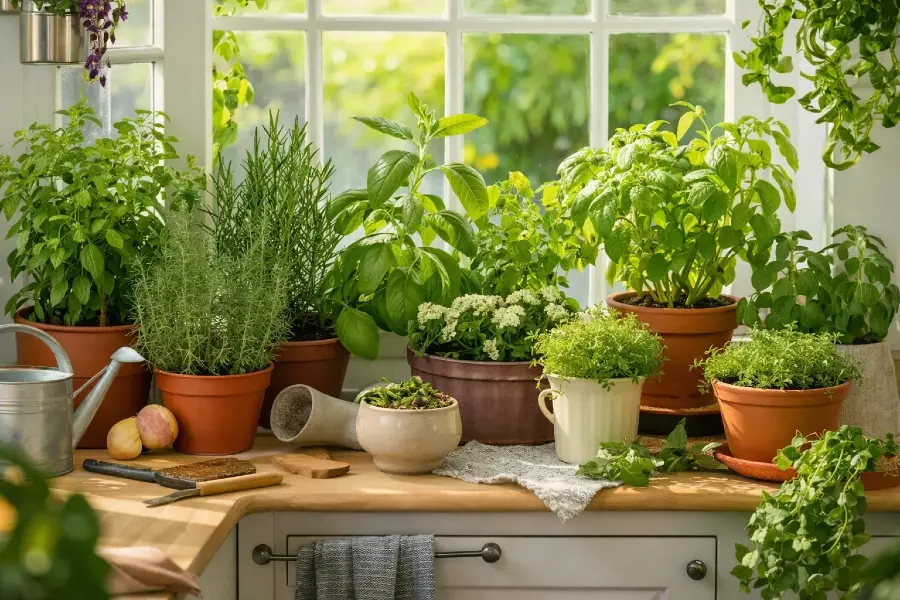
If you’ve ever tried growing basil or parsley indoors and ended up with tall, floppy stems and tiny leaves, it usually comes down to one thing: light.
This guide answers the question How Much Light Do Indoor Herbs Really Need? in plain English—no gadgets required, no “perfect setup” pressure. I’ll walk you through how many hours herbs actually need, what kind of window light works, and how to tell when your plants are begging for more.
And the best part? You don’t need a greenhouse kitchen. You just need the right expectations and a few easy placement tweaks that make a huge difference.
What You’ll Learn
- 🌿 How much daily light indoor herbs really need to grow strong and flavorful
- 🪟 Which window directions work best (and what to do if yours isn’t ideal)
- 💡 When grow lights actually help—and when they’re a waste of money
- 📏 Simple placement tricks that prevent leaning, legginess, and weak growth
🌞 Why Light Matters So Much for Indoor Herbs
Herbs are “edible leaves,” and leaves are basically little solar panels. When they get enough light, they stay compact, push out steady new growth, and develop better flavor and aroma. When they don’t, herbs start stretching—literally—trying to reach a brighter spot.
That stretching is what people call leggy growth. You’ll see long stems, bigger gaps between leaves, and a plant that leans like it’s trying to escape the room. It’s not being dramatic. It’s just doing what plants do when the light is too weak.
Light problems also snowball into other issues:
- 🌿 Weak flavor: herbs grown in low light often taste bland compared to the same herb grown brighter
- 🍃 Slow growth: the plant “idles” because it can’t produce enough energy to keep building leaves
- 💧 Overwatering risk: low light = slower drying soil = soggy roots if you water on autopilot
So when people say “my indoor herbs keep dying,” it’s often not a mystery disease. It’s usually a light situation that makes everything else harder.
⏱️ How Many Hours of Light Do Indoor Herbs Need?
Here’s the practical baseline most indoor herbs do well with:
- 🟡 Minimum: about 6 hours of bright light per day to stay alive and produce some growth
- 🟢 Better: 8–10 hours for stronger growth and better flavor
- 🌿 Best case: 10–12 hours when you’re using a grow light or have excellent window exposure
That said, not all “hours of light” are equal. A bright south-facing window for 6 hours can beat 10 hours next to a gloomy window. Think of it like charging your phone: a fast charger for less time can outperform a weak charger all day.
Also, indoor light changes a lot by season. Winter light is weaker, the sun sits lower, and days are shorter. So if your herbs look great in summer and kind of sad in January, that’s normal—and fixable.
🪟 What Window Light Is Best for Indoor Herbs?
If you want the easiest indoor herb setup, your window matters more than your pot. Here’s the quick reality check on window directions (Northern Hemisphere):
South-facing windows
This is the top choice for most herbs. It usually provides the strongest, longest-lasting light. If you can put herbs within a couple feet of a south window, you’re already ahead of the game.
- 🌿 Great for basil, rosemary, thyme, oregano, chives
- 🔄 Rotate pots weekly so plants don’t lean hard toward the glass
East-facing windows
East windows are underrated. They give gentle morning sun that’s bright but less harsh. This is a nice option if your home runs warm or if you’ve cooked plants in a hot afternoon window before.
- 🌱 Great for parsley, cilantro, mint, chives
- ☀️ Basil can work here too, especially in summer
West-facing windows
West windows can be strong, but the light hits later and can be hot—especially in summer. Herbs can do well here, but you may need to watch for dry soil and heat stress.
- 🔥 If leaves look scorched or crispy, pull plants back from the glass a bit
- 💧 Check soil more often—afternoon sun dries pots faster
Up next, we’ll cover north-facing windows (and what to do if that’s all you’ve got), plus the simple “direct sun vs bright light” confusion that trips up almost everyone at first.
🧭 Are North-Facing Windows Enough for Indoor Herbs?
This is the honest answer most guides dodge: north-facing windows are usually not enough for indoor herbs on their own.
North light is consistent but weak. It’s great for decorative houseplants that tolerate shade, but most herbs are grown for their leaves—and leaves need energy.
That doesn’t mean herbs are impossible in north-facing homes. It just means you’ll need to adjust expectations or add a little help.
- 🌿 Herbs may survive, but growth will be slow
- 🍃 Leaves may stay smaller and thinner
- 📉 Flavor can be weaker compared to brighter setups
If a north-facing window is all you have, this is where a simple grow light actually earns its keep. Even a modest supplemental light can turn a “barely surviving” herb into a usable plant.
☀️ Do Indoor Herbs Need Direct Sunlight?
This is one of the most confusing phrases in indoor gardening, so let’s clear it up.
Indoor herbs don’t need harsh, outdoor-style direct sun. What they need is bright, reliable light.
When sunlight passes through a window, it’s already filtered. Glass reduces intensity, blocks UV, and softens heat. That’s why a sunny windowsill indoors behaves very differently than full sun outside.
In practice:
- 🪟 A sunny south or west window = usually perfect
- 🌥️ Bright indirect light near a window = often enough for forgiving herbs
- 🚫 A bright room far from windows = usually not enough
If your herbs are inside the room instead of right by the glass, the light drops off fast. Even a few feet can make a big difference.
💡 When Grow Lights Actually Make Sense
Grow lights sound intimidating, but most people who need them only need a very simple setup.
Grow lights make sense if:
- 🏢 You live in an apartment with limited window exposure
- 🧭 Your windows face north or are heavily shaded
- ❄️ Herbs struggle every winter even though they do fine in summer
- 📐 You want herbs on shelves, counters, or walls away from windows
They don’t make sense if:
- ☀️ You already have a bright south-facing window
- 🌿 Your herbs are growing compact and upright
- 📈 Growth is steady and leaves look healthy
In other words, grow lights are a tool—not a requirement.
🔌 How to Use Grow Lights Without Overthinking It
You don’t need a lab setup or expensive equipment. A basic LED grow light used consistently beats a powerful light used randomly.
Here are simple guidelines that work for most indoor herbs:
- 📏 Place lights about 6–12 inches above the plants
- ⏲️ Run lights for 10–12 hours per day
- 🔁 Use a timer if possible to keep light consistent
- 🌿 Adjust height if leaves stretch or bleach
One common mistake is leaving grow lights on too far away. Light intensity drops quickly with distance, so closer (without overheating) is usually better.
🚨 Signs Your Indoor Herbs Aren’t Getting Enough Light
Herbs are surprisingly good at telling you when light is the problem—if you know what to look for.
Common low-light warning signs include:
- 🌱 Long, thin stems with wide gaps between leaves
- 🪟 Plants leaning hard toward the window
- 🍃 Pale or washed-out leaf color
- 🐢 Very slow growth despite regular watering
What won’t fix these problems?
- ❌ More fertilizer
- ❌ More water
- ❌ Bigger pots
If light is the issue, only light fixes it.
Next, we’ll break down the light needs of common indoor herbs, plus how to position plants so they grow evenly instead of twisting and stretching.
🌿 Light Needs of Common Indoor Herbs
Not all herbs ask for the same amount of light. Some are sun lovers, while others are more forgiving. Knowing which group your herbs fall into makes placement much easier.
High-light herbs
- Basil: Needs the brightest spot you have; weak light leads to leggy growth fast
- Rosemary: Loves strong light and struggles in dim rooms
- Thyme: Stays compact and flavorful with plenty of sun
- Oregano: Prefers brighter light to avoid stretching
Medium-light, more forgiving herbs
- Parsley: Handles gentler light better than most herbs
- Cilantro: Grows fine with morning sun or bright indirect light
- Mint: Very adaptable and tolerant of less-than-perfect light
- Chives: Performs well in moderate window light
If you’re mixing herbs in one area, group plants with similar light needs together. That alone prevents a lot of frustration.
📍 How to Position Indoor Herbs for Even Growth
Even with good light, placement matters. Most indoor light comes from one direction, which causes herbs to lean if left alone.
- 🔄 Rotate pots about a quarter turn every week
- 📏 Keep herbs as close to the window as practical without touching the glass
- 🌿 Avoid stacking taller plants in front of shorter ones
- 🪴 Give each pot breathing room so leaves don’t shade each other
Crowding herbs together is a common mistake. It reduces light and airflow at the same time, which slows growth and increases problems.
🍂 How Seasonal Changes Affect Indoor Light
Indoor light isn’t constant year-round. Even the same window can behave very differently by season.
- ❄️ Winter: Shorter days and weaker sun mean slower growth is normal
- 🌸 Spring: Growth picks up as days lengthen
- ☀️ Summer: Strong light supports faster growth but may increase watering needs
- 🍁 Fall: Gradual slowdown as light fades
In winter, don’t chase summer-level growth. The goal is healthy plants, not speed.
❌ Common Light Myths About Indoor Herbs
- “A bright room is enough.” Light fades quickly away from windows.
- “All herbs need full sun.” Some do, many don’t.
- “Grow lights are only for experts.” Simple lights can be very beginner-friendly.
Most problems come from overcomplicating light instead of observing the plant.
🌱 Conclusion: Keep Light Simple and Consistent
Indoor herbs don’t need perfect conditions, but they do need reliable light. A bright window, steady placement, and realistic expectations go much further than fancy equipment.
If herbs stretch, lean, or stall, light is usually the first thing to adjust. Once light is right, watering and care become much easier.
For a full overview of choosing herbs, setup, and long-term care, visit our category Indoor Herb Garden
Related Indoor Herb Guides
How Much Light Do Indoor Herbs Really Need? FAQs
How much light do indoor herbs need each day?
Most indoor herbs need at least 6 hours of bright light per day, with 8–10 hours producing better growth and flavor.
Can herbs grow under artificial light only?
Yes. Many herbs grow well under grow lights if the light is close enough and used consistently for 10–12 hours per day.
What happens if indoor herbs don’t get enough light?
Herbs become leggy, grow slowly, and develop weaker flavor. Adding fertilizer or water won’t fix a light problem.
Does window glass block sunlight for herbs?
Yes. Glass filters sunlight and reduces intensity, which is why indoor herbs need to be placed close to windows or supplemented with grow lights.
Related Content
Visit my Amazon Influencer Page for videos and gardening products Grow Your Own Garden