
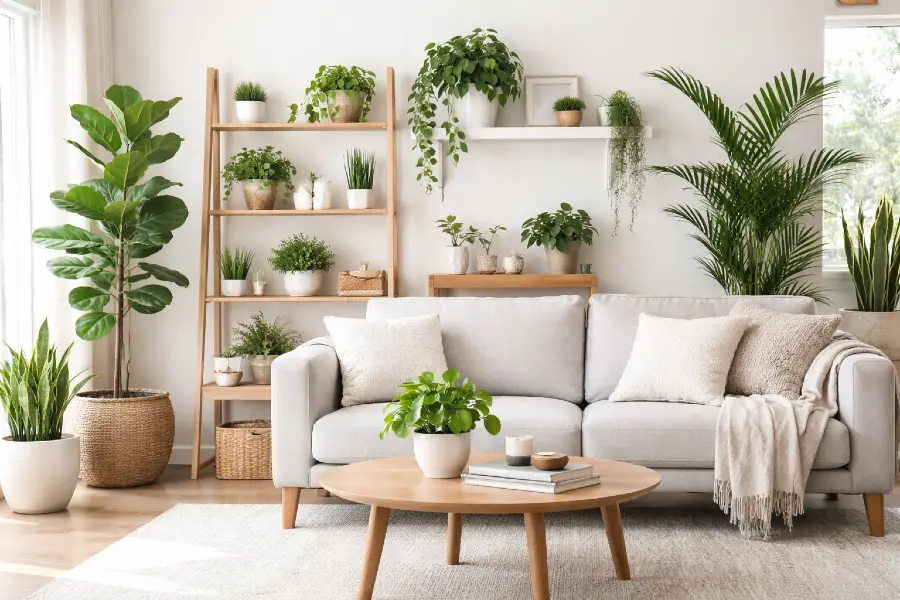
If you want to learn how to decorate with indoor plants, you really do not need a huge house, expensive furniture, or dozens of rare plants to make a room look good.
A few well-placed indoor plants can make a space feel softer, brighter, and more finished. They add natural color, shape, and texture in a way that lamps, baskets, and wall art cannot fully replace.
The biggest difference between a room that just has plants and a room that feels truly styled usually comes down to placement. The right plant in the right spot can fill an awkward corner, soften a shelf, wake up a windowsill, or make a plain table feel complete.
This guide on how to decorate with indoor plants walks through the basics of indoor plant styling, where plants look best, how to mix sizes and shapes, and how to decorate shelves, tables, corners, and small spaces without making your home feel crowded.
Find Easy Indoor Houseplants On Amazon
What You’ll Learn
- Why indoor plants work so well as part of home decor
- Where to place indoor plants in a room for the best visual effect
- How to choose plant sizes that fit the space instead of fighting it
- How to style plants on shelves, tables, desks, windows, and corners
- How to decorate small spaces with plants without adding clutter
- Common indoor plant decorating mistakes that make rooms feel busy
🌿 Why Indoor Plants Work So Well in Home Decor
Indoor plants do a lot of visual work in a room. They add height, soften hard furniture lines, and bring in a natural shape that makes spaces feel more relaxed and welcoming. Even a simple room with neutral furniture often feels warmer once you add greenery.
Plants are also flexible decor pieces. A tall floor plant can act almost like furniture in an empty corner. A trailing plant can soften the edge of a shelf. A small tabletop plant can make a desk, console, or nightstand look more intentional.
Another reason decorating with plants works so well is that there are so many ways to use them. You can go minimal with one statement plant, create a layered shelf display, or spread a few smaller plants around the room to make the whole space feel balanced.
If you are still choosing plants for your home, it may help to start with How to Choose Indoor Plants as a Beginner so the plants you style are also realistic for your space and light conditions.
🏠 Start With the Room, Not the Plant
One of the most common decorating mistakes is buying a plant first and then trying to figure out where it belongs. That can work sometimes, but it usually leads to random-looking placements that do not help the room much.
A better way to decorate with indoor plants is to look at the room and ask what it needs. Does the room feel too flat? Is there an empty corner? Does a shelf look stiff? Is a side table missing something natural and soft? Once you know the purpose, picking the plant gets easier.
Think about a room in terms of problem spots:
- 📐 An empty corner that needs height
- 📚 A shelf that feels too hard or boxy
- 🪑 A table or console that feels unfinished
- 🪟 A window area that could use a little life
- 🏠 A small room that needs decor without more bulky furniture
When you decorate this way, plants stop feeling random and start feeling like part of the room’s design.
📍 Where to Put Indoor Plants in a Room
You do not need plants in every possible location. In most homes, a few smart placements look much better than trying to add greenery to every surface. The goal is balance, not overload.
Empty corners
Corners are one of the easiest places to decorate with plants because they often need height and softness. A larger floor plant can make a blank corner feel finished and can help balance heavier furniture on the other side of the room.
If the corner is dim or north facing, you may want to read Creative Ideas for Decorating Dim Corners and North Facing Spaces for more targeted ideas.
Shelves and bookcases
Shelves are great for smaller plants, especially compact plants or trailing plants that can soften the edges. A plant can break up rows of books, baskets, and decor so the shelf feels less stiff and more natural.
If your goal is to use more wall height and less floor space, take a look at How to Maximize Vertical Space With Indoor Plants.
Tables, consoles, and side tables
A small plant on a side table, entry console, coffee table, or dresser can help that area feel complete. These spots usually work best with compact plants that look neat and do not spread too far.
Windows and windowsills
Windows are natural styling spots because many plants want the light there anyway. A bright window with one or two well-chosen plants can look polished without much effort.
Desks and workspaces
A desk plant can make a home office or workspace feel less sterile. Keep it small enough that it does not interfere with work or crowd the surface.
📏 Choose the Right Plant Size for the Space
Size matters more than people expect. A plant that is too small can disappear, especially in a larger room. A plant that is too large can make a room feel crowded fast. Good styling depends on matching the plant’s visual weight to the room.
- 🌳 Large plants work best in corners, beside sofas, and near cabinets or media consoles
- 🪴 Medium plants work well on stands, larger side tables, benches, and bigger shelves
- 🌱 Small plants fit desks, windowsills, narrow shelves, and grouped tabletop displays
If you like simpler, cleaner rooms, you may also like Best Indoor Plants for Minimalist Decor, which pairs well with this styling approach.
📐 Mix Plant Heights and Shapes for a Better Look
A room almost always looks better when your plants are not all the same size and shape. If every plant is short and rounded, the room can start to feel repetitive. Mixing heights and plant forms gives the room a more layered, natural look.
A simple way to think about this is to combine:
- ⬆️ Upright plants for height and structure
- 🌿 Bushier plants for fullness and softness
- 🌱 Trailing plants for movement and flow
That combination works in almost any room. You might use one upright floor plant in a corner, one fuller plant on a stand, and one trailing plant on a shelf to keep the space from feeling flat.
📚 How to Decorate Shelves With Indoor Plants
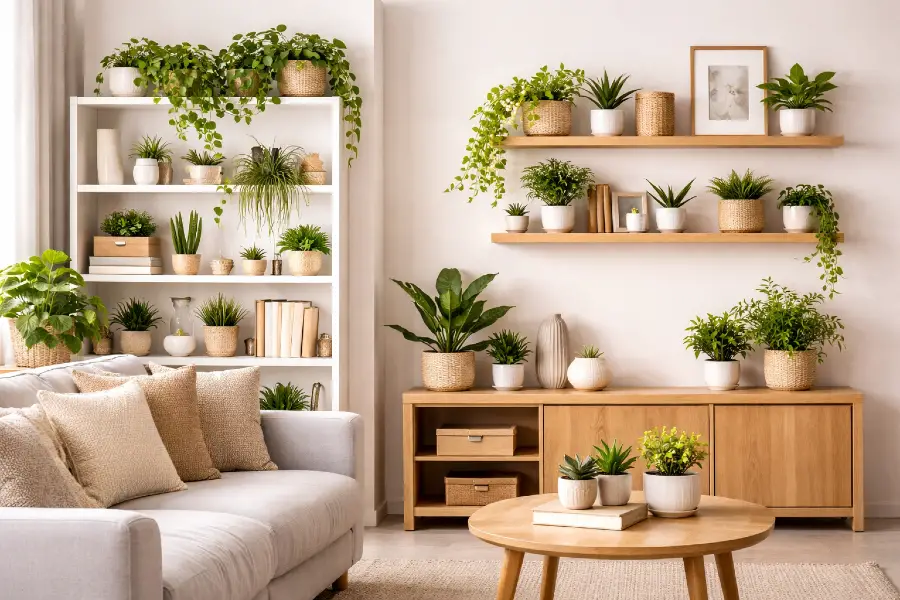
Shelves are one of the best places to style indoor plants because they let you combine greenery with books, baskets, framed photos, candles, and other decor pieces. Plants keep shelves from looking too rigid and help the whole display feel more relaxed.
The trick is to avoid turning every shelf into a mini greenhouse. A few plants mixed with other decor usually looks much better than filling every open spot with pots.
- 🌿 Use one trailing plant to soften the edge of a shelf
- 📚 Mix plants with books or decor instead of grouping only pots together
- 🪴 Vary pot sizes so the shelf has some depth and movement
- 📏 Leave open space so the shelf still feels tidy and breathable
Shelves also work especially well in apartments or smaller homes where floor space is limited. When you need decor without more furniture, shelf styling is one of the easiest wins.
🌿 How to Decorate Corners With Indoor Plants
Corners are often awkward. They are too empty to ignore, but not every corner needs another piece of furniture. This is where indoor plants really shine. A well-placed plant can fill the space without making it feel heavy.
Larger plants usually work best here because they have the height needed to hold the space visually. Even a medium plant can work if it is lifted on a stand.
- 🌳 Use a taller plant to anchor a living room or bedroom corner
- 🪴 Raise younger plants on stands if they are not tall enough yet
- 🌞 Use corners near windows for light-loving statement plants
- 🌙 Be more selective in darker corners and use lower-light options
If your room has limited natural light, Creative Ways to Incorporate Low Light Plants in Interior Design can help you match the look you want with a realistic plant choice.
🪟 Decorating Around Windows and Natural Light
Windows are some of the easiest places to decorate with indoor plants because they combine style and practicality. Plants near windows often look especially natural because that is where they would likely be happiest anyway.
A window area does not need to be packed with pots. In most cases, one small plant on the sill, one trailing plant nearby, or one taller floor plant beside the window is enough to make the area feel styled.
- 🌞 Use windowsills for compact plants that stay neat
- 🪴 Put a medium plant on a small stand near the window if the sill is narrow
- 🌿 Let one trailing plant soften the lines around the window area
- 📏 Avoid blocking too much light with overly bulky arrangements
Bright windows can handle more styling flexibility. Lower-light windows usually need a lighter touch and more careful plant choices.
🪑 Styling Tables, Desks, and Consoles With Plants
Tables are one of the easiest ways to use plants as decor because they need very little commitment. A plant on a coffee table, entry console, nightstand, side table, or desk can make the space feel more polished right away.
The main thing to watch is scale. A plant that is too tall or too wide can take over the entire surface. In most cases, one compact plant looks better than several tiny scattered pots.
- ☕ Use a low plant on coffee tables so it does not block sight lines
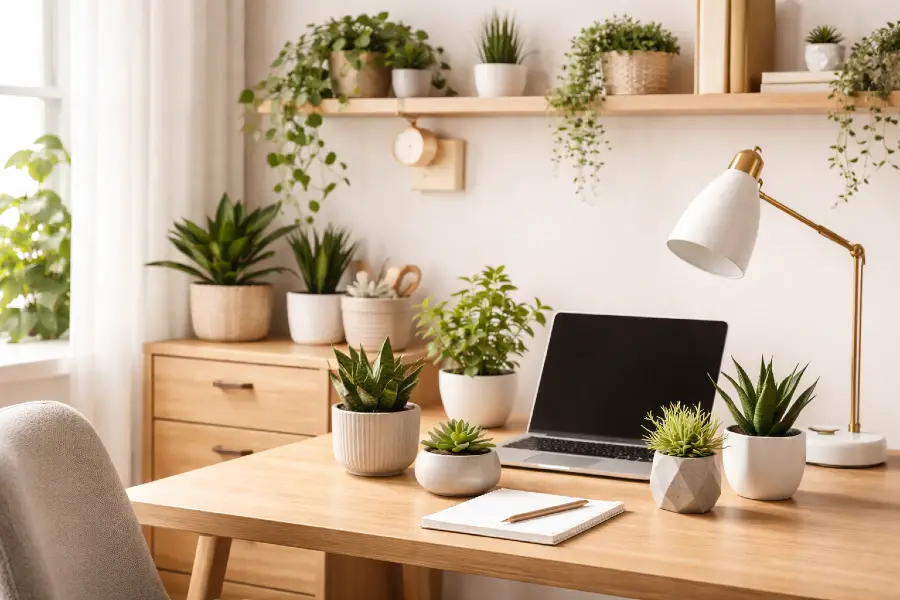
- 🖥️ Keep desk plants compact so they do not interfere with work
- 🏠 Use a simple plant on an entry table as a welcoming accent
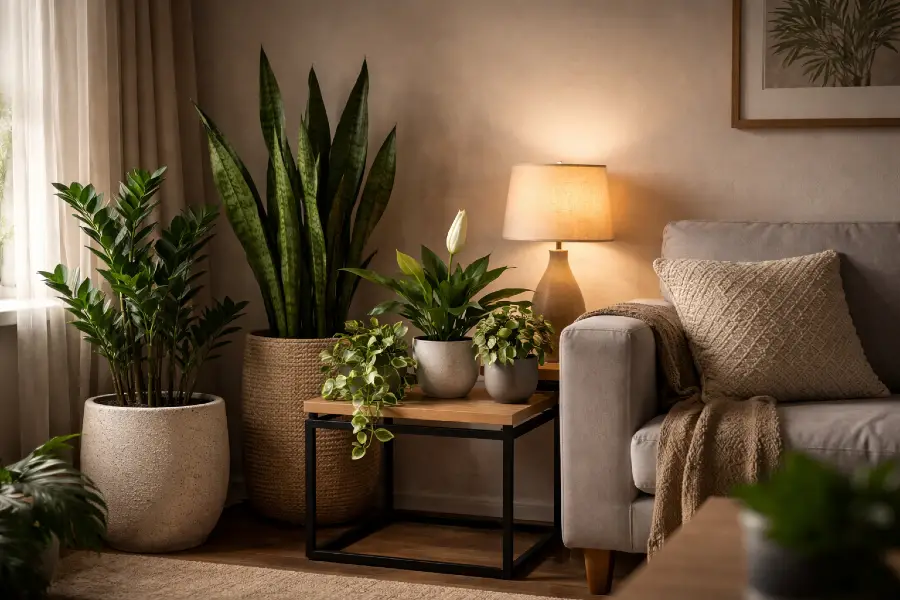
- 🛋️ Pair a side table plant with a lamp or books for a balanced setup
Plants on surfaces usually look best when they are part of a small grouping with one or two other objects, not sitting alone in the middle unless the look is intentionally minimal.
🪴 Group Plants So They Look Intentional
Grouping plants can look fantastic, but it only works when there is variation. If the plants are all the same size in matching pots, the display can feel stiff. If they are grouped with contrast, the arrangement feels more natural and styled.
An easy formula is to group in threes using different heights:
- 🌳 One taller plant for height
- 🌿 One medium fuller plant for body
- 🌱 One smaller or trailing plant for movement
This works on benches, larger consoles, wide windows, shelves, and plant stands. The display feels more intentional when the plants are connected visually but not crowded together.
🏠 How to Decorate Small Spaces With Indoor Plants
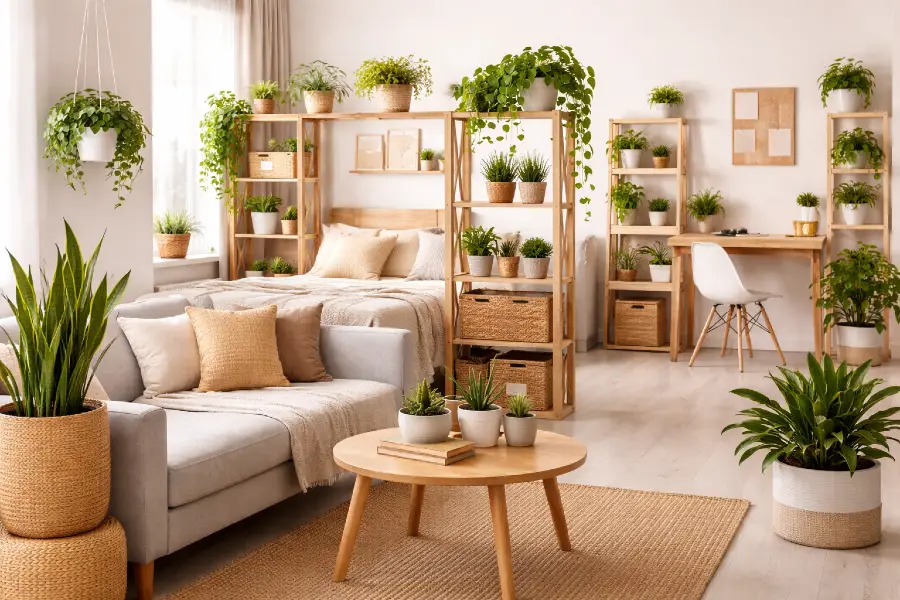
Small spaces can absolutely look amazing with plants, but the styling has to be a little more deliberate. In a small apartment, studio, or compact room, one strong plant placement often works better than several random ones.
This is where vertical space matters. Shelves, windows, wall-mounted planters, and narrow stands can give you greenery without eating up precious walking room.
- 📚 Use shelves to lift plants up and free the floor
- 🌿 Use trailing plants where you want greenery without bulk
- 🪴 Choose narrower plant stands instead of wide heavy furniture
- 🪟 Use window areas for plants so they do double duty as decor and light-friendly placement
The main thing to avoid is scattering small plants everywhere just because they fit. In tighter spaces, fewer plants with stronger placement usually looks cleaner and more intentional.
🌳 Decorating With Large Indoor Plants
Large plants can do a huge amount of styling work. They can fill empty corners, soften wall areas, add height next to low furniture, and even act like a focal point in a room. In some spaces, one large plant is worth more visually than five small ones.
The key is to let large plants breathe. If a room is already crowded, adding a big plant can make the whole space feel tighter. But if the room has an awkward gap or a flat area, a large plant can solve that problem beautifully.
- 🌳 Place large plants in corners that need height
- 🛋️ Use them beside sofas or chairs to soften furniture edges
- 📺 Put them near consoles or cabinets to balance low horizontal lines
- 🌞 Keep them near appropriate light so the styling choice is also practical
This is also where a statement look can come in. One striking plant can become a room’s visual anchor without needing a dozen other accents around it.
🧺 Choose Pots and Planters That Fit the Room
Planters matter more than most people think. A beautiful plant can still look out of place if the pot clashes with the room. On the other hand, even a fairly simple plant can look much better in a container that fits the home’s style.
Your planters do not need to match perfectly, but they should feel coordinated. Similar tones, materials, or textures help the plants look like part of one overall decorating plan.
- ⚪ White, black, beige, or gray planters work well in modern and simple spaces
- 🧺 Woven baskets soften rooms and add warmth
- 🏺 Ceramic pots feel polished and finished
- 🌿 Repeating similar tones helps grouped plants look intentional
If your plants are still sitting in plain nursery pots, slipping them into decorative cachepots is one of the fastest ways to improve the room without buying new plants.
🎨 Match Plant Styling to the Mood of the Room
Not every room should be styled the same way. A calm bedroom may call for fewer plants and softer shapes, while a bright living room may handle a taller statement plant and a fuller shelf arrangement. Thinking about the mood of the room helps you make better decorating choices.
- 🛋️ Living rooms can handle larger plants and layered displays
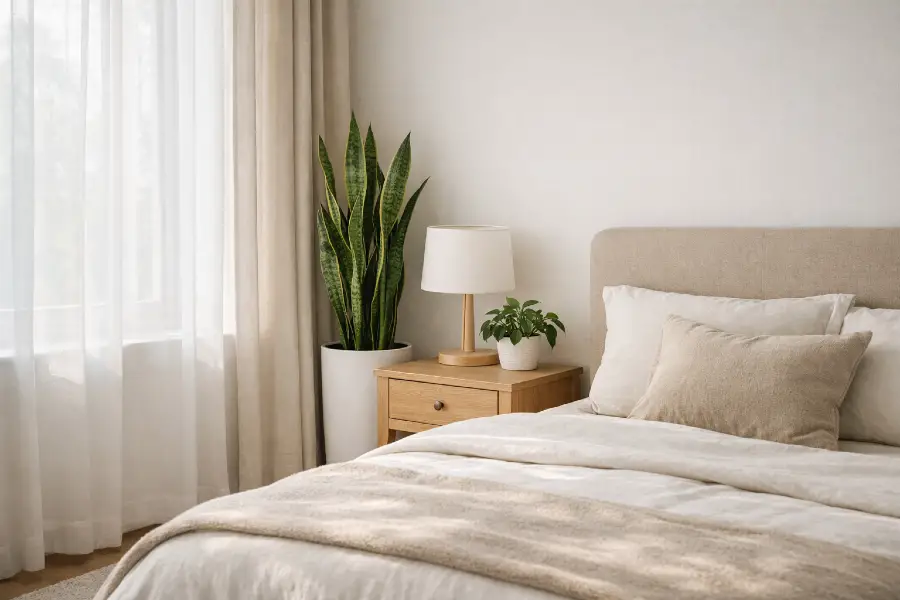
- 🛏️ Bedrooms usually look best with fewer, calmer plant placements
- 🖥️ Home offices benefit from compact plants that make the space feel less sterile
- 🚪 Entryways often work well with one neat welcoming plant instead of many small ones
If you have pets, plant styling also needs to stay practical. In that case, you may want to read Benefits of Pet Safe Indoor Plants: Absolutely Pet-Approved so the look of the room works for the whole household.
⚠️ Common Mistakes When Decorating With Indoor Plants
Most indoor plant decorating mistakes come from doing too much too fast. Plants should improve the room, not make it feel cluttered or harder to use.
- Using too many plants at once
- Choosing plants that are too small for the room
- Ignoring light and trying to force plants into the wrong spots
- Overmatching every planter so the room feels stiff
- Putting all the plants on one side of the room
- Filling shelves and tables so heavily that they lose breathing room
Another practical mistake is forgetting that plants are living decor. If the spot looks amazing but the plant cannot survive there, the setup will not last long. A room always looks better with healthy plants than with a perfect-looking placement that declines over time.
If you want to keep decorative plants looking their best, it also helps to stay ahead of issues like bugs and damage. For that, see 5 Common Indoor Plant Pests and How to Avoid Them.
📋 A Simple Indoor Plant Decorating Formula
If you feel overwhelmed by all the options, keep it simple. A balanced room often only needs a few strong plant placements, not a giant collection.
- 🌳 One larger plant for height
- 🌿 One medium plant for fullness
- 🌱 One smaller or trailing plant for detail
- 🪴 Planters that fit the room’s overall style
- 📍 Placements spread around the room for balance
That basic formula works in living rooms, bedrooms, offices, and apartments. Once that foundation looks good, you can always add another shelf plant or table plant later.
🌿 Final Thoughts
Learning how to decorate with indoor plants is really about using plants with purpose. You do not need dozens of pots or a complicated setup to make a home feel more beautiful. In most cases, a few thoughtful placements will do more for a room than a huge collection scattered all over the place.
Start by looking at the room itself. Find the empty corner, the stiff shelf, the plain table, or the bright window that could use a little life. Then match the plant size, shape, and planter style to that spot. When plants fit the room instead of fighting it, they stop looking random and start looking like part of the design.
Once you get comfortable with how to decorate with indoor plants, it becomes much easier to style shelves, corners, windows, desks, and small spaces throughout your home in a way that feels natural and lived in.
🌿 Final Thoughts
Learning how to decorate with indoor plants is really about using plants with purpose. You do not need dozens of plants or complicated arrangements to make a room look good. A few well-placed plants on shelves, tables, corners, and near windows can completely change how a space feels.
Start by looking at the room first, then choose plant sizes and placements that fit the space. When indoor plants match the room instead of fighting it, they stop looking random and start looking like part of the design.
If you want more ideas and placement guides, you can browse all of our plant styling articles here: Plant Styling & Decor.
❓ Frequently Asked Questions
How do you decorate with indoor plants without making a room look cluttered?
Use a few intentional placements instead of putting plants everywhere. Focus on corners, shelves, tables, and windows, and vary plant sizes so the room still feels open and balanced.
Where should indoor plants go in a living room?
Indoor plants usually look best in empty corners, on shelves, on side tables, or near windows where they can get appropriate light. A few well-placed plants usually look better than many scattered plants.
What size indoor plants work best for decorating?
Large plants work best in corners and beside furniture, medium plants fit stands and larger shelves, and small plants work best on desks, windowsills, and tabletops.
Do all indoor plant pots need to match?
No. Pots do not need to match exactly, but they should coordinate in color, texture, or style so the room feels more intentional and less random.
Can you decorate a small apartment with indoor plants?
Yes. Small apartments can look great with indoor plants when you use shelves, windows, narrow stands, and a few carefully chosen placements instead of overcrowding the floor.
➡️ Next Post
Where to Put Plants in a Room (Indoor Plant Placement Ideas)
Related Content
Visit my Amazon Influencer Page for videos and gardening products Grow Your Own Garden