
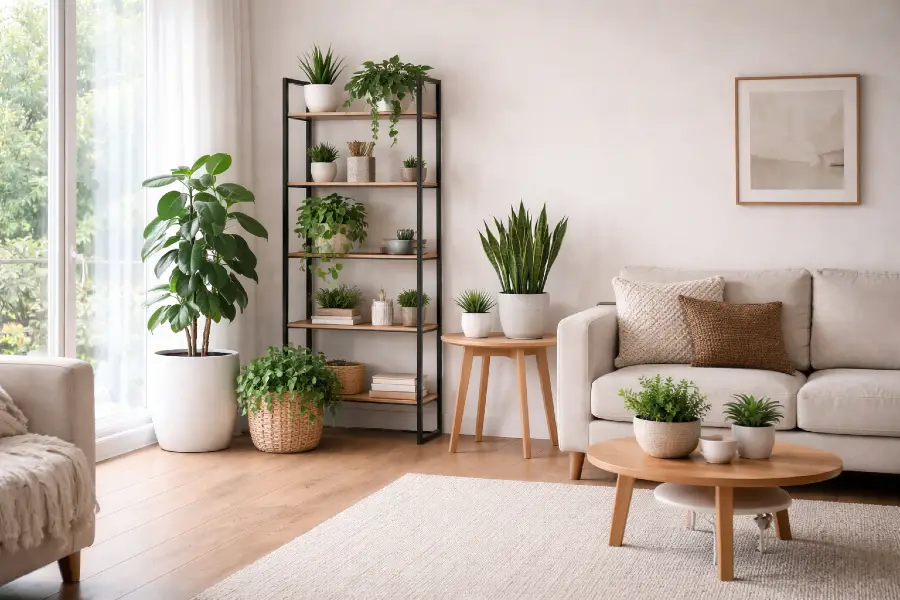
Layering plants in a room is one of the best ways to make indoor plants look natural, balanced, and decorative. Instead of placing all plants at the same height, layering uses plants at different heights around the room to create depth and visual interest.
Many professionally styled rooms use layered plant placement without people realizing it. You might see a large floor plant, a plant on a stand, a few plants on shelves, and small plants on tables all in the same room. This creates a layered look that feels natural and comfortable.
If you’re new to decorating with plants, start here: How to Decorate With Indoor Plants (Indoor Plant Styling and Decor Ideas).
What You’ll Learn
- What layering plants means in indoor plant decor
- How to use floor plants, shelves, and tables together
- How to create height and depth with plants
- How to layer plants without making a room look crowded
- Simple plant layering ideas for any room
Find Easy Indoor Houseplants On Amazon
What Does Layering Plants Mean
Layering plants means placing plants at different heights around a room instead of keeping them all on the floor or all on shelves. This creates a layered look that makes plants feel like part of the room instead of separate decorations.
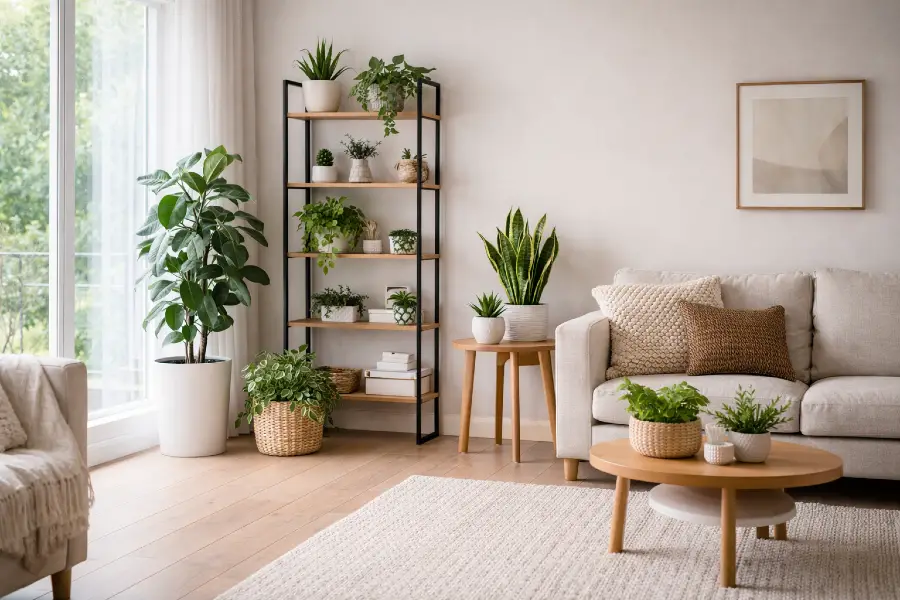
For example, you might have a tall floor plant in a corner, a plant on a stand beside a sofa, a few plants on shelves, and a small plant on a coffee table. This creates multiple levels of plants throughout the room.
Use Floor Plants for the Lowest Layer
The lowest layer is usually floor plants. These are larger plants placed directly on the floor in corners, beside furniture, or near windows.
Floor plants help fill empty spaces and act as anchor plants for the room. These are often the largest plants in the room.
If you want ideas for large plants, see Statement Plants for Living Rooms (Best Large Indoor Plants for Living Room Decor).
Use Plant Stands for the Middle Layer
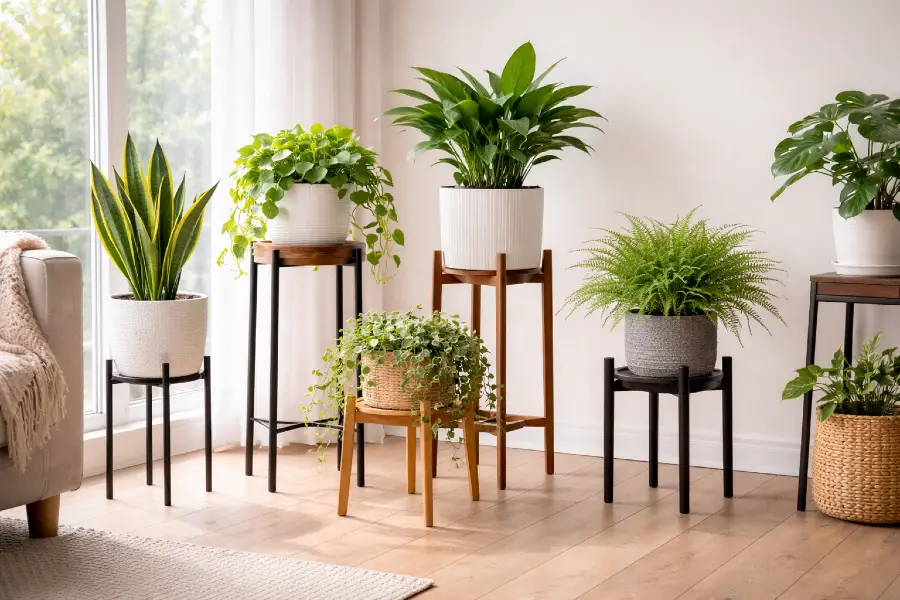
The middle layer is usually plants on plant stands. Plant stands raise plants off the floor and help create height differences between plants.
Plant stands are perfect for medium-sized plants that are too big for shelves but too small to sit directly on the floor.
If you want to learn more about plant stands, read Using Plant Stands for Indoor Plant Decor (Styling Plants With Height and Layers).
Use Shelves for the Upper Layer
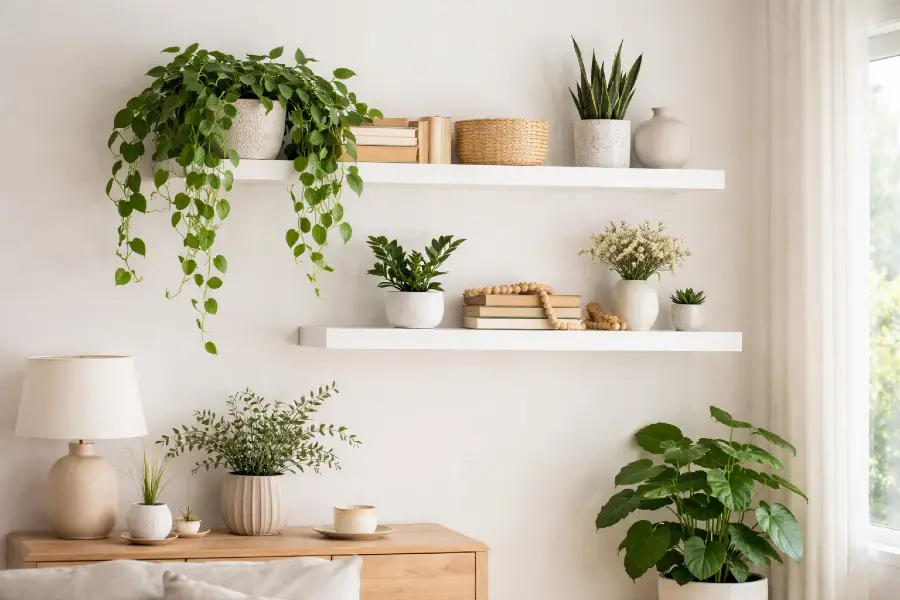
Shelves create the upper layer for indoor plant styling. Plants on shelves help draw the eye upward and make a room feel taller and more filled with greenery.
Trailing plants work especially well on shelves because the leaves can hang down and create a layered look.
If you are decorating shelves with plants, see Decorating Shelves With Plants (Shelf Plant Styling Ideas).
Use Tables for Small Accent Plants
Tables, desks, nightstands, and coffee tables are perfect places for small plants. These plants act as accent plants and help fill smaller spaces around the room.
Small plants on tables help connect the different plant layers together so the room feels balanced.
Spread Layers Around the Room
Layering works best when plants are spread around the room instead of all in one area. Try placing plants in corners, near windows, beside furniture, on shelves, and on tables.
This makes plants feel like part of the room design instead of a single plant display area.
If you’re not sure where plants should go, read Where to Put Plants in a Room (Indoor Plant Placement Ideas).
Use Different Plant Sizes
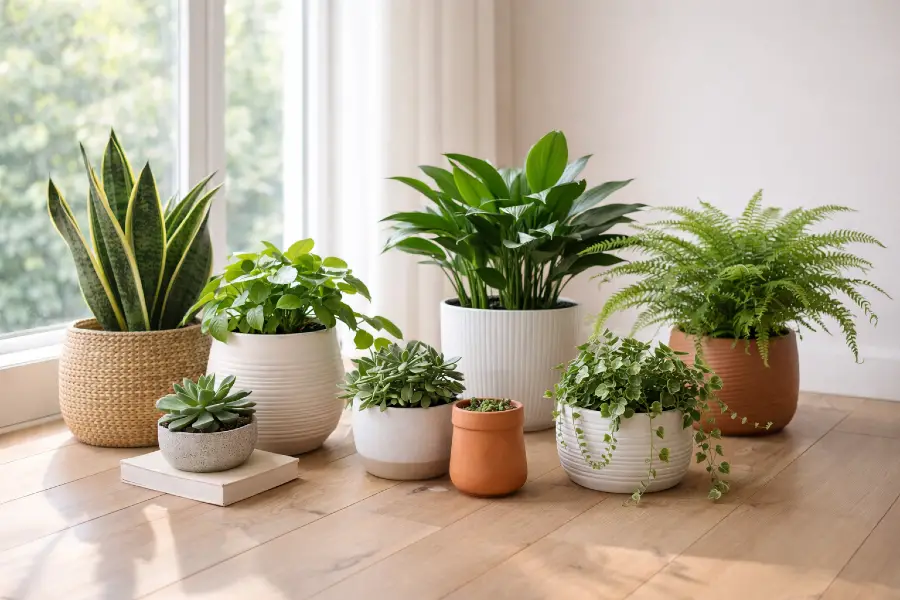
Layering plants also works best when plants are different sizes. Combine large plants, medium plants, and small plants to create a balanced indoor plant layout.
You can learn more about mixing plant sizes here: Mixing Plant Sizes in Home Decor (Indoor Plant Styling With Different Plant Sizes).
Avoid Clutter When Layering Plants
Layering plants does not mean filling every space with plants. Leave some open space so the room does not feel crowded.
Plants should make a room feel comfortable and natural, not cluttered.
Simple Layering Layout Example
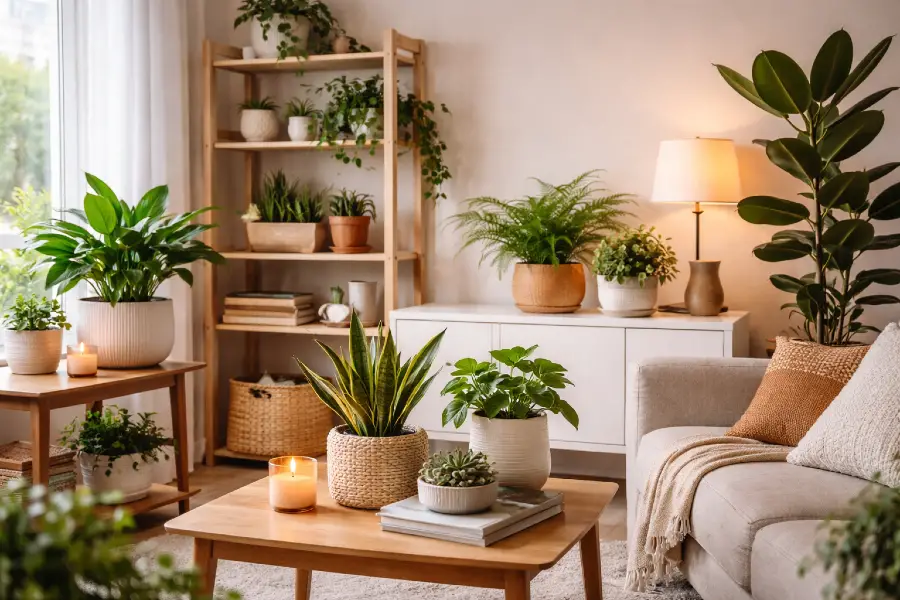
If you’re not sure how to start layering plants in a room, a simple layout is to use one large floor plant, one plant on a stand, one plant on a shelf, and one small plant on a table. This creates four different plant levels and usually looks balanced in most rooms.
For example, you might place a tall plant in a corner, a plant stand beside a sofa, a trailing plant on a shelf, and a small plant on a coffee table. This spreads plants around the room and creates a layered look without making the room feel crowded.
You do not need many plants to create layers. Even three or four plants placed at different heights can make a room look well designed.
The goal is not to fill every space with plants, but to create different plant levels so the room feels balanced and natural.
Layering Plants in Different Room Types
Layering plants works in almost any room including living rooms, bedrooms, offices, and even kitchens. The layering idea stays the same, but the number of plants and plant sizes may change depending on the room size.
Living rooms usually have the most space for layered plants because they often have corners, shelves, and tables. Bedrooms usually look best with fewer plants but still benefit from having plants at different heights.
Offices and desks can use layered plants by placing one plant on the floor, one plant on a shelf, and one small plant on a desk.
No matter the room, the goal is to spread plants around the space and place them at different heights so the room looks balanced.
Final Thoughts
Layering plants in a room is one of the easiest ways to make indoor plants look decorative and well designed. Using plants at different heights creates depth, balance, and a more natural indoor plant layout.
The easiest way to layer plants is to combine floor plants, plant stands, shelves, and small table plants around the room. This creates multiple plant levels and makes plants look like part of the room design.
Even a few plants placed at different heights can completely change how a room looks and feels.
How to Decorate With Indoor Plants (Indoor Plant Styling and Decor Ideas)
For more indoor plant styling and decor ideas, visit our category page here:
Plant Styling & Decor.
Layering Plants in a Room FAQ
What does layering plants mean?
Layering plants means placing plants at different heights around a room using floor plants, plant stands, shelves, and tables.
How do you layer indoor plants?
Use large floor plants, medium plants on stands, plants on shelves, and small plants on tables to create multiple plant levels.
Why is layering plants important?
Layering plants makes indoor plants look more natural and balanced and helps plants become part of the room design.
Can you layer plants in a small room?
Yes, even small rooms can use layered plants by combining one floor plant, one shelf plant, and one small table plant.
➡️ Next Post
Next: Minimalist Indoor Plant Decor
Related Content
Visit my Amazon Influencer Page for videos and gardening products Grow Your Own Garden