
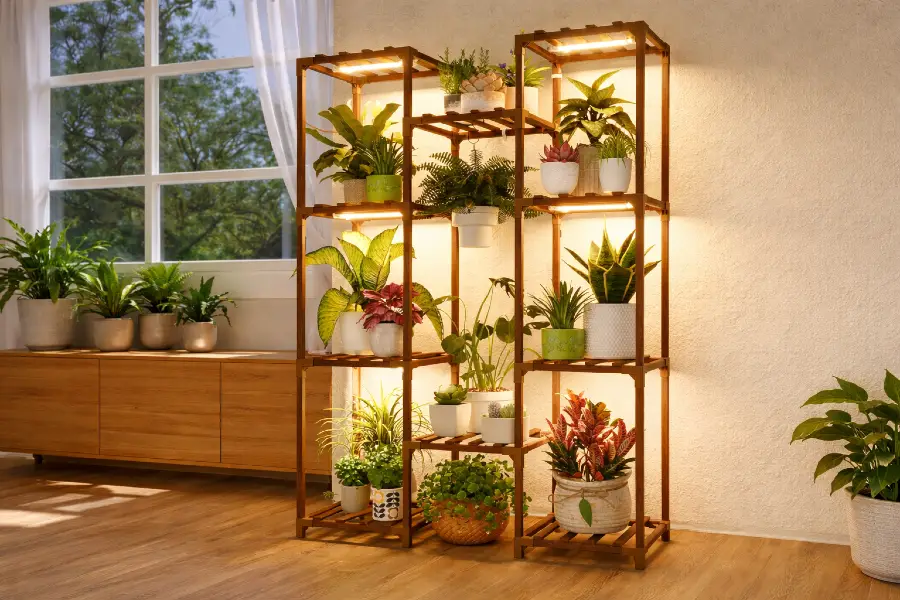
Indoor plant shelves are one of the easiest ways to decorate with plants without giving up floor space. They let you bring greenery up onto walls, bookcases, corners, and windows so plants become part of the room instead of just something sitting in a pot.
That is a big reason plant shelves work so well in real homes. They help you style living rooms, bedrooms, offices, and small apartments in a way that feels layered and intentional. A good shelf can turn a few ordinary houseplants into a full display that adds color, texture, and life to the room.
The best part is that there is no single right way to do it. Some plant shelves are simple floating shelves with one or two trailing plants. Others are fuller displays with books, baskets, framed art, candles, and a mix of upright and trailing plants. The look can be modern, cozy, minimalist, or relaxed depending on the room and the plants you choose.
In this guide, we’ll look at practical indoor plant shelf ideas that work for everyday homes. You’ll see the main types of plant shelves, how to make them look balanced, and how to choose shelf setups that fit your space and style.
Find A Wide Variety Of Plant Shelves On Amazon
What You’ll Learn
- How indoor plant shelves help decorate a room without taking up much floor space
- The main types of plant shelves that work well indoors
- How to style plant shelves so they look balanced instead of crowded
- Which shelf setups work best in living rooms, bedrooms, and small spaces
- Common shelf decorating mistakes to avoid
🌿 Why Plant Shelves Work So Well for Indoor Plant Decor
Plant shelves work because they combine two things people already want in a home: more greenery and better use of space. Instead of relying only on floor planters, you can move plants upward and create a more layered look. That instantly makes a room feel more finished.
This is especially helpful in smaller homes, apartments, and rooms where floor space is limited. A floating shelf, narrow bookcase, or corner shelf can hold several plants without making the room feel cramped. That is one reason plant shelves fit so naturally with small-space decorating.
They also make it easier to treat plants like decor. A shelf display can mix greenery with books, pottery, candles, baskets, or framed pieces so the arrangement feels styled instead of random. If you already like using greenery as part of your home design, shelf displays are one of the easiest ways to do it well. You can see that approach in our guide to Decorating Shelves With Plants.
Another reason shelves work so well is that they create natural height variation. When every plant sits at floor level, the room can feel flat. Shelves raise some plants higher, let others trail down, and create the kind of layered look that makes plant styling feel more intentional. That same idea also works well when mixing plants throughout a room, especially if you want a more collected and natural display.
Plant shelves also adapt to different styles. In a modern room, you might use a few clean-lined pots on simple white shelves. In a cozy room, you might mix warm wood, woven baskets, and softer trailing plants. In a minimalist space, a single shelf with two or three carefully chosen plants can be enough. The shelf is just the structure. The styling is what gives it personality.
That flexibility is what makes indoor plant shelf ideas so useful. You are not locked into one look. You can create something airy and simple, something fuller and collected, or something that changes with the season as you rotate plants and decor pieces around the room.
🪜 Types of Indoor Plant Shelves
There are a lot of ways to display plants on shelves, but most indoor setups fall into a few main categories. Choosing the right type depends on your wall space, lighting, room size, and the overall look you want.
Floating Plant Shelves
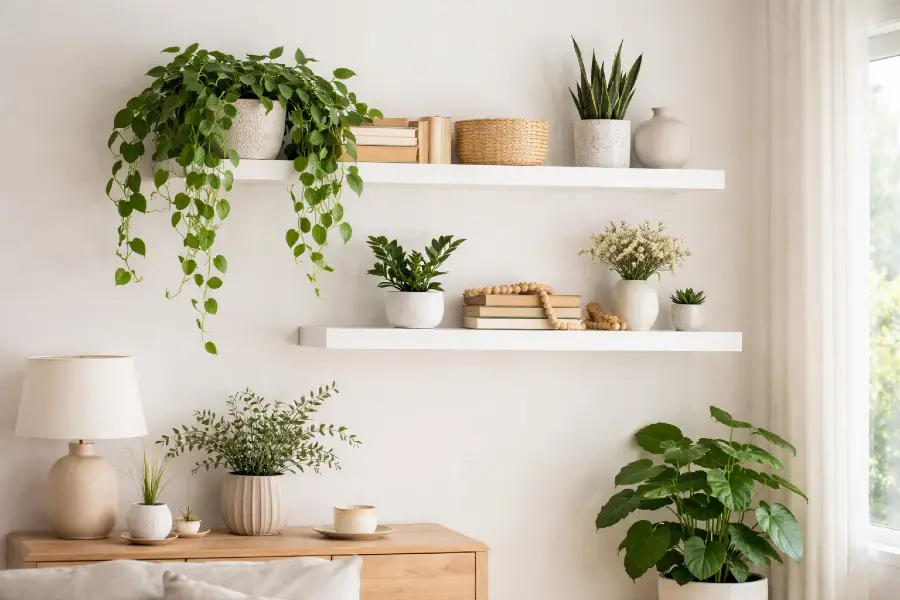
Floating shelves are one of the most popular choices because they look clean and don’t take up floor space. They work especially well in living rooms, bedrooms, kitchens, and small apartments where you want plants up off tables and counters.
These shelves are good for small to medium plants, trailing plants, and simple styled groupings. You can use one shelf as a subtle accent or stack several vertically for a fuller plant wall effect. Floating shelves also fit a lot of decor styles, from modern to cozy. Later, this article cluster can branch into a more detailed post on floating plant shelf ideas.
Bookshelves and Bookcases
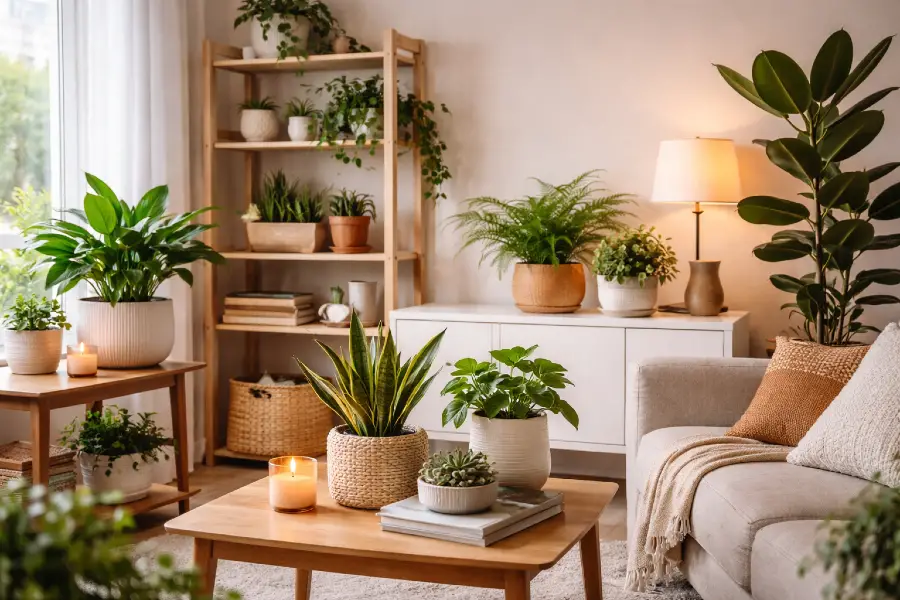
Bookshelves are one of the easiest places to add plants because they are already part of the room. Instead of creating a brand-new display, you are simply working greenery into shelves you already use for books, baskets, or decorative objects.
This type of setup works best when you avoid filling every shelf edge to edge. Plants usually look better when mixed with negative space and a few non-plant items. Compact plants are usually the easiest fit here, especially if the shelves are not very deep. For more plant choices that stay manageable in tighter spots, your existing post on Desk and Bookshelf Plants: Top Compact Varieties fits nicely with this section.
Corner Plant Shelves
Corner shelves are great for making use of awkward spaces that often get ignored. A plain corner in a living room, bedroom, or office can become a vertical plant display without taking over the room. That makes corner shelves especially useful in smaller homes where every bit of space matters.
They also help soften hard room angles. A few plants placed at different heights can make a corner feel less empty and more connected to the rest of the room. Corner setups often look best when they include a mix of upright plants and one trailing plant to break up the lines.
Window Plant Shelves
Window shelves are perfect when you want to give plants brighter light while still keeping them styled as part of the room. They are especially useful for smaller plants, herbs, and varieties that appreciate stronger natural light.
The main advantage here is obvious: better light. The challenge is making sure the shelf still looks clean and not overcrowded. Window shelves usually look best when they are kept a little simpler, since the natural light already makes them stand out.
Wall Mounted Plant Shelves
Wall mounted shelves give you the feel of a custom plant display. These can be single shelves, paired shelves, or full wall arrangements that combine plants with art and decor. They are a good option when you want the shelf itself to become a design feature.
This style works well in entryways, above furniture, or on blank walls that need something more interesting than a single frame. They can lean modern, rustic, minimalist, or eclectic depending on the material and styling.
Small Shelves for Tight Spaces
Not every plant shelf needs to be a large feature wall. Sometimes a small floating shelf, narrow ledge, or slim vertical shelf is enough to add greenery to a tight spot. These smaller shelf ideas are especially useful in apartments, bedrooms, offices, and narrow hallways where you want plants but do not want clutter.
If you are decorating a tighter room, this kind of setup often works better than trying to force in a large bookcase or multiple bulky stands. Smaller shelves keep the look lighter and let you add greenery without crowding the space.
🎨 How to Style a Plant Shelf
Once you have shelves in place, the next step is making them look balanced and intentional instead of crowded or random. Styling a plant shelf is less about how many plants you can fit and more about how the plants, pots, and other items work together.
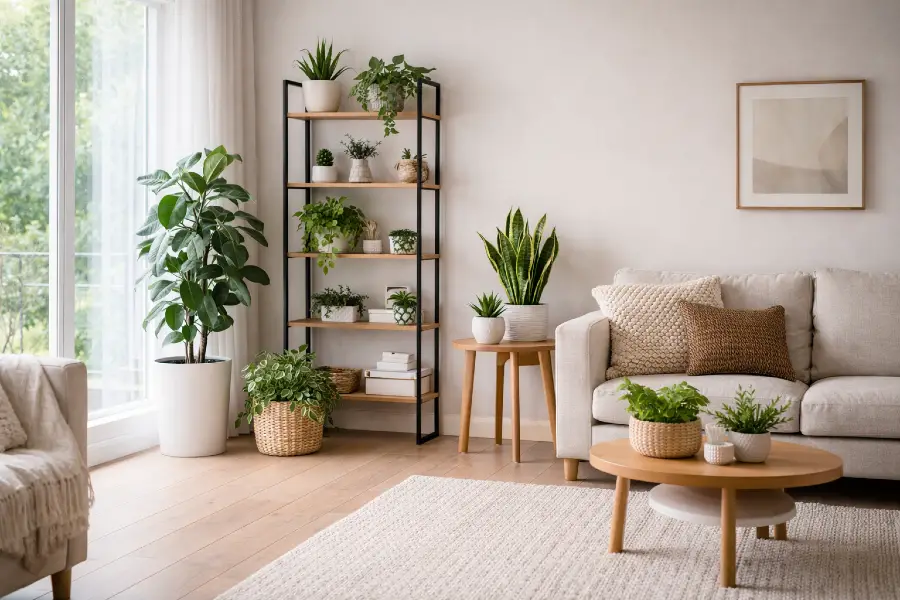
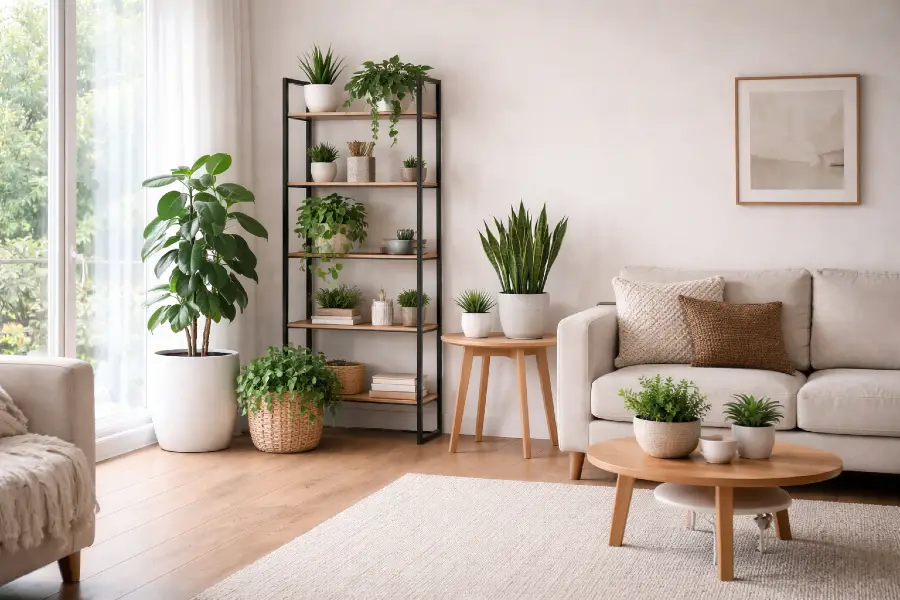
A good plant shelf usually mixes different plant shapes, different heights, and a little empty space so everything can stand out. When every shelf is packed edge to edge, the display can start to look messy even if the plants are healthy.
Mix upright and trailing plants
One of the easiest ways to make a shelf look styled is to combine upright plants with one trailing plant. Upright plants add height and structure, while trailing plants soften the edges and make the shelf feel more relaxed.
- Use upright plants toward the back of the shelf
- Let trailing plants hang slightly over the edge
- Avoid using only trailing plants on every shelf
Vary plant heights
If all the plants are the same height, the shelf can look flat. Try using a mix of small plants, medium plants, and one slightly taller plant. You can also raise smaller plants by placing them on a small stack of books or a low riser.
Leave some empty space
Empty space is important. Shelves usually look better when every inch is not filled. A little space between plants makes the display look more intentional and less cluttered.
Mix plants with decor items
Plant shelves often look best when plants are mixed with a few decor items like books, baskets, candles, framed photos, or small sculptures. This helps the shelf look like part of the room decor instead of just a place where plants are stored.
If you want more detailed styling ideas specifically for shelves, you can also see our guide on Decorating Shelves With Plants, which goes deeper into shelf styling layouts and display ideas.
🪴 Best Plants for Shelves and Bookcases
Not every plant works well on shelves. The best shelf plants are usually compact, slow-growing, and balanced enough that they do not tip easily or outgrow their space too quickly.
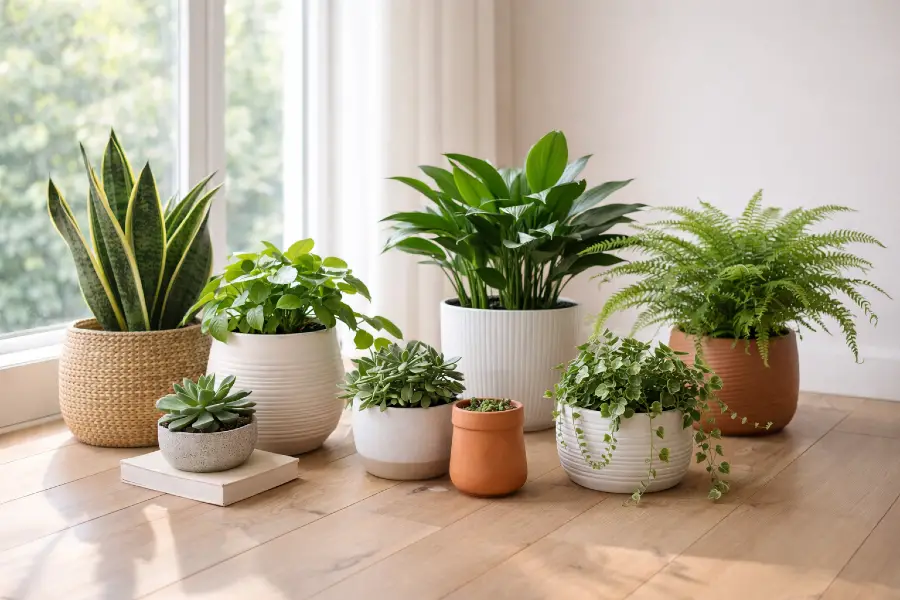
When choosing plants for shelves, it helps to think in categories: upright plants, trailing plants, and compact plants. A mix of these usually creates the best shelf display.
Upright plants for height
- Snake plant (compact varieties)
- ZZ plant
- Small dracaena varieties
These plants add vertical structure and work well toward the back of shelves or in corners.
Trailing plants for edges
- Pothos
- Philodendron
- String of pearls
- String of hearts
Trailing plants are great for upper shelves where the vines can hang down slightly without getting in the way.
Compact plants for small spaces
- Peperomia
- Small ferns
- Fittonia
- Succulents (bright light)
Compact plants are perfect for narrow shelves, desks, and bookcases where space is limited. If you want more compact plant ideas, your post on Desk and Bookshelf Plants is a good companion to this section.
🏠 Plant Shelf Ideas for Different Rooms
Plant shelves can work in almost any room. The best setup usually depends on the available light, how much wall space you have, and how the room is used.
Living room plant shelves
Living rooms are one of the easiest places to add plant shelves. You can use floating shelves, bookshelves, or corner shelves to add greenery without crowding the seating area. Shelves above furniture, next to windows, or in empty corners usually work well.
If you want ideas specifically for this room, see Plants for Shelves in Living Rooms for plant ideas and placement tips.
Bedroom plant shelves
In bedrooms, plant shelves are often used above dressers, desks, or along empty walls. Bedrooms usually look best with simpler shelf displays, fewer plants, and softer trailing plants to keep the room calm and not too busy.
Office plant shelves
Office shelves are great for adding greenery without taking up desk space. Compact plants and upright plants usually work best here so the shelves stay neat and easy to maintain.
Kitchen plant shelves
Kitchens are good places for small plant shelves near windows. Herbs, pothos, and small leafy plants often do well here as long as the shelves get enough light and are not directly above heat sources.
📏 Plant Shelf Ideas for Small Spaces
Plant shelves are especially useful in small apartments and small rooms because they use vertical space instead of floor space. Even a single narrow shelf can hold several small plants and change how a room feels.
- Use floating shelves instead of large bookcases
- Try corner shelves to use empty corners
- Use window shelves for plants that need more light
- Keep shelves narrow so the room does not feel crowded
- Use smaller pots and compact plants
Small shelves spaced vertically can often hold more plants than one large shelf while still keeping the room open and uncluttered. This approach works especially well in bedrooms, offices, and small living rooms.
💡 Lighting for Plant Shelves
Lighting is one of the most important parts of successful plant shelves. Shelves often sit farther from windows than floor plants, which means the light may be weaker than you expect.
Window shelves usually provide the best natural light. Shelves on interior walls may need brighter room lighting or a small grow light to keep plants healthy.
- Place shelves near windows when possible
- Rotate plants occasionally so they grow evenly
- Use LED grow lights for darker shelves
- Under-shelf lighting can help plants on lower shelves
- Choose low-light plants for darker shelves
Even a small clip-on grow light can make a big difference for shelves that are farther from windows. Good lighting not only helps plants grow better but also makes the shelf display stand out more in the room.
🚫 Common Plant Shelf Mistakes
Plant shelves can look amazing, but there are a few common mistakes that make them look cluttered or make plants harder to keep healthy. Avoiding these problems will make your shelves look better and make plant care easier.
- Overcrowding shelves with too many plants
- Using plants that grow too large for the shelf
- Putting shelves too far from light sources
- Using pots without drainage
- Using shelves that are too shallow for the pots
- Only using trailing plants and no upright plants
- Using very heavy pots on weak shelves
Most shelf problems come from trying to fit too many plants into a small space. Shelves almost always look better when there is a mix of plants, decor, and empty space instead of filling every inch.
🏁 Final Thoughts: Decorating With Plant Shelves
Indoor plant shelves are one of the easiest ways to decorate with plants while keeping your home organized and uncluttered. They let you add greenery to walls, corners, and windows while creating height and layers in a room.
Whether you use floating shelves, bookshelves, corner shelves, or small wall shelves, the goal is the same: create a balanced display that mixes upright plants, trailing plants, and a little empty space. When done well, plant shelves can become one of the most interesting features in a room.
Start simple with one shelf, a few easy plants, and a couple of decor items. As you get more comfortable, you can add more shelves or change the arrangement until the display fits your space and style.
Plant shelves are not just about fitting more plants into a room. They are about using plants as part of your home decor and making your space feel more alive, comfortable, and welcoming.
For more plant shelf styling and display ideas, visit our category page here:
Plant Shelf Ideas.
❓ FAQ
What are the best plants for shelves?
The best plants for shelves are compact or slow-growing plants like snake plants, ZZ plants, peperomia, pothos, and small ferns. These plants stay manageable and work well in small pots and shallow shelves.
Do plants grow well on shelves?
Plants can grow well on shelves if they receive enough light. Shelves near windows work best, but darker shelves may need low-light plants or a small grow light.
How do you style a plant shelf?
To style a plant shelf, mix upright plants with trailing plants, vary plant heights, leave some empty space, and combine plants with books or decor items for balance.
How many plants should be on a shelf?
It depends on the shelf size, but fewer plants usually look better. Leave some empty space so each plant stands out and the shelf does not look crowded.
➡️ Next Post
Next: How to Style a Plant Shelf
Related Content
Visit my Amazon Influencer Page for videos and gardening products Grow Your Own Garden