
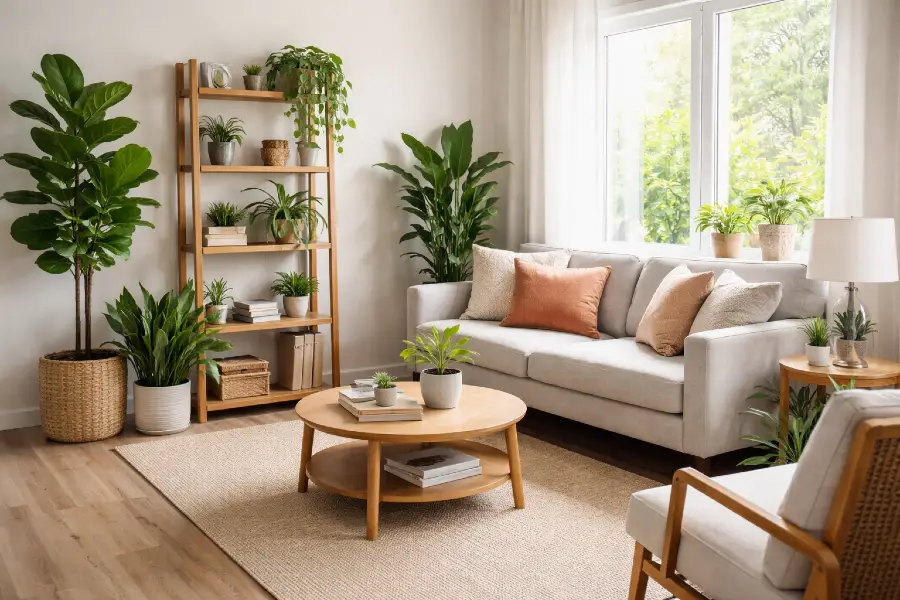
Figuring out how to arrange plants in a living room is not just about adding more greenery. It is about placing plants in a way that makes the room feel balanced, comfortable, and lived-in without looking messy or overcrowded.
A good living room plant setup usually mixes different heights, leaf shapes, and placement zones. Instead of lining every plant up in one spot, it helps to spread them through the room so they feel like part of the décor.
In this guide, you will learn how to arrange plants in a living room using simple styling ideas that work for small spaces, large rooms, bright windows, dark corners, shelves, side tables, and floor areas.
Find Easy Indoor Houseplants On Amazon
What You’ll Learn
- How to place plants so the room feels balanced instead of cluttered
- Which plant sizes work best for floors, tables, shelves, and corners
- How to group plants together for a styled, natural look
- Ways to use living room light conditions to your advantage
- Common plant arrangement mistakes to avoid
Why Plant Placement Matters in a Living Room
The living room is usually one of the busiest spaces in a home. It is where people sit, walk through, watch TV, read, relax, or spend time with family. Because of that, plant placement has to do more than just look nice.
A well-arranged plant setup can soften empty corners, frame furniture, add height to flat spaces, and make the whole room feel warmer. On the other hand, too many plants in one area can make the room feel crowded fast.
The goal is to make the plants feel like they belong in the room, not like they were dropped in all at once. When you are learning how to arrange plants in a living room, think of plants as part of the room layout, just like lamps, chairs, baskets, or artwork.
Start With the Best Light Spots First
Before choosing where every plant should go, look at the natural light in your living room. This is the easiest way to avoid frustration later.
Bright windows are usually the best places for plants that want stronger light, while lower-light corners work better for plants that can handle less sun. In most living rooms, the light changes a lot depending on the time of day, nearby buildings, curtains, and the direction the windows face.
A simple way to start is this:
- Place your most light-hungry plants closest to windows
- Use medium-light plants a few feet back from bright windows
- Save darker corners for tolerant plants or decorative faux accents if needed
This keeps your arrangement realistic. A plant may look great in a dim corner for a week or two, but if it needs brighter light, that setup will not hold up for long.
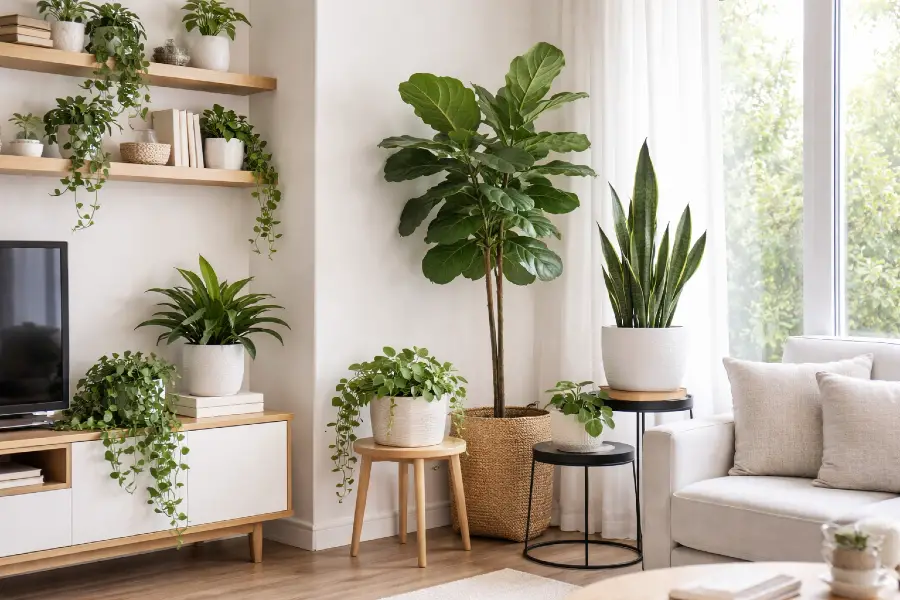
Use Different Plant Heights for a Layered Look
One of the easiest styling tricks is to avoid putting every plant at the same height. When all plants sit on the floor or all of them sit on one shelf, the room can look flat.
A better approach is to layer heights throughout the space. That usually means combining:
- Tall floor plants near sofas, windows, or corners
- Medium plants on stands, stools, or side tables
- Small plants on shelves, mantels, coffee tables, or media consoles
This creates movement for the eye and makes the room feel more finished. Tall plants add structure, mid-level plants fill awkward gaps, and smaller plants add detail without taking over the room.
Best Places to Put Plants in a Living Room
1. Empty Corners
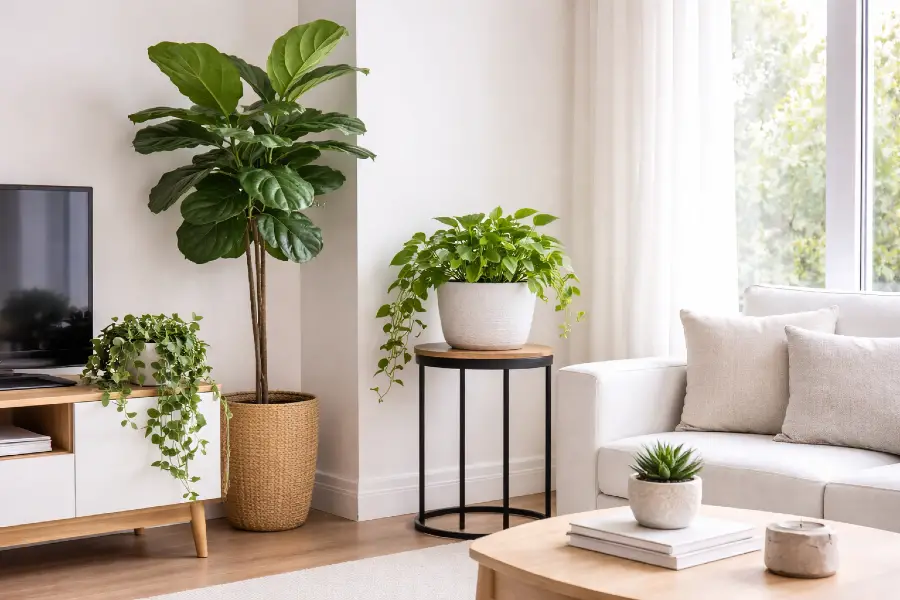
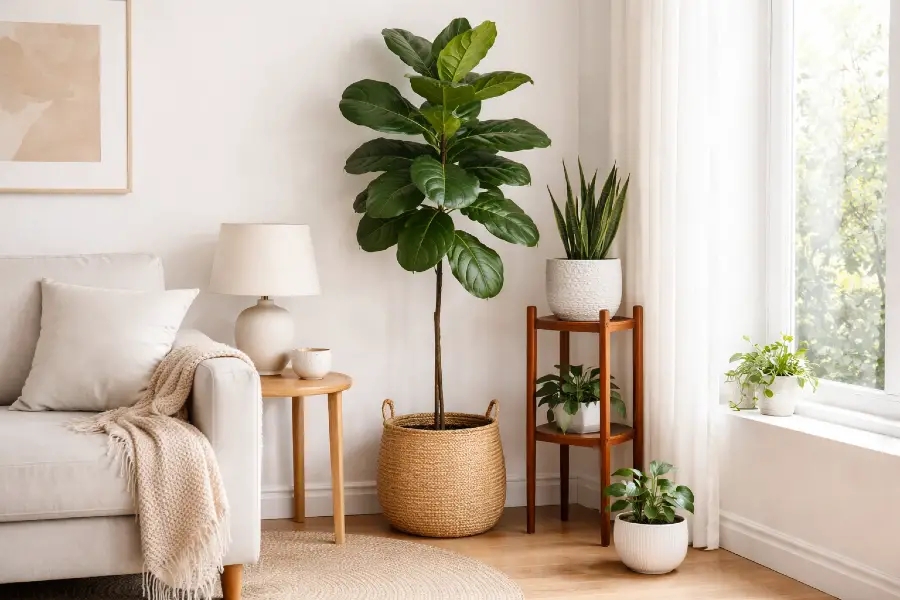
Corners are one of the best spots for larger plants. A tall snake plant, rubber plant, parlor palm, or fiddle leaf fig can make an empty corner feel intentional instead of forgotten.
If the corner gets very little light, choose a more tolerant plant instead of forcing a bright-light plant into the space.
2. Beside the Sofa
A plant next to the sofa helps soften the hard lines of furniture. This works especially well with a plant stand, woven basket, or decorative pot that matches the room style.
Just make sure the plant does not block walkways or brush against people every time they sit down.
3. Near Windows
Windows are natural anchor points for living room plants. You can place a tall floor plant beside the window, smaller plants on the sill, or a trailing plant on a nearby shelf.
This often feels more natural than putting every plant in the center of the room.
4. Coffee Tables and Side Tables
Small plants can work well on tables, but keep scale in mind. A huge leafy plant in the middle of the coffee table can block sight lines and make the space feel cramped. Smaller plants or compact arrangements usually look better here.
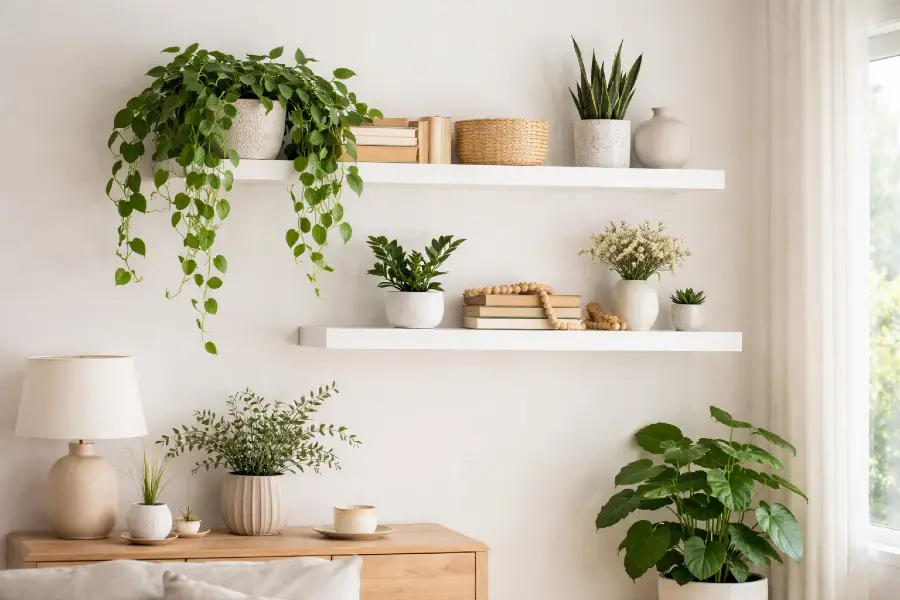
5. Shelves and Media Consoles
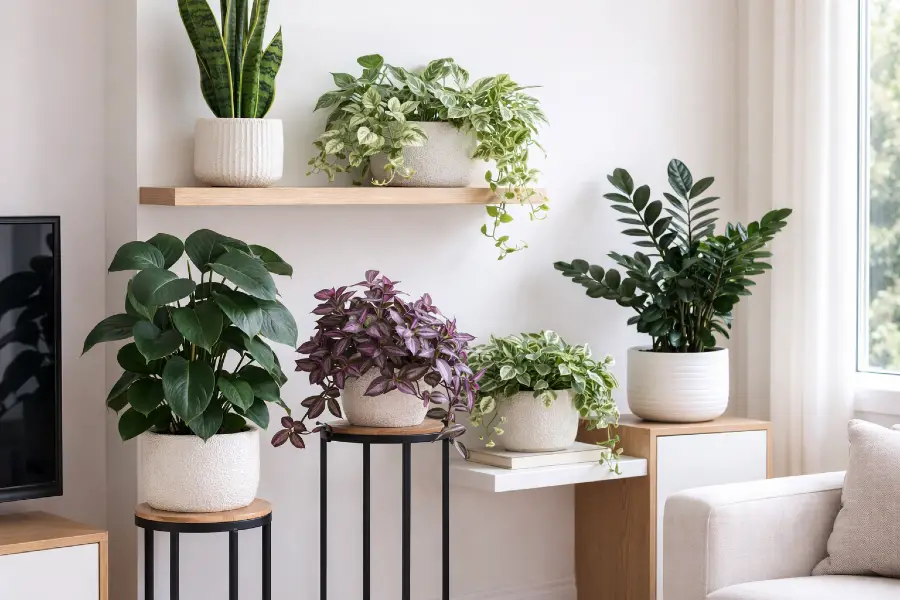
Shelves are good for smaller potted plants, trailing vines, and accent pieces. A media console can also hold one or two plants to soften electronics and make that part of the room feel less harsh.
The trick is not to overload every shelf. Leave open space so the plants stand out.
How to Group Plants Together Without Making the Room Look Busy
Grouping plants is one of the best ways to make them look styled instead of scattered. A cluster of two to five plants often feels more intentional than placing the same number randomly all over the room.
A good grouping usually mixes:
- One taller plant
- One medium plant
- One trailing or textured plant
That mix gives you variation without chaos. You can group them near a bright window, in a corner, or beside a chair to create a mini focal point.
Try not to use identical pots for every plant unless you want a very formal look. Matching too closely can make the arrangement feel stiff, while mixing materials too wildly can make it feel unplanned. A few coordinating tones usually work best.
Match Plant Size to the Room
Plant arrangement works better when the plant size matches the scale of the room. Small living rooms usually look best with a few well-placed plants rather than lots of oversized floor pots.
In a larger living room, tiny plants can disappear unless they are grouped together or placed on furniture where they are easier to notice.
Here is a simple way to think about it:
- Small rooms: use compact floor plants, shelves, and tabletop plants
- Medium rooms: mix one statement plant with smaller accents
- Large rooms: use multiple plant zones so the greenery feels spread through the space
Create One Focal Plant, Then Build Around It
If you are not sure where to begin, start with one focal plant. This is the main plant that draws attention first. It might be a tall plant by a window, a bold plant near the sofa, or a full leafy plant in a decorative pot.
Once that focal plant is in place, add smaller supporting plants around the room. This gives your setup structure and helps prevent the common mistake of buying several plants and not knowing where any of them should go.
This is often the easiest real-world method for people trying to figure out how to arrange plants in a living room without overthinking every single corner.
Common Living Room Plant Arrangement Mistakes
- Putting every plant in one corner: this can make the rest of the room feel empty
- Ignoring light conditions: pretty placement does not help if the plant cannot survive there
- Using too many small plants without structure: this can look cluttered fast
- Blocking walkways: plants should not make the room harder to use
- Making everything symmetrical: sometimes a slightly relaxed look feels more natural
Simple Living Room Plant Arrangement Ideas
If you want a quick formula, here are a few easy combinations that work well:
- Corner setup: one tall floor plant plus one small plant on a nearby stand
- Window setup: one medium plant on the floor and one trailing plant on a shelf
- Sofa setup: one plant beside the sofa and one small tabletop plant across the room for balance
- Shelf setup: mix one trailing plant, one upright plant, and one decorative object with open space between them
These kinds of combinations make the room feel greener without turning the whole space into a jungle unless that is the look you want.
Final Thoughts
The best way to arrange plants in a living room is to work with the room you already have. Start with the brightest areas, use a mix of heights, keep walkways clear, and spread plants through the space so the room feels balanced.
You do not need dozens of plants to make a living room feel styled. Even a few well-placed plants can completely change how the room looks and feels.
Once you get the placement right, your living room plants stop feeling like random extras and start feeling like part of the room itself.
How to Decorate With Indoor Plants (Indoor Plant Styling and Decor Ideas)
FAQ
How many plants should I have in a living room?
That depends on the size of the room and the amount of light. A small living room may only need two to four well-placed plants, while a larger room can handle more. The goal is balance, not just quantity.
Where should a large plant go in a living room?
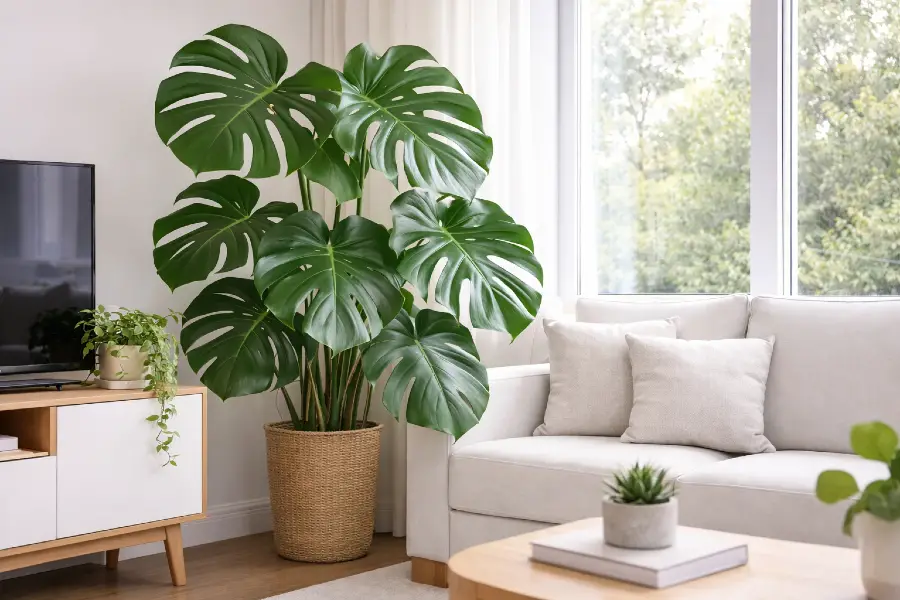
Large plants usually look best in empty corners, beside a sofa, or near a bright window. They work well as anchor pieces that help define a space without blocking movement.
Should I group plants together or spread them out?
Usually a mix works best. Grouping a few plants together creates a styled focal point, while spreading a few others through the room keeps the whole space feeling balanced.
What is the easiest way to arrange plants in a living room?
The easiest way to arrange plants in a living room is to start with one focal plant, place it in the best lighted area, then add smaller plants on shelves, tables, or nearby corners to create layers.
Can I put plants behind a couch?
Yes, if there is enough light and enough space for the plant to grow comfortably. Plants behind a couch can look great, especially taller varieties that add height and soften the back edge of the furniture.
FAQ Schema
➡️ Next Post
Next: Where to Put Plants in a Room
Related Content
Visit my Amazon Influencer Page for videos and gardening products Grow Your Own Garden